Few subjects in Orthodox Christianity generate as much fascination, debate, confusion, and sometimes even fear as the topic of tollhouses.
For some Orthodox Christians, tollhouses are an unquestionable reality taught throughout the history of the Church. For others, they are merely symbolic imagery found in monastic literature. Still others reject the concept entirely, believing it to be a later theological development that has no place in Orthodox doctrine.
What is striking is how emotionally charged these conversations often become.
People argue over the number of tollhouses. They debate the mechanics of demonic accusation. They dissect visions and hagiographies. They search the Fathers for proof texts and quotations. Entire books have been written defending or attacking the concept.
Yet in the midst of all this discussion, a far more important question often gets overlooked.
One day every single one of us will die.
One day our careers will end.
One day our bank accounts will no longer matter.
One day our political opinions, social media arguments, personal accomplishments, and earthly ambitions will all be left behind.
One day every human being will stand before Christ.
The Fathers were not primarily concerned with satisfying our curiosity about what happens after death. They were concerned with preparing souls to meet God.
Whether tollhouses are understood literally, symbolically, or somewhere in between, the fundamental issue remains unchanged:
Are we living lives of repentance?
Are we preparing to stand before Christ?
That is the question that ultimately matters.
But because the subject continues to generate significant discussion, it is worth examining carefully what tollhouses are, where the idea comes from, what the Fathers actually said, and how modern Orthodox theologians approach the subject.
You can Now Listen to Each Article
What Are Tollhouses?
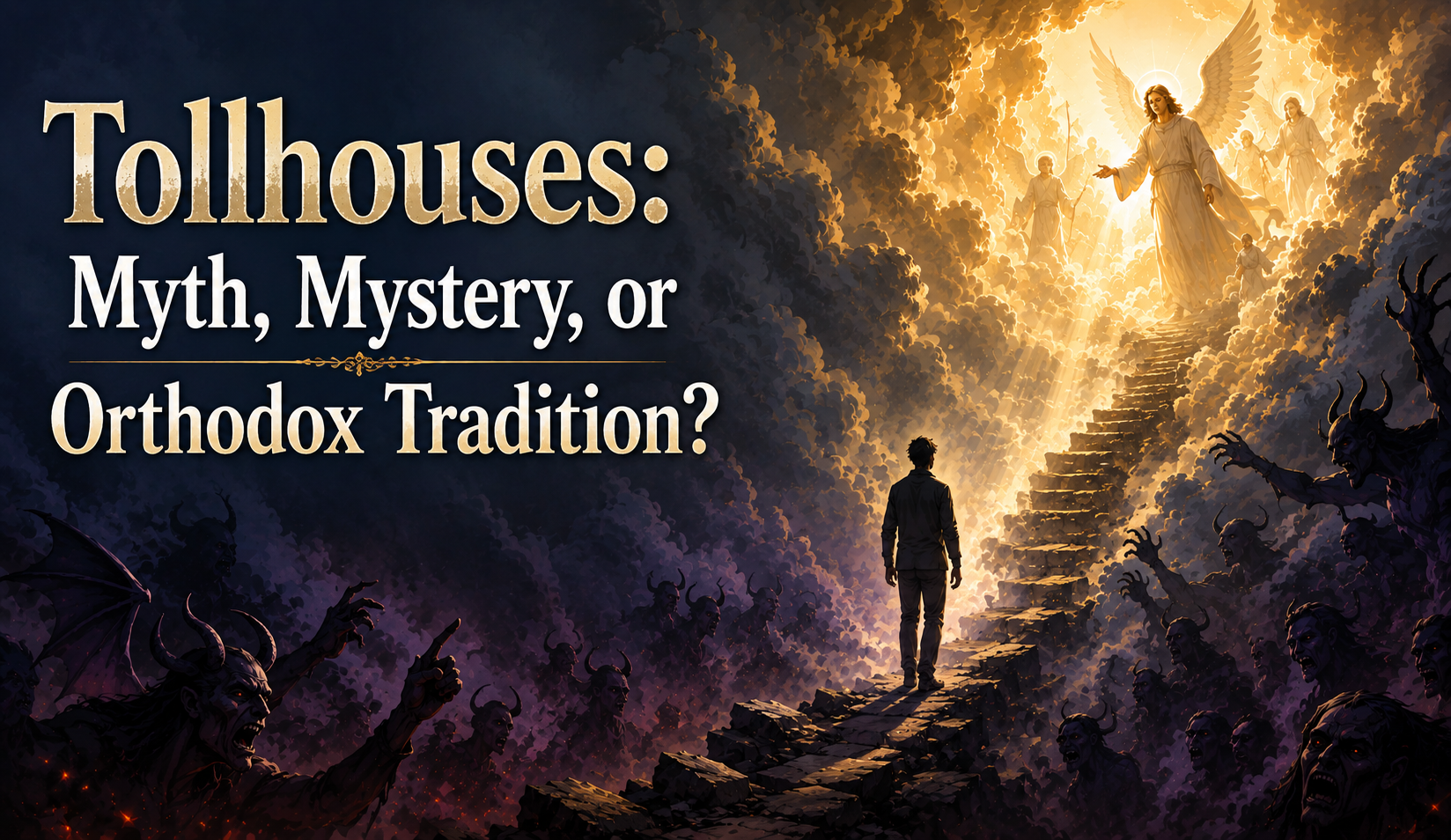
At its most basic level, the tollhouse imagery describes a post-mortem encounter between the soul and demonic powers.
According to the traditional imagery, after death the soul passes through a series of encounters where demons attempt to accuse the person concerning sins committed during earthly life.
The demons act as accusers.
The angels act as defenders.
The soul’s life is revealed.
Repentance, confession, and God’s mercy become central themes.
The imagery often portrays particular categories of sin being examined—pride, lust, anger, greed, judgment, vanity, and many others.
The purpose of these accounts is not merely to describe what happens after death. Rather, they serve as warnings about spiritual vigilance during this life.
The emphasis is accountability.
The emphasis is repentance.
The emphasis is the reality of spiritual warfare.
The emphasis is that our choices matter.
Most importantly, the emphasis is that no one enters eternal life through self-justification.
We enter only through Christ.
The Historical Roots of Tollhouse Imagery
Contrary to popular claims, the concept did not suddenly appear in the Middle Ages.
Elements of post-mortem demonic accusation appear very early in Christian literature.
Even before Christianity, Jewish writings sometimes portrayed hostile spiritual powers attempting to hinder the soul after death.
Within Christian tradition, similar themes begin appearing in ascetical and monastic literature remarkably early.
Several Fathers speak about demons confronting the soul after death.
Several describe angels escorting the righteous.
Several speak of demonic accusation at the hour of death.
What varies is the exact imagery.
The Fathers do not always describe the same process, sequence, or details.
This fact becomes important later.
The Church inherited a broad tradition concerning spiritual warfare after death, but not necessarily a universally agreed-upon map of exactly how such encounters occur.
St. Anthony the Great
One of the earliest references often cited comes from St. Anthony the Great.
In the Life of Anthony written by St. Athanasius, Anthony describes seeing the soul’s ascent obstructed by hostile powers in the air.
The demons seek to hinder the soul.
The righteous are aided by heavenly powers.
The imagery is dramatic and unmistakably spiritual.
Importantly, however, Anthony does not provide a detailed tollhouse system.
What we find instead is evidence that fourth-century Christians believed demonic powers remained active even at the soul’s departure from the body.
This fits naturally within the broader patristic understanding of spiritual warfare.
St. John Chrysostom
St. John Chrysostom also speaks about fearsome encounters following death.
Several homilies describe demons present at the departure of the soul.
He emphasizes accountability before God and the terror experienced by those who have neglected repentance.
Again, however, Chrysostom does not provide a detailed schematic system.
His concern is pastoral.
His goal is repentance.
His purpose is to awaken spiritual vigilance.
The point is never curiosity.
The point is preparation.
St. Cyril of Alexandria
St. Cyril likewise refers to hostile spiritual powers confronting souls after death.
He speaks of demons bringing accusations and seeking grounds for condemnation.
Yet even here the focus remains moral and spiritual rather than mechanical.
The Fathers consistently emphasize spiritual realities.
They are far less interested in satisfying modern demands for precise explanations.
St. John Climacus
The author of The Ladder of Divine Ascent repeatedly describes demons accusing, testing, and confronting souls. His writings frequently emphasize the moment of death as a continuation of spiritual warfare.
For Climacus, the Christian life is preparation for that final encounter.
The demons that tempt us throughout life do not suddenly lose interest at death.
Rather, death reveals what has truly taken root within the heart.
This emphasis on ongoing spiritual warfare is deeply consistent with broader Orthodox spirituality.
The Vision of St. Theodora
No discussion of tollhouses can avoid the most famous account: the Vision of St. Theodora contained within the Life of St. Basil the New.
This tenth-century text became enormously influential.
In the account, Theodora describes her soul’s journey after death through a series of tollhouses where demons accuse her regarding specific sins.
Angels accompany her.
Demons present accusations.
Repentance and spiritual struggle become central themes.
The narrative is vivid, memorable, and detailed.
For many Orthodox Christians, this text became the primary source through which tollhouse theology was understood.
Yet this is also where controversy begins.
The account is a hagiographical vision.
It is not an Ecumenical Council.
It is not a dogmatic definition.
It is not a universally binding confession of faith.
The Church preserved the account because it was spiritually edifying.
That does not automatically mean every detail was intended as a literal blueprint of the afterlife.
What the Fathers Actually Agree On
Much confusion disappears when we distinguish between what is universally taught and what remains open to interpretation.
The Fathers overwhelmingly agree on several points:
- The soul survives death.
- A particular judgment occurs after death.
- Human beings remain accountable for how they lived.
- Demons are real.
- Angels are real.
- Spiritual warfare is real.
- Repentance matters.
- The prayers of the Church matter.
- Christ alone saves.
These themes appear repeatedly throughout patristic literature.
What is less clear is whether all Fathers intended a literal sequence of tollhouses exactly as later descriptions portray them.
This distinction is often overlooked.
Arguments in Favor of Tollhouses
1. Widespread Patristic Witness
Supporters argue that references to demonic accusation after death appear across centuries of Orthodox tradition.
While details vary, the basic theme remains remarkably consistent.
The sheer volume of references suggests a genuine tradition rather than an isolated idea.
2. Consistency With Spiritual Warfare
Orthodox Christianity has always taught that spiritual warfare permeates human existence.
The demons tempt us throughout life.
Why would they cease their activity at death?
Supporters argue that tollhouses simply represent the continuation of this warfare.
3. Liturgical Evidence
Many Orthodox prayers for the departed ask God to protect souls from hostile spiritual powers.
These liturgical references are often cited as evidence that post-mortem demonic encounters were assumed within the Church’s prayer life.
4. Ascetical Purpose
Defenders emphasize that tollhouse imagery encourages repentance.
It reminds Christians that sin is serious.
It combats spiritual complacency.
It encourages confession, vigilance, humility, and preparation for death.
Arguments Against Tollhouses
1. Lack of Dogmatic Definition
The strongest objection is straightforward.
No Ecumenical Council has ever defined tollhouses.
No universally binding dogmatic statement requires belief in a literal tollhouse system.
Therefore, critics argue, the concept cannot be treated as mandatory Orthodox doctrine.
This point is historically correct.
The Church has never dogmatized tollhouses.
2. Concerns About Legalism
Some theologians worry that certain presentations of tollhouses resemble a celestial courtroom where salvation appears to depend upon balancing spiritual accounts.
Such presentations can unintentionally obscure the central Orthodox teaching that salvation comes through union with Christ.
Orthodoxy does not teach that demons possess legal authority over redeemed souls.
Christ has already conquered death, Hades, Satan, and every demonic power.
3. Questions About Specific Sources
Critics frequently focus on the Life of St. Basil the New.
They argue that hagiographical visions should not be treated as dogmatic maps of spiritual reality.
Orthodoxy has always recognized different genres of literature.
A vision may reveal truth without requiring literal interpretation of every detail.
4. Risk of Fear-Based Spirituality
Some presentations of tollhouses produce anxiety rather than repentance.
Critics worry that excessive focus on demons can distract believers from confidence in Christ’s victory.
Fr. Seraphim Rose and the Modern Revival
No modern figure is more associated with tollhouse theology than Fr. Seraphim Rose.
In his influential work The Soul After Death, Fr. Seraphim argued strongly that tollhouses represented authentic Orthodox tradition.
He assembled extensive patristic evidence and sought to demonstrate continuity between ancient sources and later descriptions.
His work became enormously influential, particularly in English-speaking Orthodoxy.
For many Orthodox Christians, Fr. Seraphim reintroduced a forgotten aspect of traditional spirituality.
For others, he elevated a theological opinion beyond its proper place.
The debate continues today.
Modern Orthodox Responses
Modern Orthodox theologians generally fall into several categories.
Literal Affirmation
Some theologians accept tollhouses substantially as described in traditional accounts.
They see no contradiction between tollhouses and salvation by grace.
They argue that the imagery simply describes spiritual realities that actually occur.
Symbolic Interpretation
Others view tollhouses as symbolic depictions of particular judgment.
The demons represent accusation.
The tollhouses represent the unveiling of the soul’s condition.
The imagery communicates real truths without requiring literal checkpoints after death.
Agnostic Acceptance
A third group remains cautious.
They neither reject nor fully embrace the imagery.
They affirm the underlying theological principles while acknowledging uncertainty about the mechanics.
This position is perhaps more common than many realize.
What Should Orthodox Christians Believe?
This is where we must be very careful.
Orthodox Christians are not required to believe in a literal tollhouse system.
Orthodox Christians are required to believe in judgment.
Orthodox Christians are required to believe in the reality of demons.
Orthodox Christians are required to believe in spiritual warfare.
Orthodox Christians are required to believe that death does not end accountability.
Orthodox Christians are required to believe that salvation comes through Christ.
The Church allows theological freedom regarding the precise interpretation of tollhouse imagery.
What she does not allow is denial of the spiritual realities that the imagery seeks to communicate.
The Greatest Danger in the Debate
The greatest danger is not believing in tollhouses.
The greatest danger is not questioning tollhouses.
The greatest danger is missing the entire point.
Too many discussions become exercises in curiosity.
How many tollhouses are there?
What order do they appear?
What sins belong to which tollhouse?
What exactly happens minute by minute after death?
The Fathers were rarely interested in such speculation.
They were interested in repentance.
They were interested in humility.
They were interested in prayer.
They were interested in purity of heart.
As I often remind people, there is a profound difference between a theology that merely talks about God and a life that actually knows God. True theology is experiential—it is union with Christ, not merely information about Him.
The question is not whether we can master the mechanics of the afterlife.
The question is whether we are becoming saints.
Christ Is the Center
Whatever position one takes regarding tollhouses, one truth remains non-negotiable:
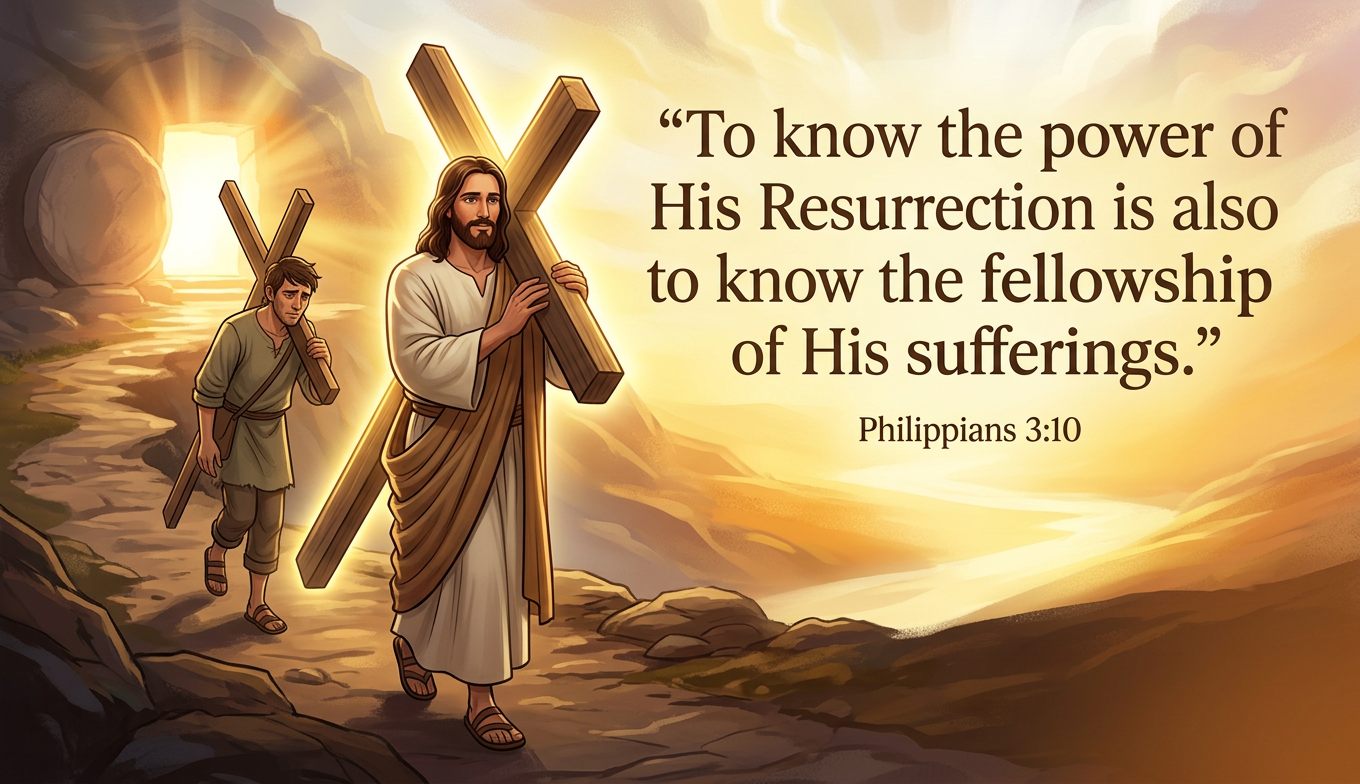
Christ has conquered.
The Cross was not a partial victory.
The Resurrection was not a symbolic victory.
Christ trampled down death by death.
He shattered the gates of Hades.
He defeated Satan.
He destroyed the dominion of darkness.
The Christian does not face death alone.
The Christian faces death united to Christ.
That is why the Church continually calls us to confession, repentance, prayer, fasting, almsgiving, participation in the Divine Mysteries, and growth in holiness.
Not because we are earning salvation.
But because we are learning to live in communion with the One who has already conquered death.
The Real Question
At the end of the day, whether one accepts tollhouses literally, symbolically, or remains uncertain altogether, the practical question does not change.
The question is not:
“What happens at the twentieth tollhouse?”
The question is:
“What is happening in my heart right now?”
Am I repenting?
Am I forgiving?
Am I pursuing holiness?
Am I becoming more like Christ?
Am I preparing to meet Him?
Because one day every theological debate will end.
One day every argument will be silenced.
One day every human soul will stand before the living God.
And on that day, the issue will not be whether we won an argument about tollhouses.
The issue will be whether we belonged to Christ.
Want the entire article distilled into one clear, printable page?
Download your free summary and keep it with you.
Get the free PDF + join thousands receiving short, practical Orthodox insights in the “Morning Brew with Father Don” to help you grow in Christ each week.