There are certain questions that seem simple on the surface but reveal something much deeper underneath.
One of those questions is this:
Did Mary have other children besides Jesus?
For many Christians, the answer appears obvious. After all, the Gospels mention the “brothers” and “sisters” of Jesus. If the Bible says Jesus had brothers, then surely Mary must have had other children, right?
But what if the question itself reveals a problem?
What if we have been reading an ancient text through modern eyes?
What if our assumptions about family, language, and culture are causing us to miss something the earliest Christians understood without controversy?
This is not merely a debate about a word. It is a question that touches the honor of the Mother of God, the continuity of Christian tradition, and whether we are willing to let Scripture speak from within its own world rather than forcing it into ours.
And that is where we must begin.
You can Now Listen to Each Article
The Problem With Reading the Bible Like a Modern American
One of the greatest challenges facing Christians today is that we often read the Bible as if it were written in twenty-first century America.
It was not.
The Scriptures emerged from a Middle Eastern world that viewed family, relationships, inheritance, and identity very differently than we do.
When we hear the word brother, we think of one thing.
A male sibling who shares the same mother and father.
That is the modern Western definition.
But that is not how the ancient world used the term.
In both Hebrew and Aramaic, the languages spoken by the Jewish people, there was no extensive vocabulary for every type of family relationship. Instead, broad family terms were commonly used.
A cousin could be called a brother.
A nephew could be called a brother.
A close kinsman could be called a brother.
Even members of the same tribe or nation were frequently referred to as brothers.
The language was far broader than our modern usage.
This is one of the reasons serious biblical study requires us to understand the world behind the text rather than simply imposing our own assumptions onto it.
Abraham and Lot: The Biblical Example Most People Miss
Perhaps the clearest example comes from the Old Testament.
In Genesis 13:8, Abraham says to Lot:
“Let there be no strife between you and me… for we are brethren.”
There is only one problem.
Lot was not Abraham’s brother.
Lot was Abraham’s nephew.
Genesis 11 clearly identifies Lot as the son of Haran, Abraham’s brother.
Yet Scripture still calls them brothers.
Why?
Because in the ancient Semitic world, the term “brother” often referred to close family relations, not merely biological siblings.
This is not a rare exception.
It is how the language functioned.
Therefore, when someone says, “The Bible mentions Jesus’ brothers, therefore Mary had other children,” they are making an assumption the text itself does not require.
The word does not automatically mean what modern English speakers assume it means.
Who Were the Brothers of Jesus?
The New Testament names several of the so-called brothers of Jesus.
James.
Joseph.
Simon.
Jude.
But when we carefully compare the Gospel accounts, something fascinating emerges.
These men are connected to another Mary, not to the Virgin Mary.
For example, at the Crucifixion, the Gospels mention Mary the wife of Clopas, who appears to be the mother of James and Joseph.
This creates an important question.
If these men already have a mother identified elsewhere in Scripture, why do we assume they must also be children of the Virgin Mary?
The earliest Christians did not make that assumption.
In fact, the ancient Church consistently understood these individuals as relatives, extended family members, or children from another family connection.
The notion that Mary bore additional children after Christ was not the universal belief of the early Church. Rather, the perpetual virginity of Mary was widely held and defended by Christians for centuries.
The Cross Gives Us Another Clue
There is another detail that deserves careful attention.
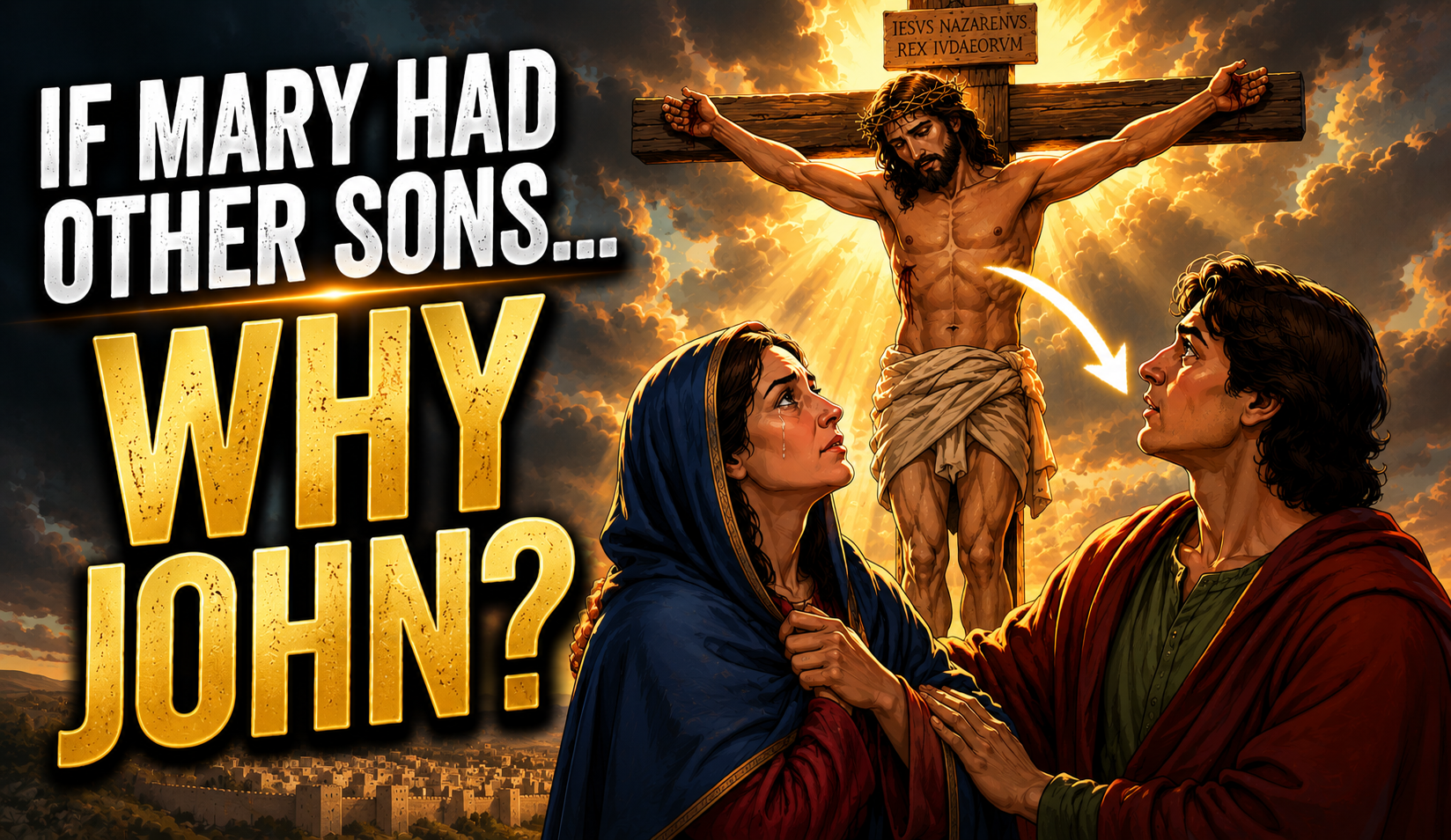
As Jesus hangs upon the Cross, He looks at His mother and says to the Apostle John:
“Woman, behold your son.”
Then He says to John:
“Behold your mother.”
From that hour, John takes Mary into his own home.
Now stop and think about that for a moment.
If Mary had several other biological sons, this scene becomes very strange.
In Jewish culture, the responsibility for caring for a widowed mother would normally belong to her sons.
Why would Jesus entrust Mary to John if she had multiple other sons available to care for her?
The simplest explanation is the one the Church has always understood.
Jesus was Mary’s only child.
And because He was preparing to depart from this world, He entrusted His mother to His beloved disciple.
The Testimony of the Early Church
Long before modern debates existed, Christians spoke about Mary as the Ever-Virgin.
This belief was not invented in the Middle Ages.
It appears in some of the earliest Christian writings and was embraced throughout much of the Christian world.
Church Fathers such as Athanasius of Alexandria, Gregory of Nyssa, Jerome, and many others defended Mary’s perpetual virginity.
For them, this was not merely a theological technicality.
It was connected to the uniqueness of Christ’s incarnation.
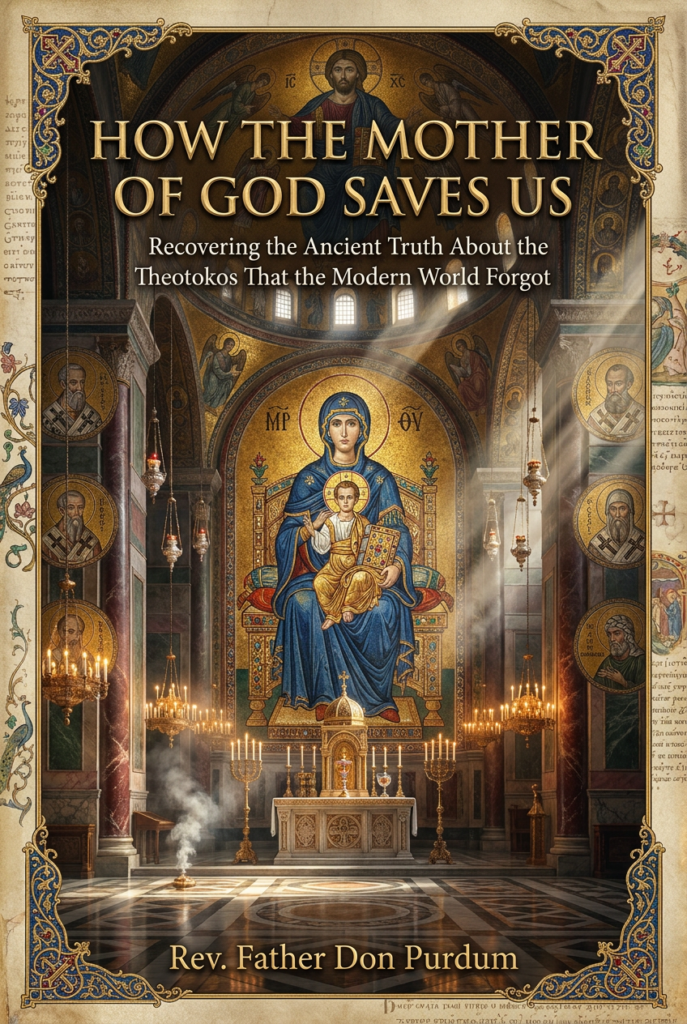
Mary was the Ark of the New Covenant.
The one who bore God in the flesh.
The vessel through whom salvation entered the world.
The question was never simply biological.
It was profoundly theological.
Why This Matters Today
Some people hear this discussion and wonder why it matters.
After all, does it really affect our salvation?
Perhaps not directly.
But it does affect how we approach Scripture.
It affects whether we read the Bible through the lens of modern assumptions or through the faith of the Church that preserved those Scriptures for us.
One of the great challenges of modern Christianity is that we often assume our interpretation is automatically correct because it seems obvious to us.
Yet many things seem obvious when we remove them from their historical and cultural context.
The ancient Christian faith constantly calls us to humility.
It reminds us that Scripture was not written to us, though it was written for us.
Before we tell the Bible what it means, we must first allow it to speak from within its own world.
A Final Thought
The question is not whether the Bible mentions the brothers of Jesus.
It does.
The real question is what the Bible means when it uses that word.
And once we understand the broader way ancient Jewish culture used family terminology, the argument becomes far less straightforward than many modern readers assume.
The Mother of God stands at the center of the greatest mystery in human history: God became man and dwelt among us.
Perhaps before rushing to modern conclusions, we should listen carefully to the voices of the earliest Christians who received the faith from the Apostles themselves.
Sometimes the greatest obstacle to understanding Scripture is not what the text says.
It is what we assume the text must mean.
And that is a lesson that reaches far beyond the question of Mary’s children.
Want the entire article distilled into one clear, printable page?
Download your free summary and keep it with you.
Get the free PDF + join thousands receiving short, practical Orthodox insights in the “Morning Brew with Father Don” to help you grow in Christ each week.