This is one of those questions that at first glance seems simple, but when you really begin to unpack it, you realize very quickly that it is profoundly theological. And the way we answer it will shape everything about how we understand Christ, salvation, and ultimately our relationship with God.
Now, many people will say that Jesus never explicitly said the words, “I am God.” And in a very narrow, modern sense, that is true. But that is also a misunderstanding of how first-century Jewish theology worked. Jesus did not need to use those exact words. Instead, He made claims that, within the context of His audience, were unmistakably divine.
So what I want to do is walk carefully through three passages of Scripture and allow the weight of the text to speak for itself.
John 8:54-58 — The Claim to Eternal Identity
In John chapter 8, Jesus is in a very intense exchange with the religious leaders. This is not a casual conversation. This is a theological confrontation.
And in verse 58, Jesus says something that stops everything:
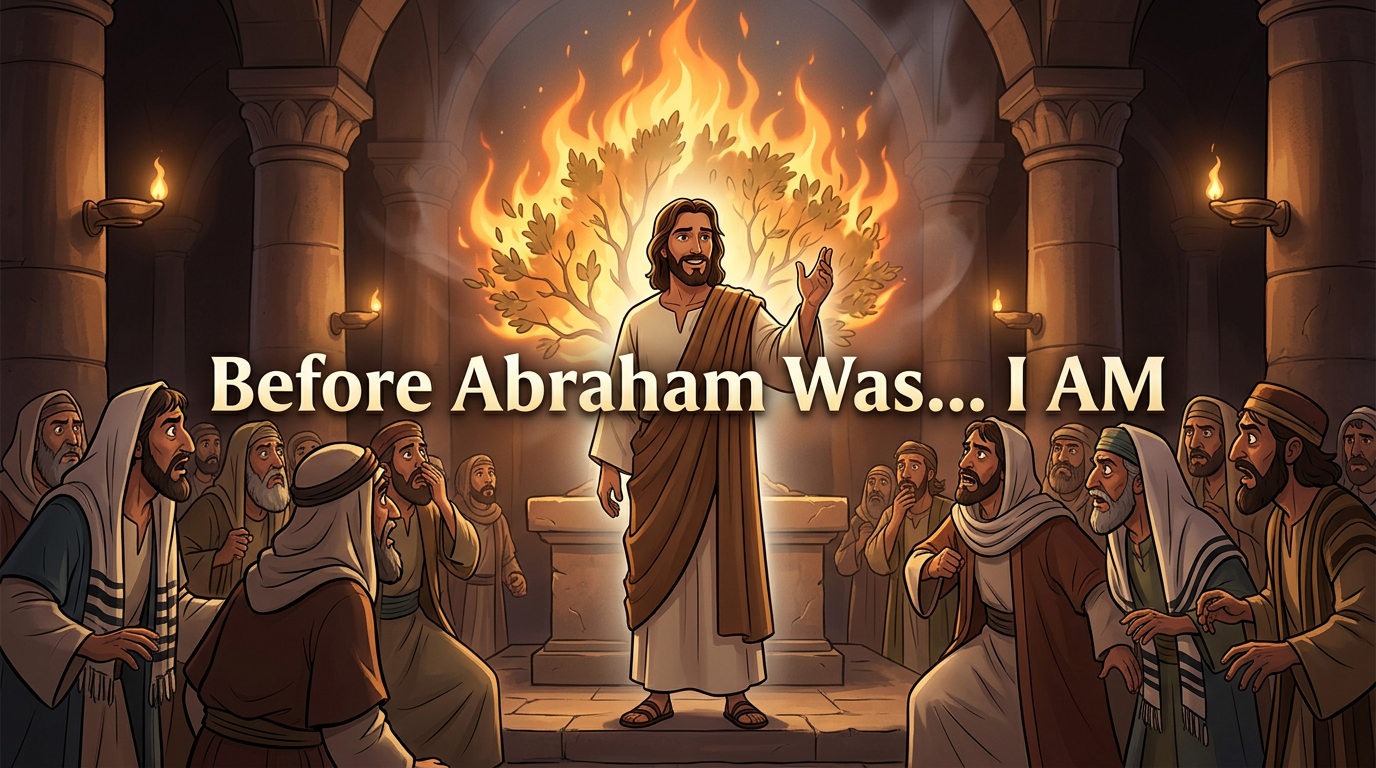
“Before Abraham was, I am.”
Now we have to slow down here, because this is not just a statement about age or existence.
Jesus does not say, “Before Abraham was, I was.” He says, “I am.”
That language reaches all the way back to Exodus 3:14, where God reveals Himself to Moses as “I AM.” In the Jewish mind, this is the divine name. It is a declaration of eternal, self-existent being. It is God identifying Himself as outside of time, uncreated, and unchanging.
So when Jesus uses that phrase, He is not being poetic. He is identifying Himself with the very identity of God.
And if there is any doubt about how His audience understood Him, look at their response. They pick up stones to kill Him. Why? Because they recognize this as blasphemy. In their minds, Jesus has just made Himself equal with God.
That reaction is critical. They understood exactly what He was claiming.
John 10:25-29 — Authority Over Life and Salvation
Now we move to John chapter 10, and again Jesus is speaking about His identity, this time using the imagery of a shepherd.
He says:
“My sheep hear my voice… I give them eternal life, and they will never perish, and no one will snatch them out of my hand.”
There are several layers here that we cannot miss.
First, Jesus claims that He gives eternal life. That is not a small statement. In Jewish theology, eternal life is something that belongs to God alone. No prophet, no teacher, no rabbi would ever claim the authority to grant eternal life.
Second, He says that no one can snatch His people out of His hand. That is absolute, sovereign authority over the souls of men and women.
And then when you look at the broader context, Jesus ties this directly to the Father. The same security that comes from the Father comes from Him. This is not a lesser authority. This is shared authority.
In other words, Jesus is not merely representing God. He is operating with the authority that belongs only to God.
Matthew 28:18-20 — Universal Authority and Divine Presence
After the resurrection, Jesus gathers His disciples and gives what we often call the Great Commission.
And He begins with this statement:
“All authority in heaven and on earth has been given to me.”
That is an all-encompassing claim. Not some authority. Not partial authority. All authority. Heaven and earth.
That is the language of sovereignty. That is the language of God.
Then He commands His disciples to baptize:
“In the name of the Father and of the Son and of the Holy Spirit.”
Notice that it is singular, “name,” not plural. And yet within that one name, you have the Father, the Son, and the Holy Spirit. Jesus places Himself within that divine identity.
And then He closes with this promise:
“I am with you always, to the end of the age.”
That is not something a mere human being can say. That is a claim to omnipresence. To be with all believers, at all times, in all places.
That is a divine attribute.
A Deeper Theological Reality
One of the things we have to understand is that theology is not just about learning information about God. It is about encountering Him as He has revealed Himself.
There is a difference between talking about God and actually knowing God.
And when you read these passages carefully, what you begin to see is that Jesus is not simply pointing people to God. He is revealing God.
He is speaking with divine authority. He is acting with divine power. And He is identifying Himself with the very nature of God.
Conclusion
So did Jesus claim to be God?
If we are looking for a modern, simplified sentence, we might miss it. But if we are willing to step into the context of the Scriptures and understand what He is actually saying, the answer becomes very clear.
In John 8, He claims the divine name.
In John 10, He exercises divine authority over life and salvation.
In Matthew 28, He claims universal authority and divine presence.
These are not the claims of a prophet.
These are not the claims of a moral teacher.
These are the claims of God.
And the real question is not just what did Jesus say about Himself.
The real question is, what are we going to do with what He said?
Grace and Peace,
Father Don