The idea that “books were removed from the Bible” is historically far more complex than many modern discussions suggest. Most conversations surrounding this subject immediately devolve into internet conspiracy theories, sensationalized claims about hidden gospels, or accusations that the Church intentionally suppressed “forbidden” truths from ordinary Christians. But the real issue is not nearly that simplistic.
The true issue is the development of the biblical canon itself. In other words, how did Jews and Christians come to recognize certain writings as authoritative Scripture while excluding others? That question forces us to wrestle with history, theology, apostolic tradition, and ultimately the authority of the Church itself.
From the perspective of the early Church, especially within ancient Christian communions such as the Eastern Orthodox Church and the Roman Catholic Church, several books now absent from most Protestant Bibles were not viewed as suspicious or controversial. They were widely read, quoted, preached from, and included within the life of the Church for centuries.
These books are commonly referred to as the Deuterocanonical Books, meaning “second canon,” or more commonly within Protestant circles, the Apocrypha.
Among these books are:
- Tobit
- Judith
- Wisdom of Solomon
- Sirach
- Baruch
- 1 and 2 Maccabees
- Additions to Esther
- Additions to Daniel
You can Now Listen to Each Article
For many Christians today, the discovery that these books once existed within Christian Bibles can feel shocking. Yet historically, their presence within the life of the Church was entirely normal. In fact, many of the earliest Christians, including the Apostles themselves, primarily used the Greek Septuagint, a translation of the Old Testament that included these writings.
This is where the conversation becomes deeply important because it reveals a larger issue that modern Christianity often struggles to confront honestly.
The Bible did not simply fall from heaven leather-bound and universally agreed upon. The canon of Scripture developed over time within the worshipping life of the Church. Long before there was a finalized New Testament, Christians gathered around apostolic teaching, liturgical worship, prayer, and the public reading of sacred texts. The Church existed before the finalized biblical canon did.
That historical reality creates an uncomfortable tension for many modern believers because it forces us to ask a difficult question:
Who had the authority to recognize Scripture in the first place?
That question sits at the center of this entire discussion.
The Septuagint and the Bible of the Early Church
When the Apostles carried the Gospel throughout the Roman Empire, they overwhelmingly used the Greek translation of the Old Testament known as the Septuagint, often abbreviated as the LXX.
This matters far more than most people realize.
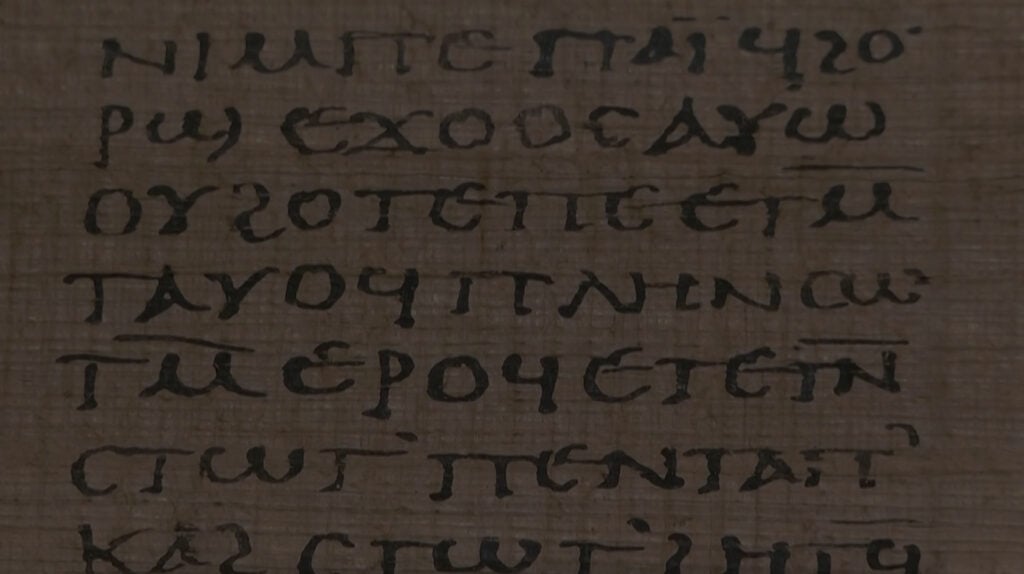
The Septuagint included books that are absent from most Protestant Bibles today. These books were not hidden, secret, or unknown. They were read openly in the churches, referenced by bishops, quoted by theologians, and embraced within Christian worship for centuries.
The early Christians did not view these writings as foreign additions to the faith. They inherited them as part of the sacred tradition they received.
Church Fathers such as St. Irenaeus, St. Clement of Alexandria, Origen, St. Athanasius, and St. Augustine all referenced or utilized these books in various ways throughout their writings.
Even St. Jerome, who personally preferred the Hebrew canon while translating the Latin Vulgate, still included the Deuterocanonical books because they had long been received by the Church.
This is where modern Christianity often collides with the worldview of the ancient Church.
Today, many believers approach theology through a modern rationalistic lens shaped by the Enlightenment. We tend to assume every theological issue must fit neatly into a system that can be dissected, categorized, and explained with precision. But ancient Christianity was not built upon rationalism alone. It was built upon participation in the life of God through worship, sacrament, ascetic struggle, prayer, and continuity with apostolic tradition.
Orthodoxy especially has preserved this ancient worldview.
The Scriptures were never meant to exist detached from the worshipping life of the Church. They emerged from within it.
The Councils That Recognized These Books
Several important Church councils formally recognized these books as part of the Christian canon, including:
- The Council of Rome in 382 AD
- The Council of Hippo in 393 AD
- The Council of Carthage in 397 AD
For over one thousand years, Christians throughout much of the world read these books as Scripture.
This historical reality raises an important question that modern Protestantism must wrestle with honestly:
If these books were accepted and utilized by much of historic Christianity for centuries, on what authority were they later removed?
The Protestant Reformation Changed the Canon
The major turning point came during the Protestant Reformation in the 16th century.
Martin Luther and other Reformers began challenging certain doctrines and practices of the Roman Catholic Church. In doing so, they also reevaluated the canon of Scripture itself.
One of the primary arguments made by the Reformers was that the Old Testament should follow the later Hebrew Jewish canon rather than the Greek Septuagint used by the early Christians.
As a result, the Deuterocanonical books were moved into a separate section often called the “Apocrypha.”
Eventually, many Protestant publishers removed them altogether.
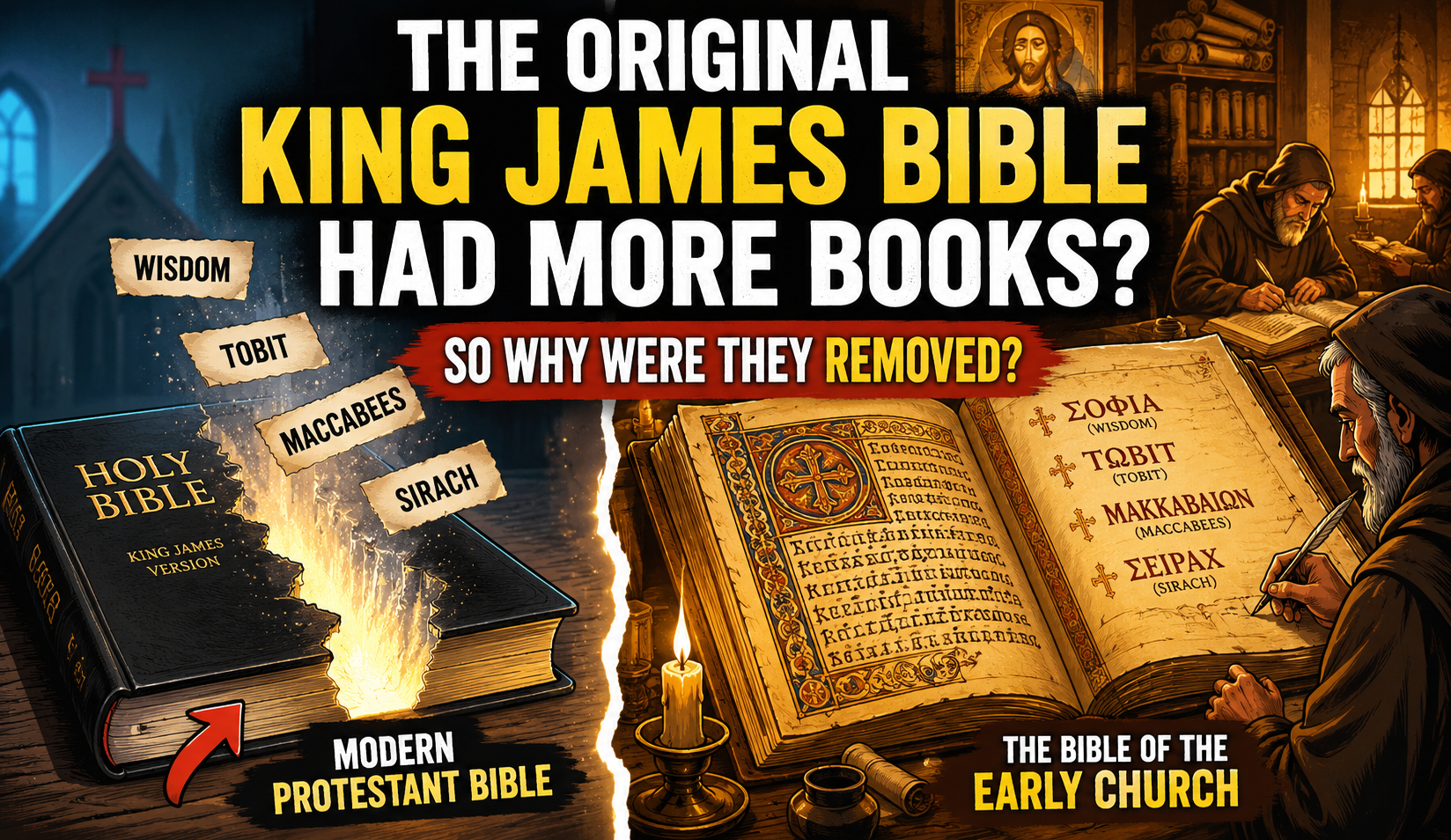
Ironically, the original 1611 King James Bible still contained the Apocrypha.
Most people today have never even seen that.
Why Were These Books Rejected?
There were several reasons.
1. The Reformers Preferred the Hebrew Canon
The Reformers believed the Old Testament should reflect the Jewish canon preserved in Hebrew rather than the broader Septuagint canon used by the ancient Church.
But this raises another important historical question:
Why should Christians base the Old Testament canon primarily upon rabbinic Judaism that rejected Christ rather than upon the canon used by the Apostles and the early Church?
That is not merely an academic question.
It is a deeply theological one.
2. Certain Doctrines Were Problematic
Some of the Deuterocanonical books contain teachings that aligned closely with historic Catholic and Orthodox theology.
For example:
2 Maccabees discusses prayers for the dead.
Wisdom of Solomon contains profound theological imagery regarding righteousness, the soul, and divine wisdom.
Sirach speaks deeply about almsgiving, repentance, humility, and virtue.
These passages complicated certain Protestant theological positions developing during the Reformation.
3. A Shift Toward Rationalism
The deeper issue, in many ways, was philosophical.
The ancient Christian world embraced mystery.
Modern Christianity increasingly embraced analysis.
The ancient Church saw theology as participation in divine life.
Modernity increasingly reduced theology to propositions and systems.
This is one of the reasons Orthodoxy often feels foreign to the modern Western mind. Orthodoxy never fully surrendered itself to Enlightenment rationalism.
The Orthodox Church still sees Scripture as something inseparable from worship, sacrament, asceticism, prayer, and holy tradition.
What About Books Like Enoch or the Gospel of Thomas?
This is where confusion often explodes online.
Books like:
- The Gospel of Thomas
- The Gospel of Peter
- The Gospel of Judas
were never universally accepted by the Church.
Most emerged much later and often carried Gnostic theology that contradicted apostolic Christianity.
The Book of Enoch is more complicated.
It was highly respected in some ancient Jewish and Christian circles and is still canonical in the Ethiopian Orthodox Church. Portions of Enoch are even referenced in the New Testament Epistle of Jude.
But unlike the Deuterocanonical books, Enoch was not universally received throughout the broader Church.
So we must distinguish between:
- books widely used by the historic Church for centuries
- and books that were fringe, disputed, or clearly heretical
These are not the same category.
The Bigger Spiritual Problem
I believe the deeper issue here is not merely whether seven books belong in the Old Testament.
The deeper issue is this:
Who has the authority to define Christianity?
The modern world teaches radical individualism.
The ancient Church taught continuity.
Modern Christianity often asks:
“What do I personally think the Bible means?”
Ancient Christianity asked:
“How has the Church received and lived this truth from the Apostles?”
Those are radically different approaches.
And the consequences of that divide are everywhere around us today.
Why This Matters Spiritually
This discussion is not about winning arguments online.
It is about rediscovering the historic faith.
It is about understanding that Christianity did not begin in the 1500s.
It did not begin with modern denominations.
It did not begin with celebrity pastors or YouTube theologians.
The faith was handed down through martyrs, bishops, monks, saints, councils, liturgy, prayer, fasting, and worshipping communities that preserved the Gospel through bloodshed and persecution long before modern Christianity existed.
And when we study these questions honestly, we are often confronted with an uncomfortable reality:
The Christianity of the ancient Church looks far more Orthodox and sacramental than modern Western Christianity is often prepared to admit.
The question is whether we are willing to wrestle honestly with that truth.
Want the entire article distilled into one clear, printable page?
Download your free summary and keep it with you.
Get the free PDF + join thousands receiving short, practical Orthodox insights in the “Morning Brew with Father Don” to help you grow in Christ each week.