
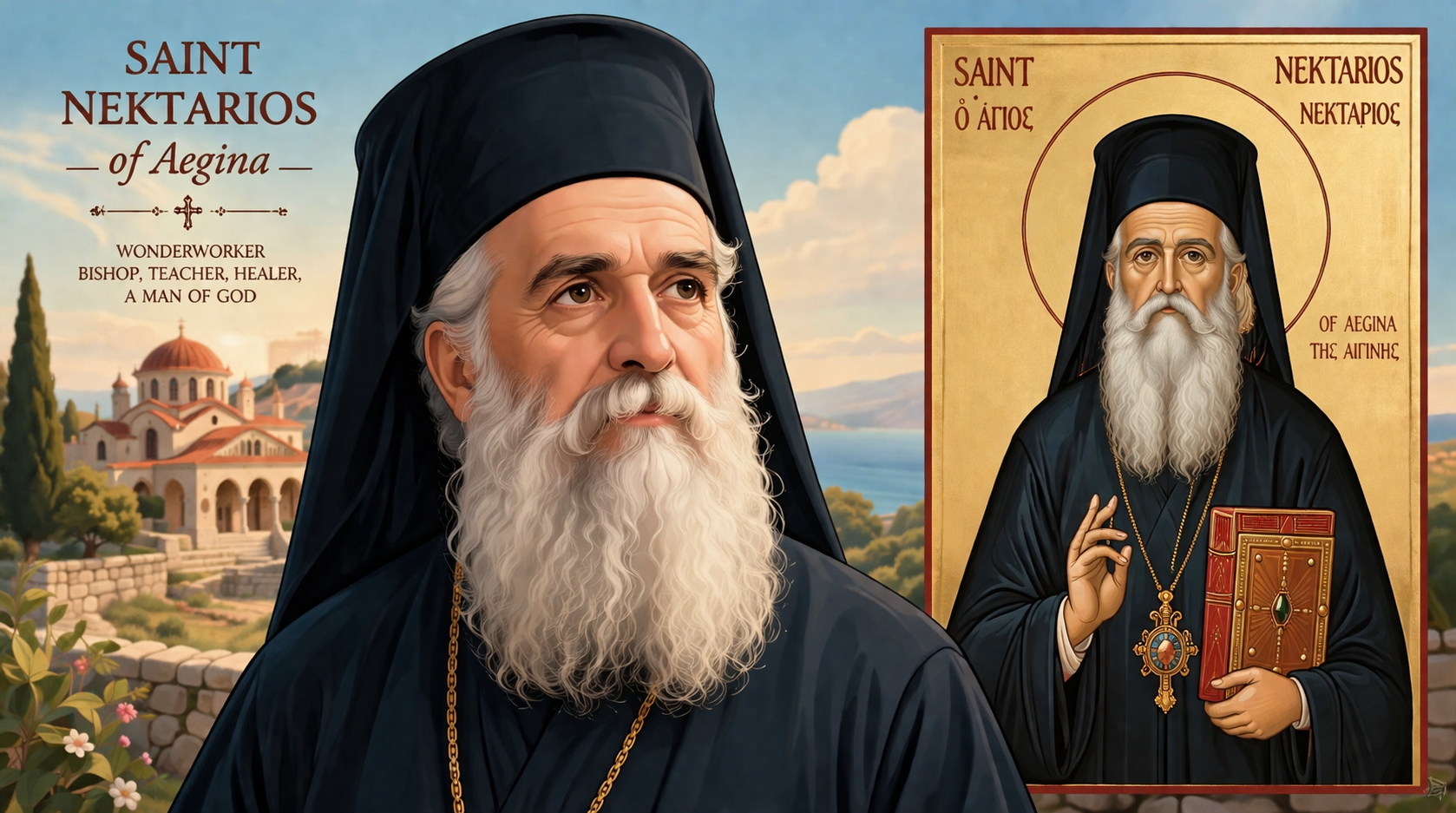
When I reflect on the life of Saint Nektarios of Aegina, I am confronted with a reality that cuts against everything our culture teaches about success, justice, and recognition. His life was not marked by applause, but by slander. Not by advancement, but by humiliation. And yet, through these very trials, his sanctity was revealed.
His story is not distant. It is deeply personal for anyone who has suffered injustice, rejection, or prolonged hardship.
A Humble Beginning and a Life of Struggle
Saint Nektarios was born in 1846 in Selymbria, into poverty. From his earliest years, he experienced deprivation, working difficult jobs simply to survive. Yet even in those conditions, his heart was fixed on God.
Holiness does not begin in comfort. It is often formed in constraint, in limitation, and in longing.
Through perseverance, he was ordained and eventually rose to prominence within the Church, becoming a bishop in Alexandria. By every outward measure, his life seemed to be moving toward stability and influence.
But that was not the path God allowed him to walk.
Slander, Injustice, and Exile
At the height of his ministry, Saint Nektarios was falsely accused by fellow clergy of ambition and disloyalty. These accusations were not only untrue, they were devastating.
He was removed from his position, stripped of his authority, and expelled from Alexandria.
There are moments in life when truth does not prevail in the immediate sense. There are seasons where integrity is not rewarded, but punished. He lived in that reality.
What stands out to me is not only what he suffered, but how he responded.
He did not retaliate.
He did not attempt to destroy those who harmed him.
He did not fight to reclaim his reputation.
Instead, he embraced humility, silence, and trust in God.
This reflects a deeper spiritual truth. What we experience outwardly is often rooted in realities we cannot see. The spiritual and physical are inseparable, and the struggles we face are not merely human conflicts
Hidden Holiness on Aegina
After his exile, he eventually settled on the island of Aegina, where he founded a women’s monastery.
There, he lived quietly.
He served. He labored. He wrote. He prayed.
Even in this place, he continued to be misunderstood and dismissed by many.
Most of the spiritual life is lived in hiddenness. There is no audience, no affirmation, no visible reward.
This is where discouragement often takes hold. Discouragement is the loss of courage, the surrender of the will to continue in faith .
Saint Nektarios did not surrender that courage.
His Death and the Revelation of Glory
He died in 1920, largely unknown and unrecognized by the world.
Yet almost immediately after his death, miracles began to occur through his intercessions. His holiness, hidden during his life, became undeniable.
God revealed what the world had overlooked.
Why He Was Glorified a Saint
On April 20, 1961, the Ecumenical Patriarchate of Constantinople formally proclaimed Bishop Nektarios a Saint.
This is significant when you consider the timeline:
- He died in 1920, largely unrecognized
- His holiness became evident through miracles and widespread veneration
- Over 40 years later, the Church formally affirmed what the faithful had already come to know
His canonization reflects a deeply Orthodox reality: sanctity is not manufactured by institutional declaration. It is revealed over time through a life of union with God and confirmed through the witness of the Church.
Saint Nektarios was canonized because his life bore unmistakable witness to:
- Humility in the face of injustice
- Endurance through prolonged suffering
- Faithfulness without recognition
- Deep union with God
Sainthood is not about external success. It is about transformation through participation in the life of Christ.
What His Life Means for Us
When I consider his life, I cannot help but see its relevance to our present condition.
Many people are walking through:
- Misunderstanding and false judgment
- Seasons of hardship without resolution
- Emotional and spiritual exhaustion
Scripture reminds us that suffering, stress, and trials are part of the human condition. They are not anomalies. They are expected realities in a fallen world .
The question is not whether we will suffer. The question is how we will respond.
A Personal Confrontation
His life forces me to ask difficult questions.
When I am wronged, how do I respond?
Do I defend myself at all costs, or do I guard my soul?
Do I demand immediate justice, or do I trust in God’s timing?
Do I allow discouragement to take root, or do I continue forward in faith?
These are not theoretical questions. They define the trajectory of my spiritual life.
Final Reflection: The Quiet Power of Faithfulness
Saint Nektarios reveals a truth that is both sobering and liberating.
God sees what others overlook.
Truth is not determined by public opinion.
Vindication may come, but not on my timeline.
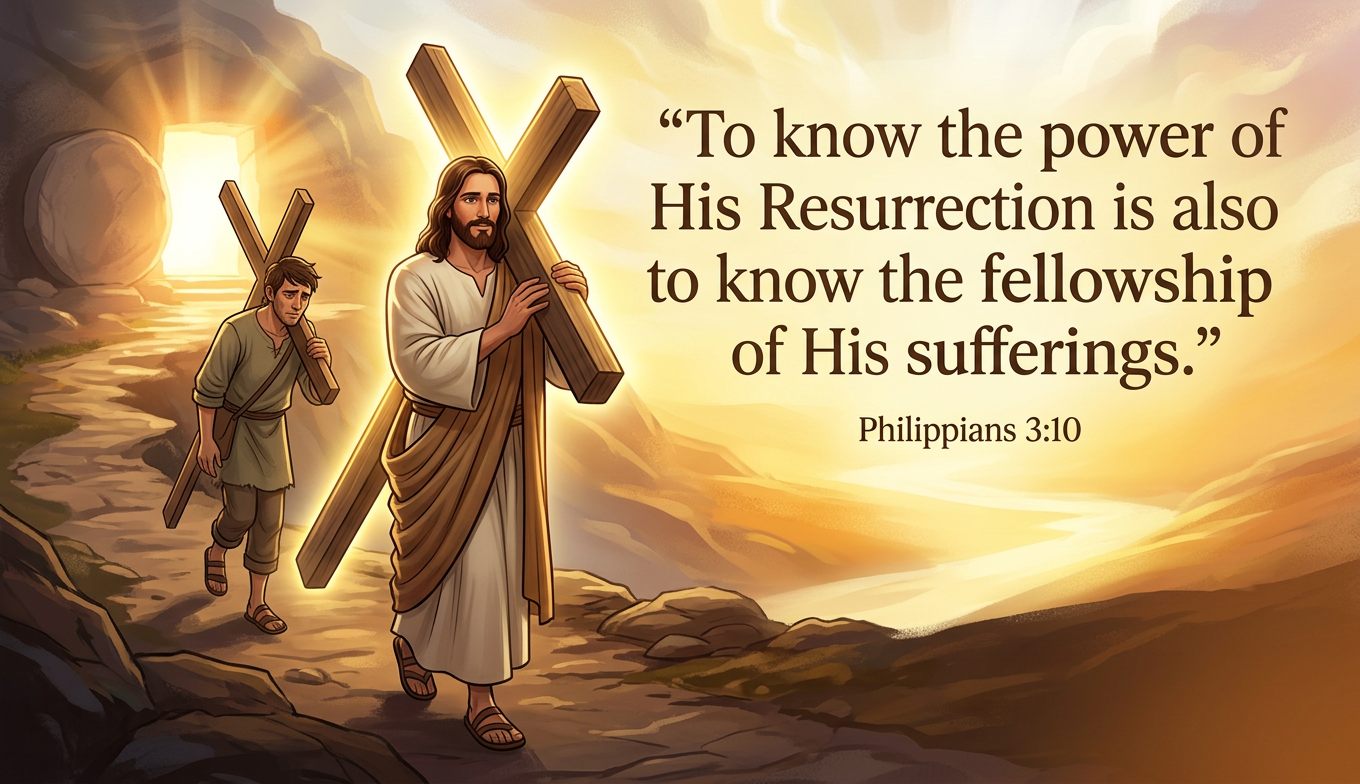
Most importantly, suffering, when united to Christ, is not meaningless. It becomes transformative.
His life is not simply a story to admire. It is a call to endure, to trust, and to remain faithful even when everything visible suggests otherwise.
That is the path of the saints.
Would you like to share your thoughts? Below is the Facebook post for this article. Please leave a comment and engage with me.
Grace and Peace,
Father Don
P.S. Would you like to learn more about the path of being known by God and knowing Him?
Join me every Monday evening for a live catechism (or just watch the replays) as we study things like the Nicene Creed, Enchantment, and Spiritual Growth and Warfare through the Ladder of Divine Ascent.
Click Here to Learn More or Join Us