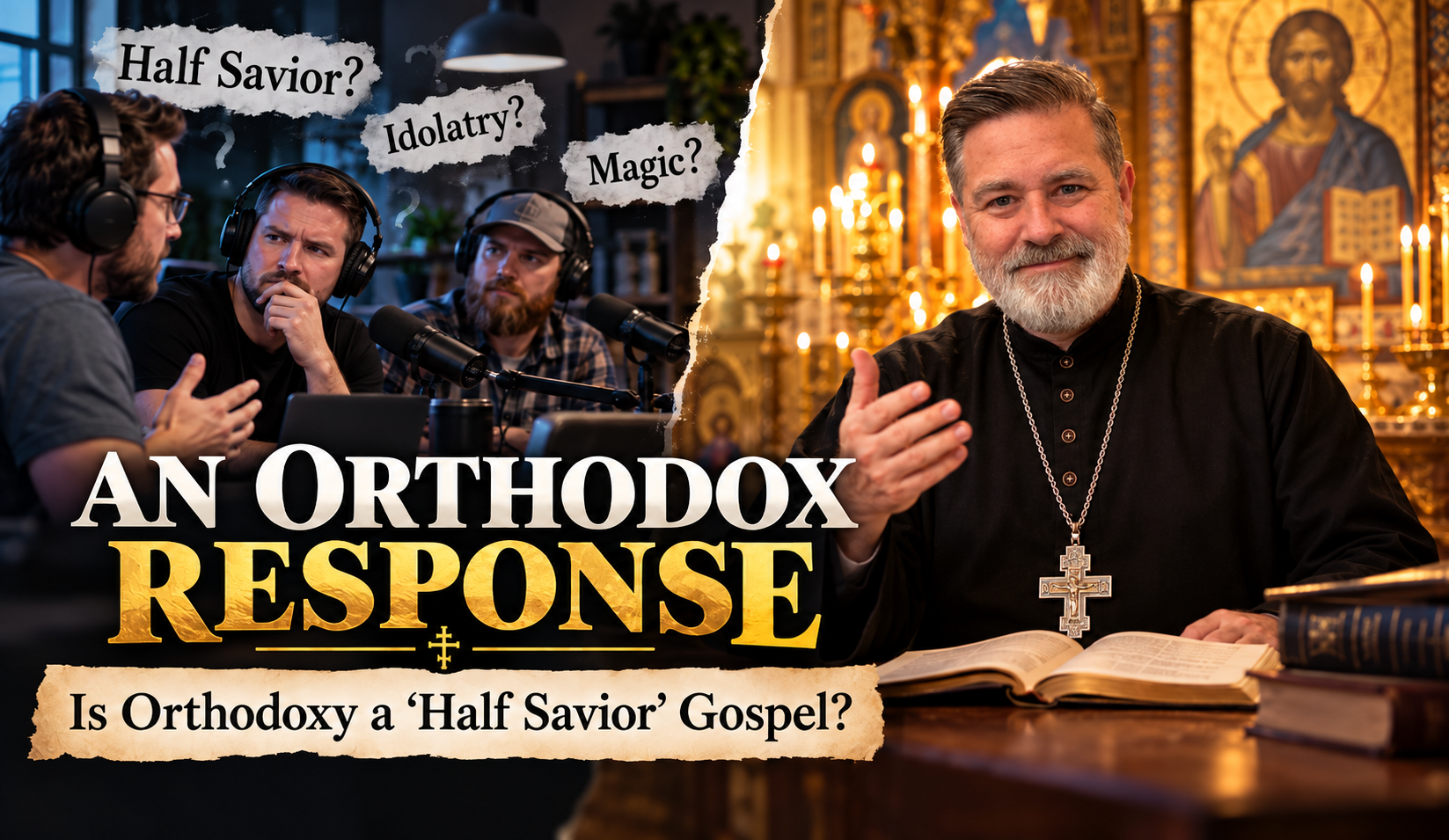
What if I told you that one of the most common accusations against the early Church that it added a man-made requirement for salvation actually reveals a deep misunderstanding of who Jesus Christ is?
This is not a minor historical dispute. It is not a niche theological debate reserved for scholars or historians. At its core, this question touches the very heart of the Gospel itself.
Did the Church invent new requirements for salvation?
Or did it defend something essential about the identity of Christ?
At first glance, the claim sounds serious, even alarming: that the Second Council of Nicaea required Christians to venerate icons as a condition of salvation, allegedly grounding this in the authority of Christ and the Apostles. This argument is most commonly advanced in modern times by Protestant apologists, particularly within traditions shaped by the Reformation’s rejection of sacred images.
Historically, this critique emerges out of the 16th-century iconoclastic movements influenced by figures like John Calvin and Huldrych Zwingli, who rejected not only abuses of imagery but often the theological framework that had supported their use for centuries. In distancing themselves from medieval Catholic practice, many Reformers collapsed the distinction between veneration and worship, leading to a broader suspicion of images altogether. That interpretive framework has been inherited and amplified in certain modern apologetic circles.
For many today, this claim feels like proof that the Church drifted from the simplicity of the Gospel and began adding human traditions in place of divine truth.
But here is the problem. That claim is not just historically inaccurate. It is theologically shallow.
Because what is really being debated is not whether Christians should honor images.
What is really being debated is this:
Did God truly become man in a way that can be seen, touched, and depicted?
And if He did, what does that mean for how we understand matter, worship, and salvation itself?
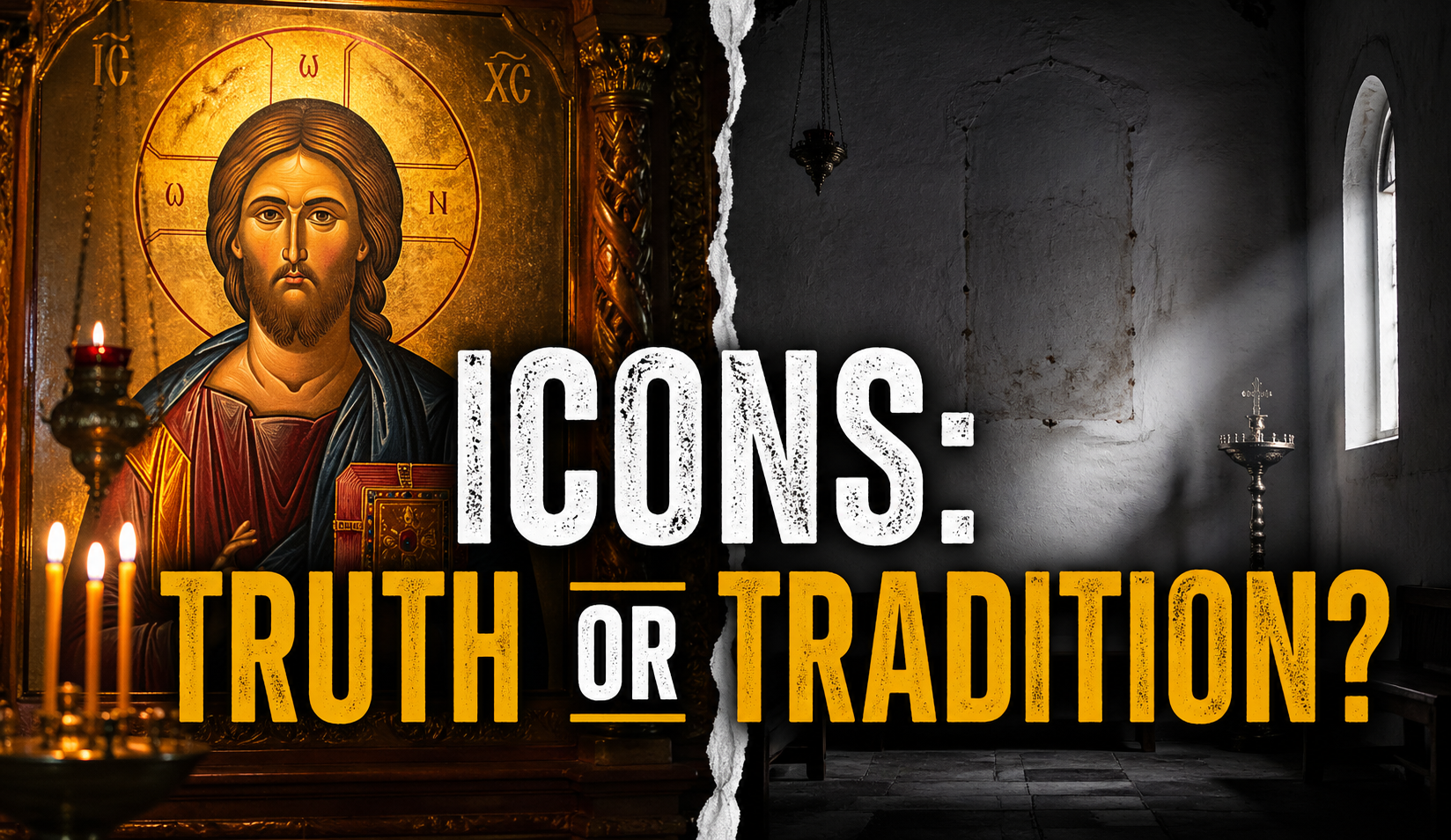
This article is not about defending religious artwork.
It is about clarifying what the Church actually taught, what the council actually said, and why rejecting icons was understood not as a minor disagreement, but as a distortion of the Incarnation itself.
Because until we get that right, we will continue to misunderstand not only the Church, but Christ Himself.
The Real Question Behind the Question
Before we even examine the council itself, we must ask: What is really being claimed here?
The assertion assumes three things:
- That the early Church “added” doctrines over time
- That icon veneration is a kind of external ritual requirement for salvation
- That such a requirement lacks grounding in Christ and the Apostles
If any of these assumptions are flawed, then the entire argument collapses.
And indeed, they are.
The Context: A Crisis Over the Incarnation
The controversy that led to the council was not about art. It was about Christology.
The iconoclasts argued:
- God is invisible
- Therefore, He cannot be depicted
- Therefore, icons are idolatrous
But the Church responds with the Gospel itself:
“The Word became flesh.” (John 1:14)
And the council makes this logic explicit. It teaches:
“We define with all certitude and accuracy that… the venerable and holy images… are to be set forth in the holy churches of God… for the more frequently they are seen in artistic representation, the more readily are men lifted up to the memory of their prototypes.”
This is not about decoration.
It is about remembering, proclaiming, and safeguarding the reality that God has been seen.
What the Council Actually Taught
The council makes a critical distinction that is often ignored by critics:
“The honor (proskynesis) paid to the image passes to the prototype; and he who venerates an image venerates the person represented in it.”
And just as importantly:
“True worship (latreia)… is to be given to the divine nature alone.”
This is decisive.
- Worship belongs to God alone
- Veneration is honor directed through the image to the person
So when a Christian venerates an icon of Christ, he is not worshiping wood and paint.
He is confessing that Christ truly became visible.
Did the Council Make Icon Veneration a “Condition of Salvation”?
Here is where precision matters.
The council does issue a strong condemnation:
“If anyone does not confess that Christ our God can be represented in His humanity, let him be anathema.”
Now, this is where many misunderstand.
This is not saying:
“If you do not perform acts of veneration, you fail a ritual requirement.”
It is saying:
“If you deny that Christ can be depicted, you are denying something essential about who He is.”
Because to deny depiction is to imply:
- Christ was not truly seen
- His humanity is not fully real
- The Incarnation is compromised
And if the Incarnation is compromised, then salvation itself is at stake.
So again, the issue is not ritual compliance.
It is Christological truth.
Apostolic Tradition: Explicit or Implicit?
The council also grounds its teaching in tradition:
“This is the faith of the Apostles. This is the faith of the Fathers. This is the faith of the Orthodox. This faith has established the universe.”
Now, this does not mean there is a recorded command saying “you must venerate icons.”
Rather, it means the theological implications of the Incarnation, handed down from the Apostles, lead to this conclusion.
The Church is not inventing something new.
It is protecting what has always been believed about Christ.
The Modern Misunderstanding
Much of the confusion today comes from reducing salvation to:
- A legal status
- A checklist
- A minimal set of beliefs
But the Church has always understood salvation as:
- Union with Christ
- Participation in His life
- Transformation into His likeness
And within that framework, doctrine is not optional.
It is the boundary that preserves reality.
To distort doctrine is to distort Christ.
So What Should We Say?
A historically and theologically accurate statement would be:
The Second Council of Nicaea affirmed that the veneration of icons is a necessary expression of orthodox Christian faith because it safeguards the truth of the Incarnation, and it condemned the rejection of icons as a denial of that truth, not as a failure to perform a ritual act.
That is a very different claim than what is often presented.
Final Thought: Why This Still Matters
This is not an ancient, irrelevant debate.
We live in a world that:
- Separates the spiritual from the physical
- Reduces Jesus to an idea
- Struggles to believe that God truly entered matter
And against that confusion, the Church boldly proclaims, visibly:
- God became flesh
- God was seen
- God can be depicted
Icons are not optional decorations.
They are a theological proclamation in color and form.
And ultimately, the question is not:
“Do you venerate icons?”
The question is:
“Do you truly believe that Jesus Christ has come in the flesh?”
Because everything flows from that.