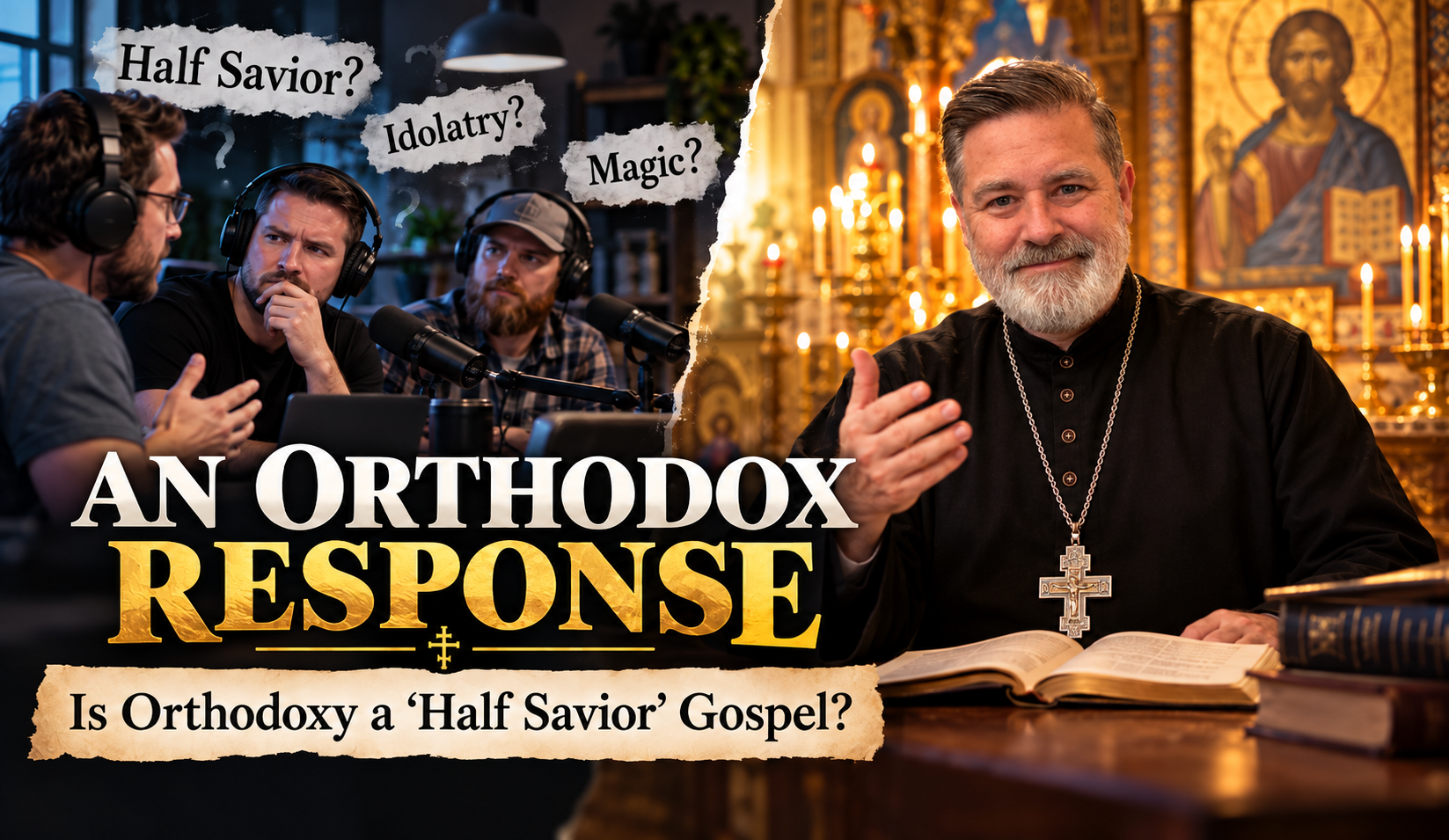
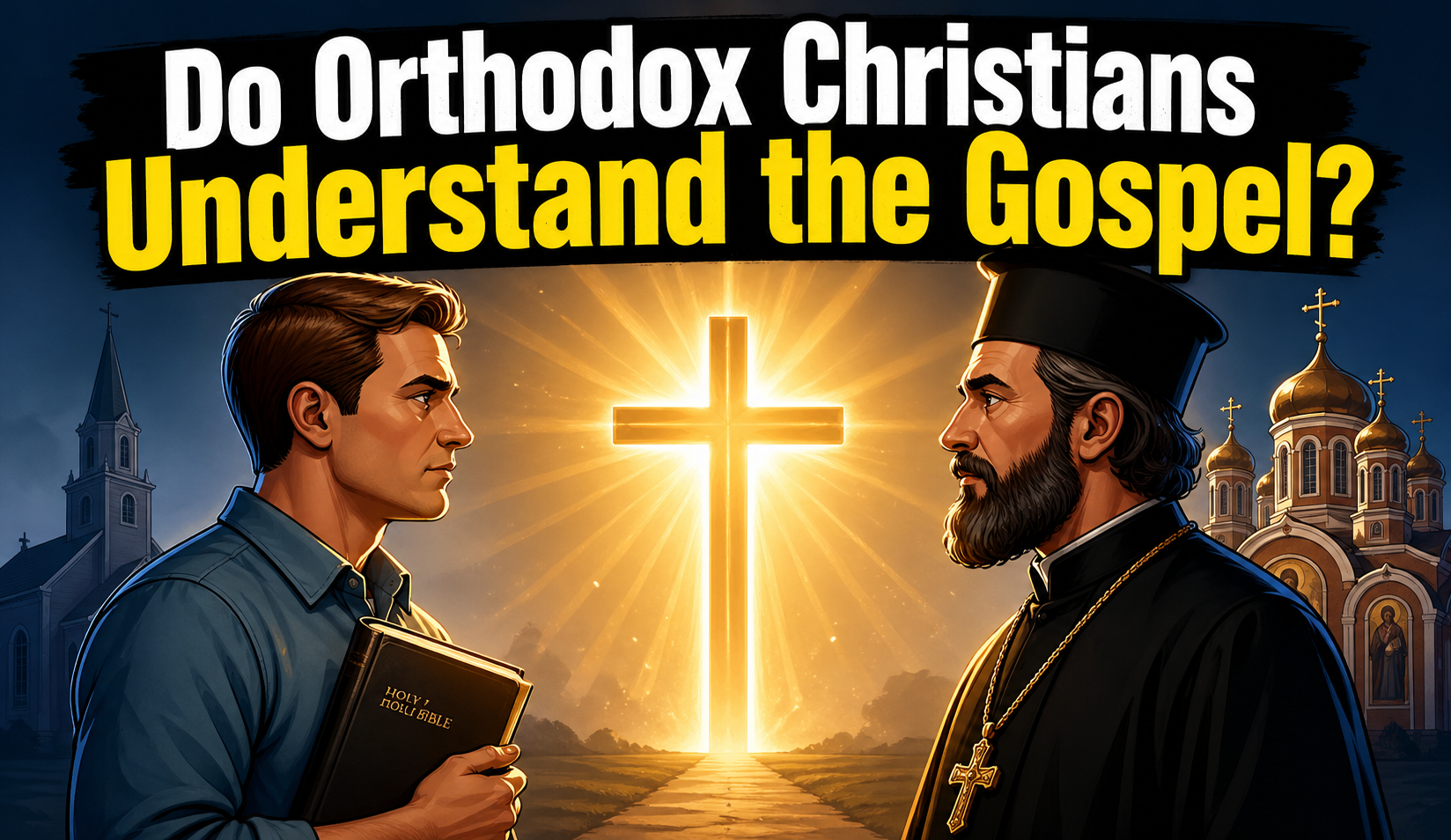
“Orthodox Christians don’t understand the Gospel.”
That’s not just a disagreement. That’s a serious accusation.
And when someone says something like that, you’re left with a choice. You either ignore it, or you take it seriously enough to ask the deeper question:
Do we actually know what the Gospel is?
Not what we’ve heard.
Not what we’ve assumed.
Not what we can repeat in a sentence.
But what the Gospel truly is according to Christ, the apostles, and the life of the Church.
So let’s answer it directly. Not defensively, but clearly. Not with slogans, but with truth.
The Gospel Is Not Just a Statement. It Is the Work of God in Christ
In many modern Christian circles, the Gospel is often reduced to a short statement. Something like, “Jesus died for your sins so that if you believe in Him, you are saved.”
There is truth in that. But the issue is not whether it is true. The issue is whether it is complete.
From an Orthodox perspective, the Gospel is not merely a statement to be affirmed. It is the full reality of what God has accomplished in Jesus Christ.
The Gospel is this:
God became man in Jesus Christ.
He entered into our broken condition.
He took on death itself.
He destroyed death through His own death.
He rose again.
And now He invites us into union with Him so that we may share in His life.
That is the Gospel.
The Problem Is Bigger Than Guilt
One of the core differences between how many Protestants and the Orthodox Church understand the Gospel comes down to how we define the human problem.
If the problem is primarily guilt, then the solution is forgiveness.
But if the problem is deeper, if it is death, corruption, separation from God, and a distortion of our very nature, then the solution must be deeper as well.
Christ did not come simply to make a legal declaration about you.
He came to restore you.
He came to heal what has been broken.
He came to bring you back into communion with God.
This is why theology is not just about talking about God. It is about knowing Him. It is about experiencing Him. It is about walking in what the early Church called “the Way,” a life of unity with Christ and purity of heart.
The Cross Is Victory, Not Just Payment
In some traditions, the Cross is understood almost exclusively as a transaction. A payment made to satisfy a penalty.
The Orthodox Church has never denied that Christ died for our sins. But we do not stop there.
The Cross is not only a sacrifice. It is a victory.
Christ enters into death, not as a victim who is overpowered, but as the One who destroys it from the inside out.
Death could not hold Him. And because of that, death no longer has the final word over us.
If we reduce the Cross to a transaction, we miss the magnitude of what actually happened.
The Resurrection Is the Center of the Gospel
If you want to understand the Gospel as the Orthodox Church proclaims it, you must understand this clearly.
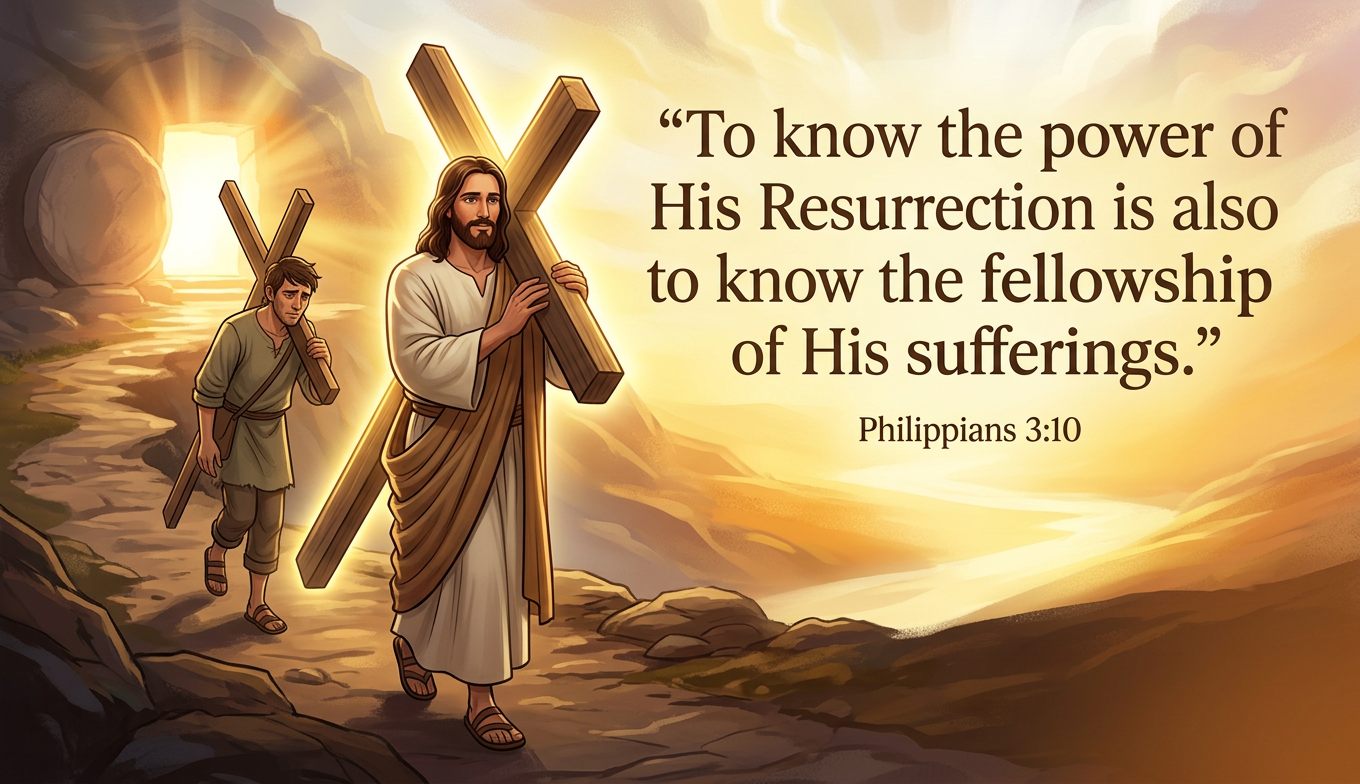
The Resurrection is not an add-on.
It is the center.
The good news is not simply that Christ died.
The good news is that Christ is risen.
Death has been defeated.
Life has been restored.
And humanity has been lifted up in Him.
This is why the Church proclaims, not just once a year but continually, that Christ is risen. Because everything flows from that reality.
The Gospel Is Something You Enter Into
Another place where confusion often arises is how salvation is understood.
For many, salvation is a moment. A decision. A declaration.
In the Orthodox Church, salvation is a life.
It is something you enter into.
It is something you live.
It is something that transforms you over time.
This is why the spiritual life matters. This is why repentance matters. This is why the sacraments matter.
Because the Gospel is not just information. It is participation.
You are not simply told that you are united to Christ. You are invited to actually become united to Him.
And this is where we must recover something that has been lost in much of modern thinking. We cannot separate the spiritual from the physical. They are deeply interconnected. What happens in the spiritual realm affects our lived reality in ways we often do not fully understand.
Why the Misunderstanding Exists
So why would someone say that Orthodox Christians do not understand the Gospel?
In many cases, it comes down to expectations.
If someone is expecting a short, precise formula, then the Orthodox answer can feel too broad.
But that is because we are not trying to reduce the Gospel.
We are trying to remain faithful to its fullness.
The Gospel is not a slogan. It is the story of God redeeming the world.
It is the life of Christ.
It is the defeat of death.
It is the restoration of humanity.
And it is the invitation for you to enter into that life.
A Clear Answer
If I were to answer your friend as plainly as possible, I would say this:
The Gospel is the good news that Jesus Christ, the Son of God, became man, defeated sin and death through His Cross and Resurrection, and invites us into union with Him so that we may be transformed and share in His life.
That is not a rejection of the Gospel.
That is the fullness of it.
Final Thought
At the end of the day, the question is not whether we can define the Gospel in a sentence.
The question is whether we are living it.
Because the Gospel is not just something to believe.
It is something to enter into.
It is something to be transformed by.
And it is, ultimately, the restoration of your life in Christ.