
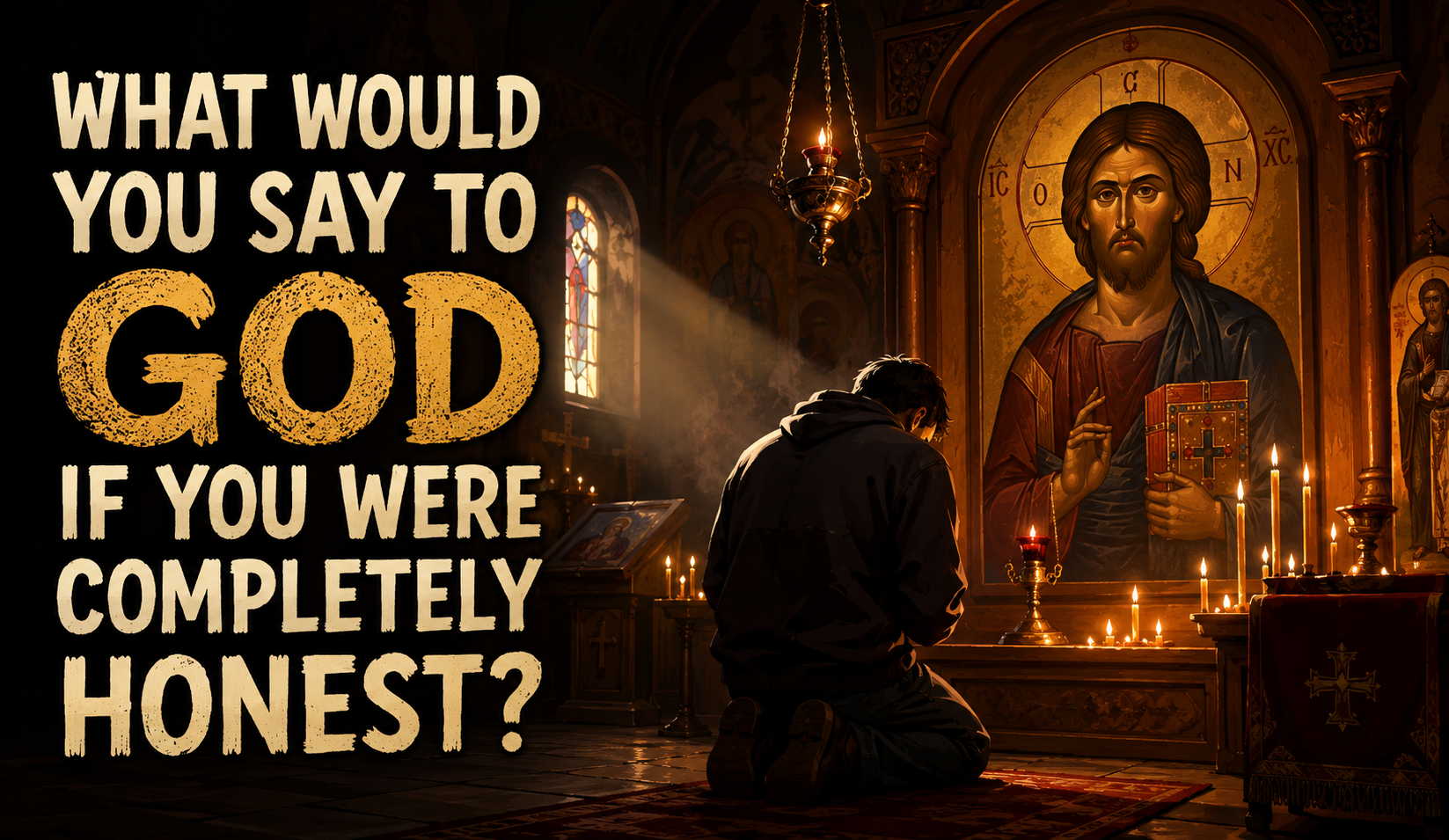
There comes a moment in nearly every Christian life when the soul grows tired of carrying its own weight. We try to hide our wounds, justify our sins, minimize our passions, or simply distract ourselves from what is happening deep within the heart. Yet no matter how far we run, there remains within us a longing to be known completely and loved completely.
This is where confession begins.
Confession is not merely the listing of failures. It is not a courtroom where God waits to condemn you. It is not spiritual humiliation for humiliation’s sake. Confession is the return of the human person to communion with God. It is the opening of the heart before Christ with honesty, humility, and hope.
Think of confession as a conversation between you and God.
What do you want to say to Him?
Where have you wandered?
What wounds are you carrying?
What sins have become chains?
What fears keep you from intimacy with Him?
How has your heart grown cold?
And perhaps just as importantly: How has He loved you despite all of it?
The sacrament of confession exists because God desires not merely to forgive us, but to heal us.
You can Now Listen to Each Article
Confession Is About Relationship, Not Mere Rule-Keeping
In much of modern Christianity, sin is often reduced to breaking rules. While sin certainly violates God’s commandments, the Orthodox understanding goes much deeper. Sin is fundamentally the distortion of communion with God. It is the movement away from life itself.
As I often teach, Christianity is not merely about information about God, but participation in the life of God. The early Christians were called “The Way” because Christianity is a path of union with Christ, not simply intellectual agreement.
Confession restores us to that path.
St. Isaac the Syrian wrote:
“This life has been given to you for repentance; do not waste it in vain pursuits.”
Repentance in the Orthodox Church is not merely feeling guilty. The Greek word metanoia means a change of mind, a transformation of heart, a turning of the entire person back toward God.
Confession is therefore deeply relational.
You are not informing God of something He does not know. You are surrendering what you have hidden from Him and from yourself.
As King David cries out after his repentance:
“Create in me a clean heart, O God, and renew a right spirit within me.”
— Psalm 51:10
The Biblical Foundations of Confession
The sacrament of confession is rooted deeply in Scripture.
Please allow me to expand upon this…
Christ Gave the Apostles Authority to Forgive Sins
After His Resurrection, Christ appeared to His disciples and said:
“Receive the Holy Spirit. If you forgive the sins of any, they are forgiven them; if you retain the sins of any, they are retained.”
— John 20:22–23
This passage is foundational to the Church’s understanding of confession. Christ entrusted to His apostles the ministry of reconciliation.
This authority did not disappear after the apostles died. It continued through apostolic succession in the bishops and priests of the Church.
St. Paul also writes:
“Now all things are of God, who has reconciled us to Himself through Jesus Christ, and has given us the ministry of reconciliation.”
— 2 Corinthians 5:18
The priest does not replace Christ. Rather, Christ works through the priest sacramentally, just as He works through water in baptism and bread and wine in the Eucharist.
Confession Was Practiced in the Early Church
The New Testament itself records believers confessing their sins openly:
“And many who had believed came confessing and telling their deeds.”
— Acts 19:18
St. James commands:
“Confess your trespasses to one another, and pray for one another, that you may be healed.”
— James 5:16
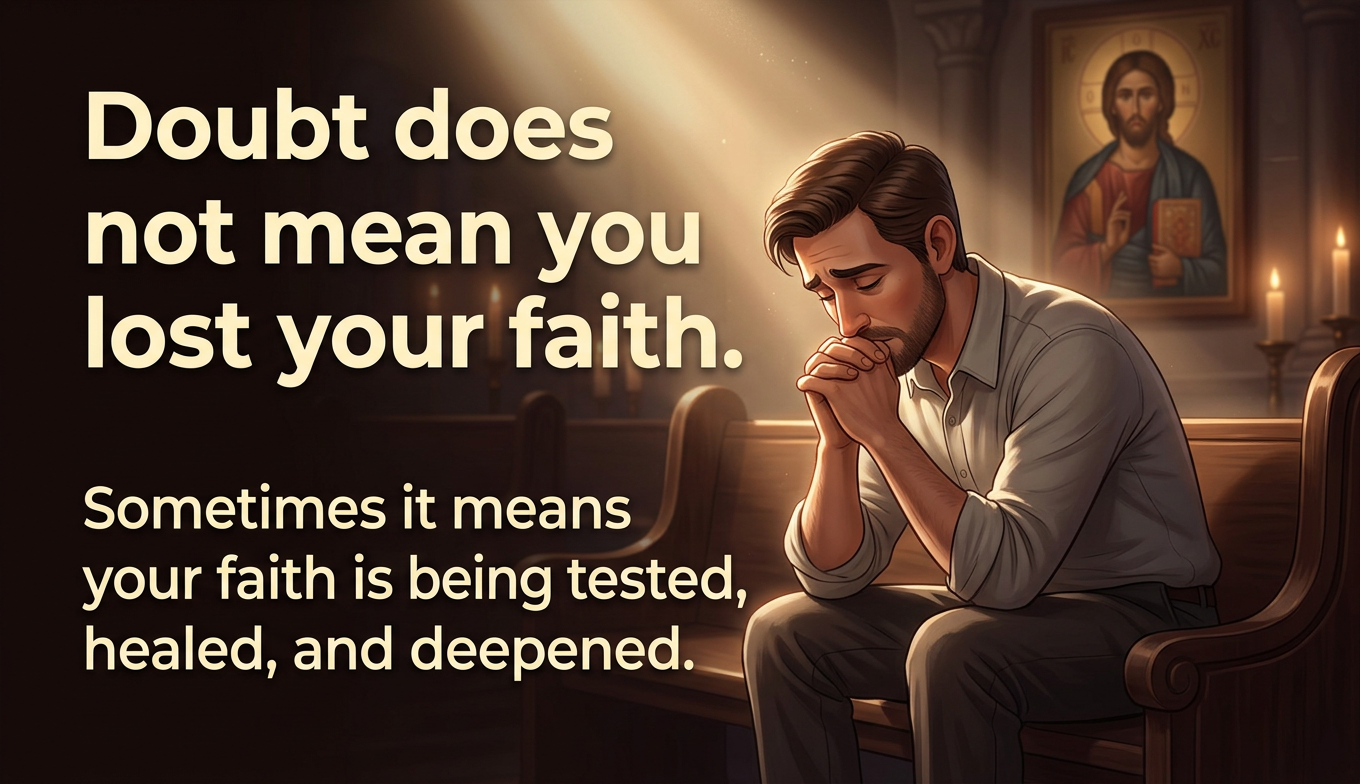
Notice the connection between confession and healing.
In Orthodoxy, sin is not viewed merely as legal guilt but as spiritual sickness. The Church is therefore a hospital for the soul.
This understanding permeates the Fathers.
St. John Chrysostom wrote:
“The Church is not a court of justice, but a hospital.”
The Historic Practice of Confession in the Ancient Church
From the earliest centuries, Christians practiced confession.
In the early Church, confession was sometimes public, especially for grave sins such as apostasy, murder, or adultery. Over time, private confession before a spiritual father became the normative practice, especially through the influence of the monastic tradition.
The Desert Fathers understood that hidden sin grows stronger in darkness.
Abba Poemen said:
“A man who hides his sins grows worse, but he who confesses them is healed.”
St. Basil the Great taught:
“It is necessary to confess our sins to those to whom the dispensation of God’s mysteries is entrusted.”
Likewise, St. Cyprian of Carthage wrote in the 3rd century:
“Let each confess his sin while he is still in this world, while his confession may be received.”
The Church has always understood confession not as a later invention, but as part of the apostolic life of repentance and restoration.
Why Do We Confess to a Priest?
This is often one of the first questions people ask.
“Why can’t I just confess directly to God?”
The answer is that we absolutely should confess directly to God every single day. Personal repentance is essential to Christian life.
But sacramental confession exists because Christianity is not merely individualistic. Christ established a Church, a Body, a communion.
Sin wounds not only our relationship with God but our relationship with the Body of Christ. Therefore reconciliation is both vertical and communal.
The priest stands as a witness to your repentance and as a representative of the Church. More importantly, he stands sacramentally in service to Christ.
In Orthodox confession, the priest does not say, “I forgive you” by his own authority. Rather, Christ forgives through the ministry He established.
St. Ambrose wrote:
“For those sins which we cannot wash away by ourselves, we receive remission through the priest.”
What Actually Happens in Confession?
For many people, confession feels intimidating because they imagine interrogation, embarrassment, or shame.
But true confession is profoundly freeing.
You come before Christ honestly.
You speak truthfully about your sins, passions, struggles, resentments, addictions, pride, lust, anger, envy, fear, bitterness, dishonesty, and failures.
You do not justify them.
You do not blame others.
You do not perform spirituality.
You simply stand before God as you truly are.
As I often emphasize in my teaching, transparency is essential to healing because most people are not even transparent with themselves. Hidden things buried in the secret places of the heart continue to shape and wound us until they are brought into the light.
This is exactly why confession matters.
Sin thrives in secrecy.
Healing begins in truth.
St. Symeon the New Theologian wrote:
“Do not hide your wounds from your spiritual physician.”
Where Do You Start?
You start with honesty.
Not theological sophistication.
Not perfect words.
Not polished prayers.
Honesty.
Perhaps begin with these questions:
- What is weighing on my heart?
- What sins do I repeat without fighting?
- Where have I hardened my heart?
- Who have I refused to forgive?
- What passions control me?
- What do I love more than God?
- What fears dominate my life?
- Where am I pretending?
Then speak to God plainly.
“Lord, I have become angry.”
“Lord, I have been proud.”
“Lord, I have neglected prayer.”
“Lord, I am addicted to comfort.”
“Lord, I have wounded the people I love.”
“Lord, I do not know how to change.”
That is where confession begins.
Not with performance.
With surrender.
Confession Is Not About Shame
One of Satan’s greatest lies is that if people truly knew us, we would not be loved.
This is why shame keeps people from confession.
Yet throughout the Gospels, Christ consistently moves toward sinners, not away from them.
The woman caught in adultery.
The tax collectors.
The thief on the cross.
St. Peter after denying Christ.
The Samaritan woman.
Christ does not expose sin to destroy people. He exposes sin to heal people.
As I teach in many of my reflections on spiritual warfare and the life of the soul, much of our struggle is spiritual and hidden beneath the surface of visible behavior. Confession becomes one of the primary ways the hidden darkness is brought into the healing light of Christ.
St. Ephraim the Syrian wrote:
“As soon as the evil one sees confession in the soul, he flees.”
Confession and Spiritual Healing
The Orthodox Church understands that passions such as anger, lust, fear, envy, pride, despair, and bitterness deform the soul over time.
Confession interrupts this cycle.
This is why the Fathers often compare sin to disease and repentance to medicine.
St. John of Kronstadt wrote:
“Confession is the washing of the soul.”
The goal is not merely moral improvement.
The goal is transformation.
Union with Christ.
Purity of heart.
Participation in divine life.
This is why repentance is ongoing. Even the saints confessed regularly because the closer one grows to God, the more clearly one sees the condition of the heart.
St. Silouan the Athonite wrote:
“Keep thy mind in hell and despair not.”
Meaning: see your brokenness truthfully, but never lose hope in God’s mercy.
Preparing for Confession
A good confession is prayerful and reflective.
Many Orthodox Christians prepare through:
- Prayer
- Examination of conscience
- Reading Psalm 51
- Fasting
- Silence and reflection
- Reviewing the commandments and beatitudes
It is helpful to ask:
- Have I loved God with my whole heart?
- Have I loved my neighbor?
- Have I spoken with cruelty?
- Have I judged others?
- Have I nurtured secret sins?
- Have I neglected prayer?
- Have I been prideful?
- Have I acted without mercy?
Confession is not about creating a dramatic emotional moment. It is about truth.
The Joy of Repentance
Many people fear confession until they experience it.
Then they discover something unexpected:
Peace.
Relief.
Freedom.
Tears.
Hope.
Not because confession is psychologically therapeutic alone, but because grace truly operates within the sacrament.
The Fathers understood this deeply.
St. John Climacus wrote:
“Repentance is the renewal of baptism.”
And St. Isaac the Syrian said:
“There is no sin that overcomes the mercy of God.”
That is the heart of confession.
Not condemnation.
Mercy.
Not humiliation.
Restoration.
Not despair.
Healing.
Final Thoughts
Confession is ultimately about returning home.
The prodigal son did not begin with theological precision. He simply arose and went to his father.
That is repentance.
That is confession.
You come as you are.
Broken.
Confused.
Ashamed.
Afraid.
And yet willing to step into the light.
The beautiful mystery of confession is that long before you ever enter the confessional, Christ is already waiting for you there.
Not to destroy you.
Not to embarrass you.
But to heal you.
To restore you.
To free you.
To remind you that holiness begins not with pretending to be righteous, but with the courage to finally become honest before God.
Want the entire article distilled into one clear, printable page?
Download your free summary and keep it with you.
Get the free PDF + join thousands receiving short, practical Orthodox insights in the “Morning Brew with Father Don” to help you grow in Christ each week.