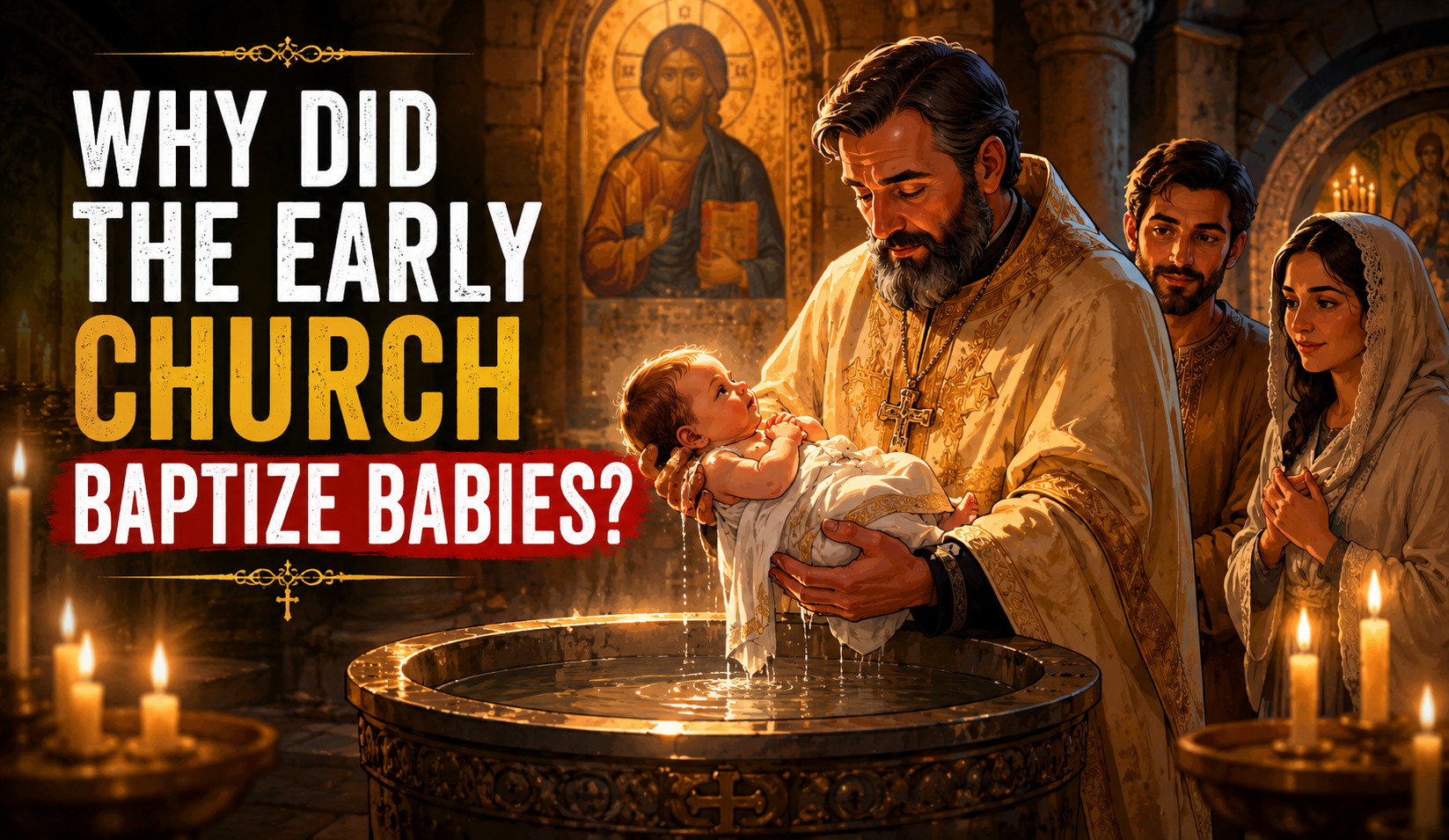
One of the most common questions asked by those coming from a Protestant background is this: if the Orthodox Church does not believe that infants inherit the personal guilt of Adam’s sin, then why baptize babies at all? Why not wait until someone is old enough to consciously profess faith in Christ?
At first glance, infant baptism can appear little more than a dedication ceremony or what many call a “christening,” where parents promise to raise their child in a Christian home. Yet the Orthodox Church has never understood baptism in merely symbolic or sentimental terms. Baptism is not simply a public declaration. It is not merely an outward sign of an inward decision. It is a sacramental entrance into the life of Christ and His Church.
To understand infant baptism rightly, several foundational theological misunderstandings must first be corrected.
You can Now Listen to Each Article
The Western Idea of Original Sin Versus the Orthodox Understanding
Much of the confusion surrounding infant baptism comes from differing understandings of original sin.
In much of Western Christianity, especially following Augustine and later Protestant theology, humanity is often viewed as inheriting both Adam’s corrupted nature and Adam’s guilt. In this framework, baptism becomes necessary primarily to remove inherited guilt and save the infant from condemnation.
Orthodoxy does not teach this.
The Orthodox Church teaches that humanity inherits the consequences of Adam’s fall, not Adam’s personal guilt. Humanity inherits mortality, corruption, spiritual brokenness, and separation from the fullness of communion with God. Death entered the human experience through Adam, and through death came disordered passions, fear, suffering, and sin.
This distinction matters immensely.
A child is not born morally guilty of Adam’s transgression. The prophet Ezekiel is very clear that the son does not bear the guilt of the father. Yet the child is born into a fallen world dominated by death and corruption.
The problem Christ came to heal is deeper than legal guilt alone. Humanity suffers from spiritual disease. The Church Fathers consistently describe salvation more as healing and restoration than merely legal acquittal.
That changes how baptism itself is understood.
Baptism Is Participation in Christ’s Life
In the Orthodox Church, baptism is not primarily about removing legal guilt. Baptism is union with Christ.
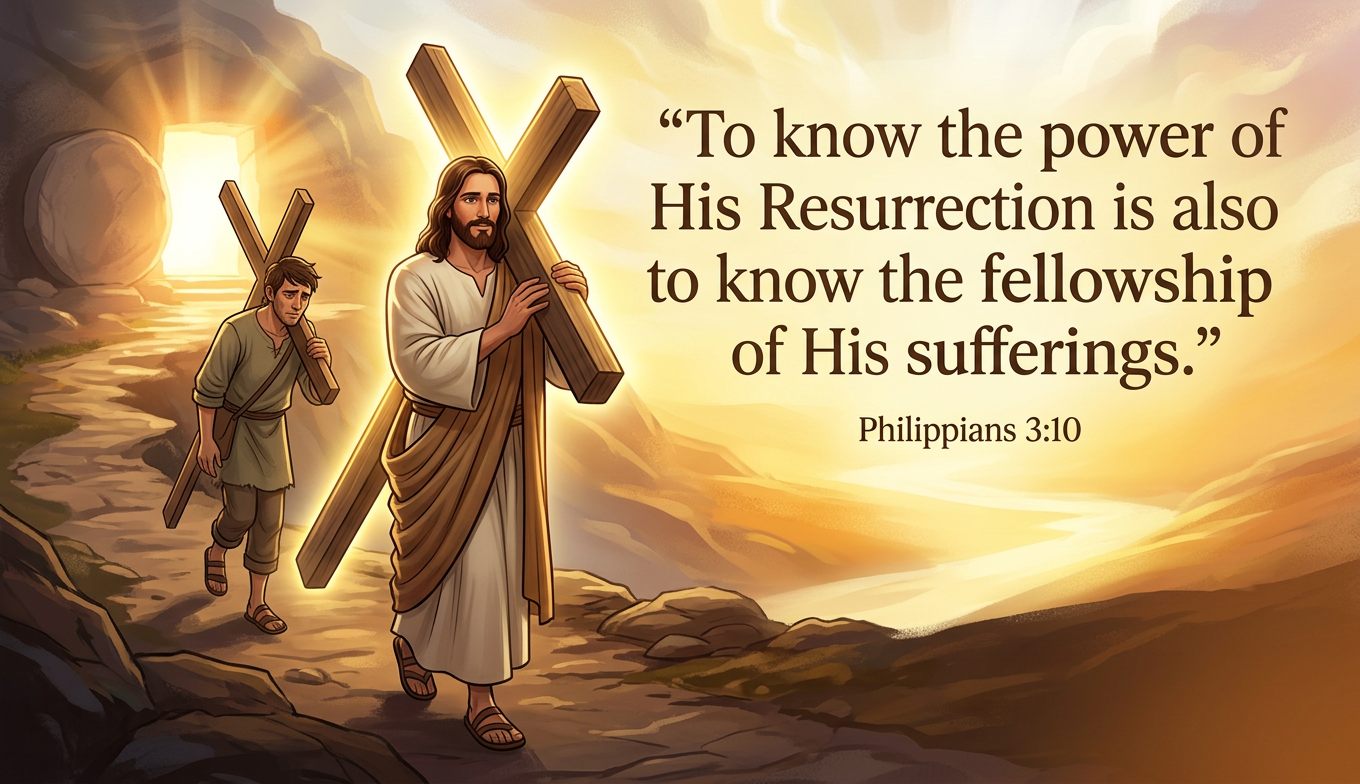
St. Paul writes in Romans 6 that through baptism we are buried with Christ and raised with Him into newness of life. Baptism is participation in Christ’s death and resurrection. It is entrance into the covenant life of the Kingdom of God.
This means something objective and real is occurring sacramentally.
The infant is not simply being dedicated by the parents. The child is being joined to Christ. The child is being grafted into the Body of Christ, which is the Church. The child is receiving the seal of the Holy Spirit. The child is beginning a life of communion with God.
Orthodoxy does not separate salvation into isolated moments. Salvation is union with God. It is participation in divine life. Baptism is the beginning of that journey.
This is why Orthodox Christians baptize infants. Not because the child has committed personal sins requiring legal pardon, but because the child needs life in Christ just as every human being does.
A baby still needs healing from mortality. A baby still needs union with Christ. A baby still needs the grace of the Holy Spirit.
The Ancient Jewish and Biblical Context
Modern Christians often approach baptism through the lens of individual decision making. Yet the biblical world thought covenantally and communally.
Under the Old Covenant, male infants entered the covenant community through circumcision on the eighth day, long before they could intellectually understand what was happening. They belonged to God’s covenant people because God’s covenant included households and families.
The New Testament presents baptism as the fulfillment of circumcision. St. Paul explicitly connects the two in Colossians 2:11-12. Entire households were baptized in the New Testament. The ancient Church universally practiced infant baptism because Christianity was never understood as a purely individualistic religion detached from family and covenant life.
Modern Western culture tends to elevate autonomous choice above all things. Ancient Christianity did not think this way.
Children belong in the life of the covenant community because grace is not merely intellectual agreement. Grace is participation in divine life.
No loving Christian parent says, “We will wait until our child is eighteen before feeding them spiritually.” Parents pray over infants long before infants understand language. Parents bring infants into worship long before infants comprehend theology. Parents teach children to cross themselves before they understand the Trinity.
Why?
Because human beings are formed sacramentally, relationally, spiritually, and communally long before intellectual maturity develops.
The Ancient Church and Infant Baptism
Infant baptism was not a medieval invention, nor did it arise as a late sentimental dedication ceremony. By the early third century, we already find clear references to children being baptized in the life of the Church.
The Apostolic Tradition, commonly associated with Hippolytus of Rome around the early third century, instructs the Church to baptize children first. If they could answer for themselves, they answered. If they could not, parents or relatives answered on their behalf.
Origen, writing in the third century, stated that “the Church received from the apostles” the practice of giving baptism even to infants. This matters because Origen does not present infant baptism as a novelty or local experiment. He speaks of it as something received within the living tradition of the Church.
St. Cyprian of Carthage gives another important witness. In A.D. 253, a council considered whether infants should be baptized only on the eighth day, in parallel with circumcision. The council rejected the delay and concluded that no one should be hindered from baptism and the grace of God.
St. Gregory the Theologian, in his Oration on Holy Baptism, also speaks of infants being sanctified and not left “unsealed” when danger is present. Later, St. Augustine argued that the custom of baptizing infants was not invented by councils but preserved as the Church’s received practice.
There is also archaeological evidence. Early Christian tomb inscriptions from the third and fourth centuries sometimes mention very young children who had been baptized before death. Scholars who have studied these inscriptions note that they demonstrate infant baptism was already present in early Christian life and practice.
This historical record does not show the ancient Church treating infant baptism as a mere family dedication. It shows the Church treating baptism as sacramental participation in Christ, entrance into the covenant community, and reception of divine grace. The parents and godparents do make vows, but those vows do not replace the sacrament. They surround the sacrament with the responsibility of discipleship.
What Actually Happens Sacramentally?
This is where the Orthodox understanding becomes deeply beautiful.
In baptism, the infant is united to Christ. The old humanity under the dominion of death is put away, and the new life of Christ begins. The child receives the indwelling presence of the Holy Spirit through Chrismation immediately following baptism. The child becomes a full member of the Church and may even receive Holy Communion.
This is not symbolic theater.
Orthodoxy takes seriously that the sacraments truly communicate grace. The mysteries of God are not empty rituals. God actually acts through them.
I often emphasize in teaching that Christianity is not merely about information concerning God. Christianity is participation in the life of God Himself. Theology is not simply speaking about God. It is encountering Him.
That same sacramental worldview shapes Orthodox baptism.
The modern world tends to separate the spiritual from the physical. Orthodoxy does not. The spiritual and physical work together. God uses physical means to communicate spiritual realities because human beings themselves are both physical and spiritual beings.
Water matters. Oil matters. Touch matters. The body matters. The Church matters.
God uses created things to communicate uncreated grace.
But What About Personal Faith?
This is often the next objection.
If an infant cannot personally believe, how can baptism be meaningful?
Yet Scripture repeatedly shows that faith is not merely individualistic. The faith of parents affects children. The faith of communities affects households. Jesus healed people because of the faith of others around them.
Even in ordinary life, children are shaped by realities they do not yet fully understand. A child does not understand nutrition before being fed. A child does not understand language before learning to speak. A child does not understand love before receiving it.
The same is true spiritually.
The child grows into the faith that was planted sacramentally in baptism. This is why godparents and parents make vows during the service. Not because baptism is merely symbolic, but because the child must be discipled into the life they have already sacramentally entered.
Baptism is the beginning of life in Christ, not the end of spiritual formation.
Baptism Is Not Magic
At the same time, Orthodoxy does not teach that baptism operates mechanically or magically.
A baptized child must still grow in Christ. The child must still learn repentance, prayer, worship, obedience, humility, and love for God. Grace can be resisted. Human freedom remains real.
The sacrament is not magic insurance against rebellion.
Rather, baptism plants the child into the life of Christ so that growth toward communion with God may occur within the life of the Church.
This is why the Orthodox Church never isolates baptism from the ongoing sacramental life. Baptism leads into Eucharist, confession, prayer, fasting, worship, and lifelong transformation.
Why Orthodox Christians Continue Baptizing Infants
Ultimately, infant baptism reveals something profound about salvation itself.
Salvation is not primarily about making a private religious decision someday in the future. Salvation is participation in the Kingdom of God beginning now.
The Church baptizes infants because the Church believes grace is real.
The Church baptizes infants because Christ conquered death itself, not merely legal guilt.
The Church baptizes infants because children belong to the covenant community.
The Church baptizes infants because union with Christ is life.
And perhaps most importantly, the Church baptizes infants because Christianity is not merely about what human beings choose for God. It is first about what God lovingly does for humanity.
Before a child can speak the name of Jesus, Christ already knows the child’s name.
Before a child can confess faith intellectually, God’s grace is already at work drawing that child into communion with Himself.
That is the mystery and beauty of infant baptism in the Orthodox Church.
Want the entire article distilled into one clear, printable page?
Download your free summary and keep it with you.
Get the free PDF + join thousands receiving short, practical Orthodox insights in the “Morning Brew with Father Don” to help you grow in Christ each week.