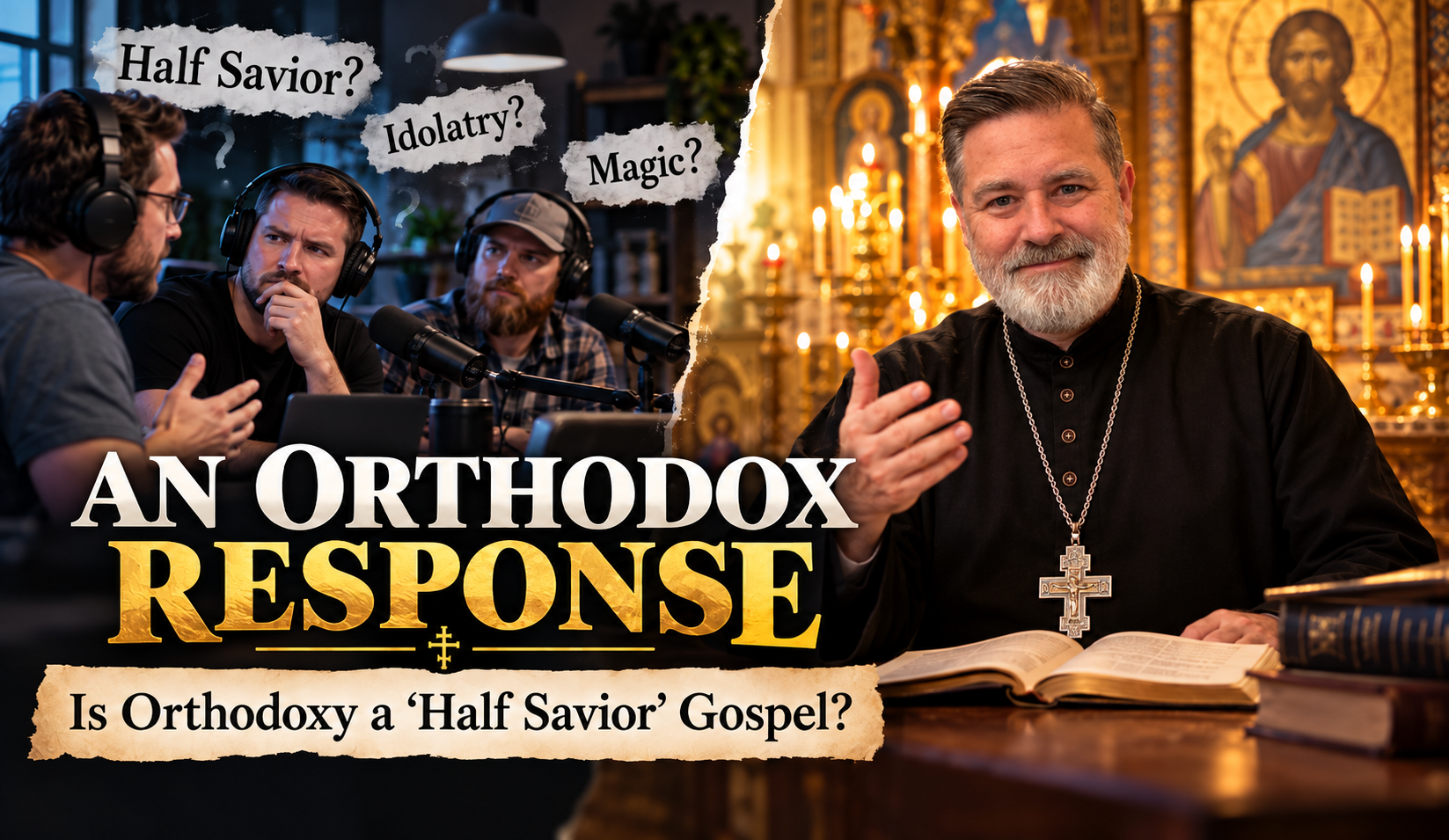
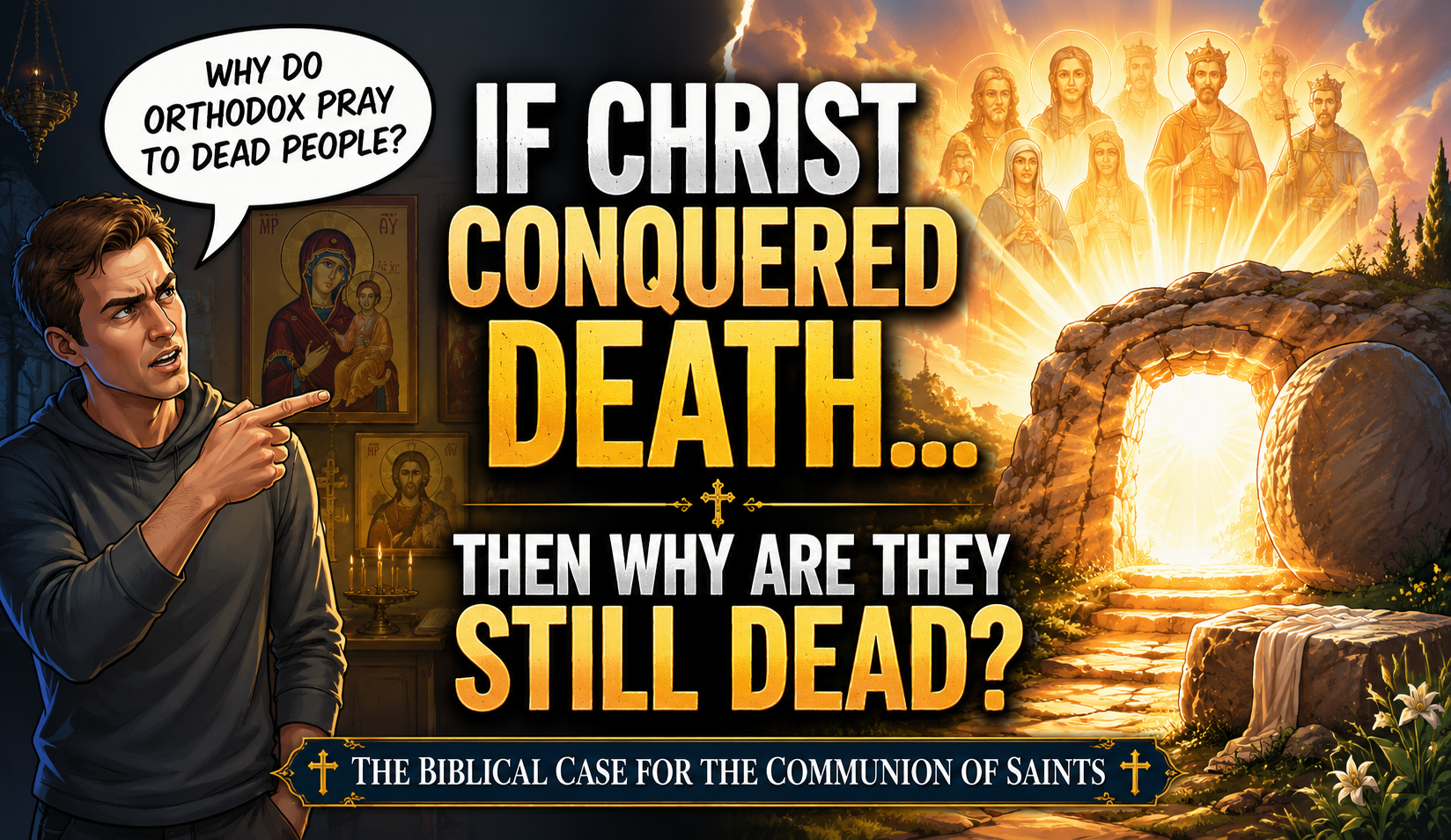
One of the most common objections raised against Orthodox Christianity is this accusation:
“You Orthodox pray to dead people.”
It is usually followed by references to the Old Testament prohibitions against necromancy, warnings about communicating with the dead, and sometimes even accusations of idolatry or occultism.
But here is the fundamental problem with the objection.
The Orthodox Church does not speak to dead people because, in Christ, there are no dead people.
That statement alone reveals the deep divide between modern Protestant assumptions and the ancient Christian understanding of salvation, resurrection, the Church, and eternal life.
The issue is not really about prayer to the saints. The issue is about whether Jesus Christ truly conquered death.
Because if He did, then those who die in Him are not dead. They are alive.
And if they are alive, then the Church on earth remains united to the Church in heaven.
This is the historic Christian faith.
Not merely Orthodox.
Christian.
As I often remind people, theology is not merely information about God. Theology is participation in the life of God. Christianity was first called “The Way” because it is a living union with Christ, not simply intellectual agreement with doctrines.
The Orthodox understanding of the saints flows directly out of this reality.
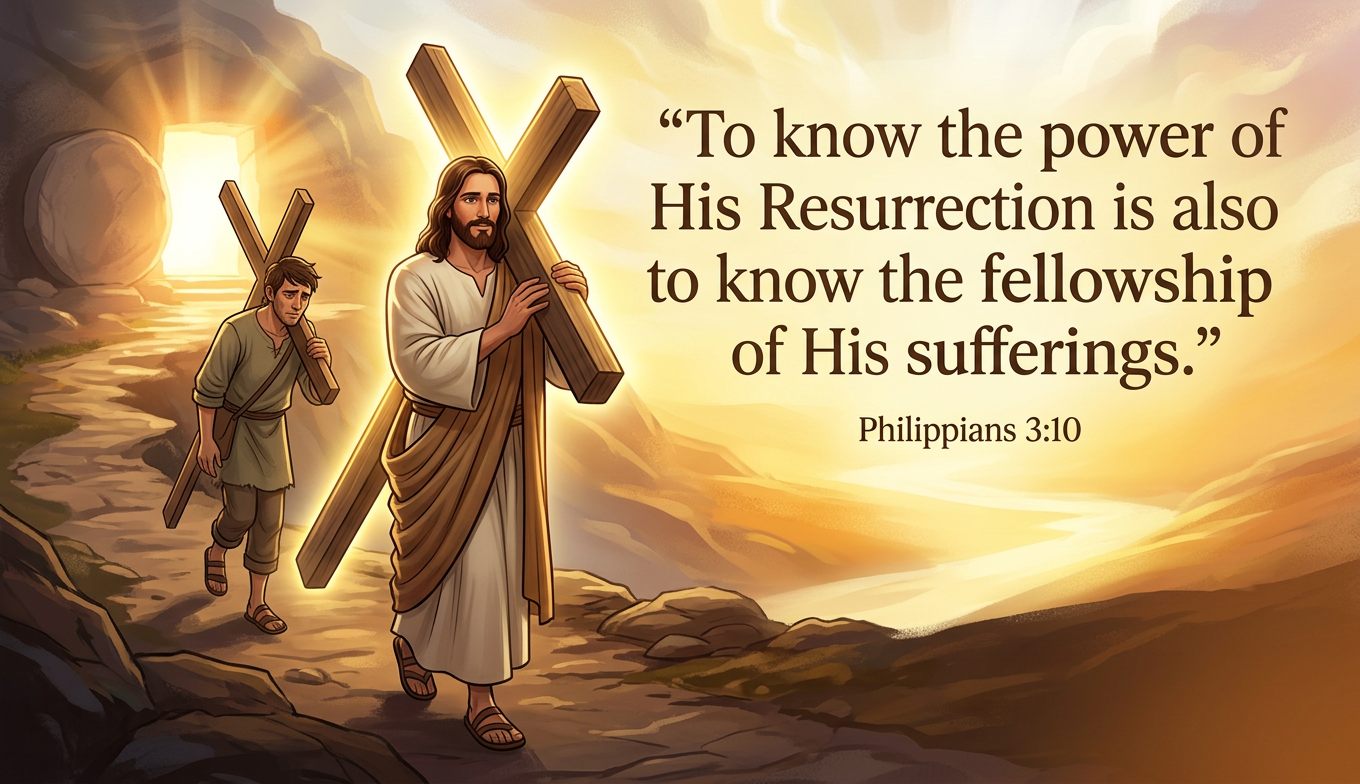
Christ Destroyed Death
The first thing we must establish is this:
Death no longer reigns over those who belong to Christ.
Scripture could not be clearer.
Jesus says:
“I am the resurrection and the life. He who believes in Me, though he may die, he shall live.”
John 11:25
And again:
“God is not the God of the dead, but of the living.”
Matthew 22:32
Notice carefully what Christ says while referring to Abraham, Isaac, and Jacob, men who had physically died centuries earlier.
He does not say they were alive.
He says they are alive.
Why?
Because covenant union with God transcends physical death.
For the Christian, death is not annihilation. It is transition.
St. Paul says:
“To be absent from the body is to be present with the Lord.”
2 Corinthians 5:8
And in Philippians 1:23, Paul says he desires “to depart and be with Christ.”
Not unconsciousness.
Not soul sleep.
Not nonexistence.
Communion with Christ.
This is why the Orthodox Church does not view the departed faithful as disconnected from us. The Church is one body in Christ.
Christ did not establish two churches.
One in heaven and one on earth.
There is one Church.
One Body.
One communion.
As I often teach, modern Christianity has created artificial separations between the physical and spiritual realms that the ancient Church never accepted.
The ancient Christian mind understood that heaven and earth overlap in worship, in prayer, and in communion with God.
The Saints Are Alive in Christ
The Book of Hebrews gives us one of the clearest pictures of this reality.
After listing the heroes of the faith in Hebrews 11, Scripture immediately says:
“Therefore we also, since we are surrounded by so great a cloud of witnesses…”
Hebrews 12:1
The saints are not gone.
They surround us.
They witness.
They participate in the life of the Kingdom.
Likewise, in Revelation 5:8, the twenty-four elders in heaven offer the prayers of the saints before God like incense.
In Revelation 6:9-10, the martyrs cry out to God from heaven.
They are conscious.
Aware.
Prayerful.
Alive.
This should not surprise us because eternal life begins now.
Not after the resurrection.
Now.
Christ says:
“He who hears My word and believes in Him who sent Me has everlasting life.”
John 5:24
Present tense.
The Christian already participates in eternal life through union with Christ.
So when Orthodox Christians ask the saints to pray for them, we are not attempting to summon the dead.
We are asking living members of Christ’s Body to intercede for us.
Exactly the same way Christians ask one another for prayer on earth.
“But the Old Testament Forbids Talking to the Dead”
This is where many Protestants immediately go.
Deuteronomy 18 condemns necromancy.
Saul’s visit to the witch of Endor in 1 Samuel 28 is often cited as proof that any communication with departed persons is forbidden.
But this argument completely misunderstands what necromancy actually is.
Necromancy is an occult attempt to conjure spirits, gain hidden knowledge, manipulate supernatural power, or bypass God through magical practices.
That is not remotely what the Orthodox Church is doing.
The difference is profound.
Necromancy seeks power apart from God.
The communion of saints exists entirely within Christ.
One is rebellion.
The other is communion.
One is occultism.
The other is the life of the Church.
When an Orthodox Christian says:
“Holy Apostle Peter, pray for me,”
he is not conjuring Peter.
He is not attempting secret knowledge.
He is not summoning spirits.
He is asking a living member of Christ’s Body to pray.
That is categorically different from necromancy.
In fact, if asking departed believers for prayer is necromancy, then the Transfiguration becomes deeply problematic.
In Matthew 17, Moses and Elijah appear speaking with Christ.
The apostles witness this.
No one rebukes it.
No one calls it forbidden.
Why?
Because the righteous are alive in God.
Likewise, after Christ’s resurrection:
“Many bodies of the saints who had fallen asleep were raised.”
Matthew 27:52
Scripture repeatedly demonstrates that death no longer functions the way fallen humanity thinks it does.
Christ shattered its power.
The Early Church Believed This Universally
This is not some later medieval corruption.
The earliest Christians honored the martyrs, preserved their relics, asked for their prayers, and celebrated the Eucharist over their tombs.
Why?
Because they understood the Church as a living communion extending beyond physical death.
St. Cyril of Jerusalem, writing in the fourth century, says:
“We commemorate those who have fallen asleep before us… believing that this will be of the greatest benefit to the souls for whom the supplication is offered.”
St. John Chrysostom wrote:
“The apostles and martyrs have great power with God.”
St. Basil the Great referred to the saints as intercessors and helpers of the faithful.
Even more importantly, the early Church never interpreted the veneration of saints as competition with Christ.
Why?
Because the saints have no life apart from Christ.
Everything they are comes from Him.
To honor the saints is to honor the victory of Christ in them.
“There Is One Mediator Between God and Men”
Another common objection comes from 1 Timothy 2:5:
“There is one mediator between God and men, the Man Christ Jesus.”
Amen.
Orthodox Christians fully affirm this.
Christ alone reconciles humanity to the Father.
No saint died for your sins.
No saint conquered death.
No saint grants salvation.
Only Christ.
But Protestants misunderstand mediation here by applying it inconsistently.
Because immediately before saying Christ is the one mediator, Paul commands Christians to pray for one another:
“I exhort first of all that supplications, prayers, intercessions… be made for all men.”
1 Timothy 2:1
So clearly, asking others to intercede does not violate Christ’s unique role as mediator.
Otherwise Christians should never ask anyone to pray for them.
The prayers of the saints participate in Christ’s mediation. They do not replace it.
Just as your pastor praying for you does not dethrone Christ.
Why This Matters Spiritually
The deeper issue here is modern Christianity’s impoverished understanding of the Church.
Many Christians today view salvation almost entirely individualistically.
Me and Jesus.
My Bible.
My personal relationship.
But Christianity has never been merely individual.
It is covenantal.
Sacramental.
Communal.
The Church is a family united in Christ across heaven and earth.
As I often teach, we cannot separate the physical from the spiritual because reality itself is sacramental.
The saints are not distractions from Christ.
They are evidence that Christ truly transforms human beings.
They are witnesses that holiness is possible.
That grace is real.
That death is defeated.
And this is precisely why Satan hates the doctrine of the communion of saints. Because it proclaims that Christ’s victory is total.
Not partial.
Total.
The grave no longer has the final word.
The Final Reality
Orthodox Christians do not worship saints.
We worship the Holy Trinity alone.
We do not seek secret knowledge from the dead.
We seek the prayers of the living.
And those who die in Christ are alive forevermore.
This is why, at Orthodox funerals, there is both sorrow and hope.
Because for the Christian, death is not extinction.
It is entrance into the presence of Christ.
The saints are not dead memories.
They are living members of the Kingdom.
And if Christ truly conquered death, then the Church did not lose them.
Because love in Christ is stronger than the grave.
Want the entire article distilled into one clear, printable page?
Download your free summary and keep it with you.
Get the free PDF + join thousands receiving short, practical Orthodox insights in the “Morning Brew with Father Don” to help you grow in Christ each week.