Most modern Christians have never stopped to ask a critically important question:
If the Bible alone is meant to be the sole authority for Christianity, why did Christ not leave behind a Bible?
Why did He establish a Church instead?
Why did the Apostles spend their lives planting churches, ordaining bishops, preserving worship, and handing down the faith long before the New Testament canon even existed?
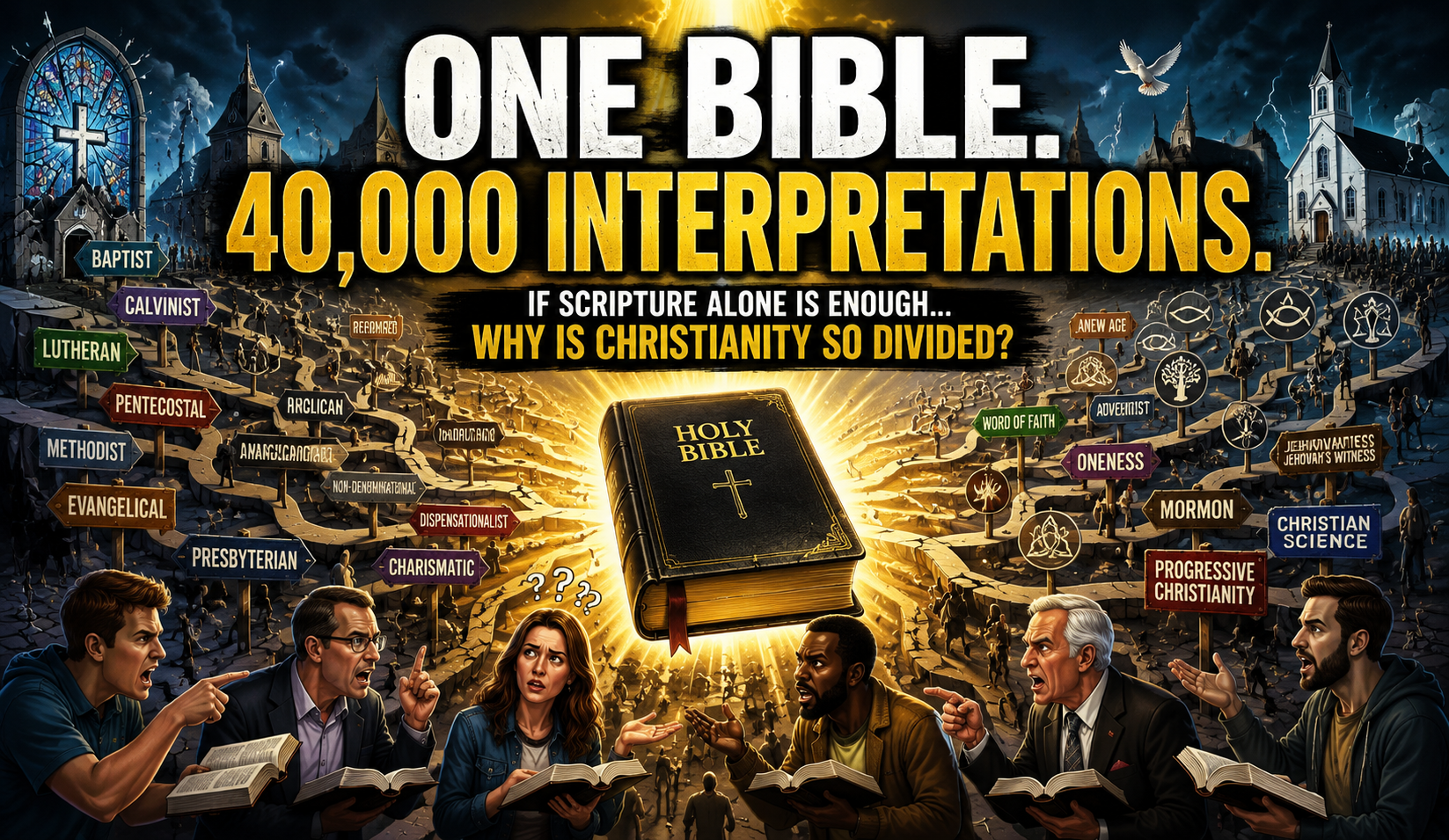
And perhaps even more importantly… If Scripture alone is truly sufficient apart from the Church, why are there now tens of thousands of competing interpretations, denominations, and theological systems all claiming to follow the same Bible?
This article is not an attack on Scripture. Quite the opposite. It is a defense of Scripture from the instability of private interpretation. It is an invitation to rediscover how the earliest Christians understood authority, doctrine, worship, and the transmission of divine truth.
The central claim of this article is simple:
Jesus Christ did not leave us a book to interpret independently.
He left us a Church guided by the Holy Spirit.
To understand why this matters, we must examine how the doctrine of Sola Scriptura emerged, why it would have been foreign to the early Church, what Holy Tradition actually is, and why proper interpretation of Scripture itself requires the living apostolic Church.
You can Now Listen to Each Article
Christ Founded a Church, Not a Book
When Christ ascended into heaven, He did not distribute New Testaments to the Apostles. He did not command them to go write books. He commanded them to preach, baptize, disciple, and establish His Church.
“Go therefore and make disciples of all nations…”
(Matthew 28:19)
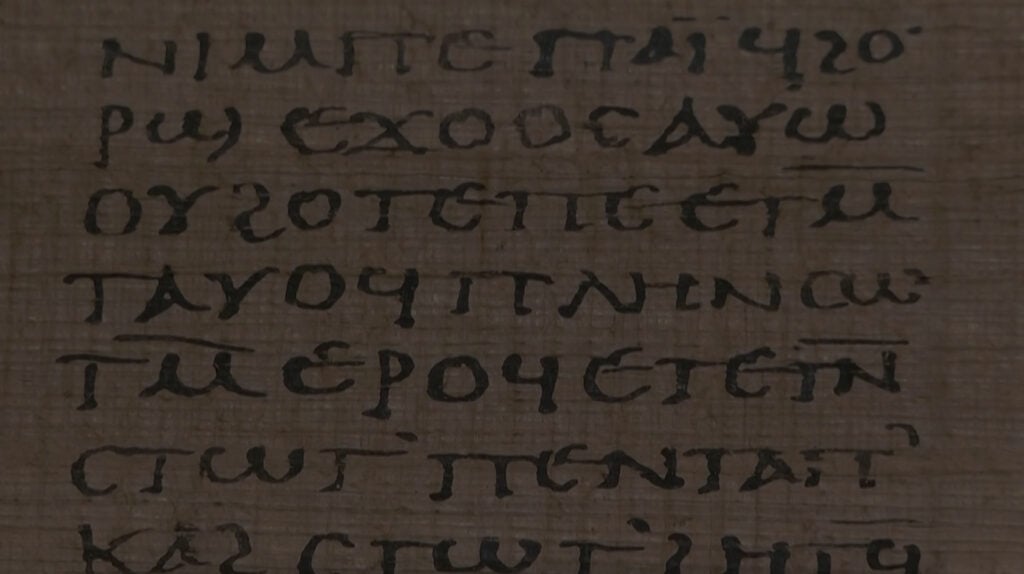
The Christian faith spread throughout the Roman Empire for decades before the New Testament canon existed in its finalized form. The earliest Christians worshiped, baptized, celebrated the Eucharist, ordained bishops, and suffered martyrdom without possessing a completed New Testament.
This fact alone dismantles the assumptions behind Sola Scriptura.
The Church existed before the New Testament canon.
The Church preserved the writings that eventually became the New Testament.
The Church canonized those writings.
And the Church interpreted those writings.
Christianity did not emerge from the Bible.
The Bible emerged from the life of the Church.
The Apostles Handed Down More Than Written Text
The Apostles transmitted the Christian faith through both written and oral teaching.
The Apostle Paul explicitly says:
“Therefore, brethren, stand fast and hold the traditions which you were taught, whether by word or our epistle.”
(2 Thessalonians 2:15)
Notice carefully that Paul places oral apostolic teaching and written apostolic teaching side by side.
This apostolic inheritance is what the Orthodox Church calls Holy Tradition.
Holy Tradition is not merely human customs or cultural habits. It is the living transmission of the apostolic faith through the life of the Church under the guidance of the Holy Spirit.
Holy Tradition includes:
- The canon of Scripture
- The liturgical life of the Church
- The Ecumenical Councils
- Apostolic worship
- The Creed
- Sacramental theology
- The writings of the Church Fathers
- The continuity of apostolic succession
- The interpretive framework of the Church
Scripture is not separated from Holy Tradition.
Scripture exists within Holy Tradition.
Sola Scriptura Is Historically New
For the first 1,500 years of Christianity, no Christian believed in Sola Scriptura as it is understood today.
The doctrine emerged during the Protestant Reformation in the 16th century as a reaction against corruption and abuse within medieval Roman Catholicism.
Martin Luther and other Reformers were responding to real problems:
- Indulgences
- Clerical corruption
- Moral decay
- Papal abuses
- Distortions produced through late medieval scholasticism
Many of these criticisms had legitimacy.
But rather than returning to the ancient apostolic model preserved by the Orthodox Church, the Reformers relocated authority into the individual interpretation of Scripture.
This created a profound theological problem.
Who determines the correct interpretation of Scripture?
The Reformers claimed Scripture was self-authenticating and sufficiently clear.
History proved otherwise.
Almost immediately, Protestants divided among themselves:
- Lutherans
- Calvinists
- Zwinglians
- Anabaptists
- Anglicans
They disagreed on:
- Baptism
- Salvation
- The Eucharist
- Church authority
- Predestination
- Worship
- Ecclesiology
Today, Protestantism contains thousands upon thousands of competing denominations — all claiming fidelity to the same Bible.
The issue is not whether Scripture is authoritative.
The issue is interpretation.
Scripture Cannot Interpret Itself
One of the greatest weaknesses of Sola Scriptura is the assumption that Scripture is simple enough to be interpreted independently apart from the historical Church.
But proper interpretation of Scripture requires enormous depth of knowledge.
To interpret Scripture faithfully, one must understand:
- Ancient history
- Second Temple Judaism
- Greek
- Hebrew
- Aramaic
- Literary structure
- Symbolism
- Prophecy
- Metaphor
- Hyperbole
- Typology
- Ancient culture
- Historical context
- Patristic theology
- The theological worldview of each biblical author
Even language itself is complex.
Words are not always literal. Scripture contains poetry, apocalyptic imagery, symbolism, covenantal language, prophetic idioms, parables, allegory, and rhetorical devices. Without a proper interpretive framework, sincere readers can arrive at radically contradictory conclusions.
This is precisely what has happened in modern Christianity.
If every believer becomes his own final authority for interpretation, Christianity inevitably fragments into endless theological subjectivity.
This is why the Church matters.
The Church has already done this work.
From the Apostles onward, bishops, martyrs, theologians, ascetics, councils, and Church Fathers preserved not merely the text of Scripture, but its proper interpretation.
The bridge from the Apostles to today was never broken.
The same apostolic faith handed down in the first century continues within the life of the Orthodox Church today.
The Church did not invent Christianity centuries later.
The Church is the historical continuation of the apostolic community established by Christ Himself.
The Early Church Never Taught Sola Scriptura
The early Church Fathers consistently appealed not only to Scripture, but to apostolic succession and Holy Tradition.
Why?
Because heretics quoted Scripture too.
The Gnostics quoted Scripture.
The Arians quoted Scripture.
Even Satan quoted Scripture to Christ in the wilderness.
And today, the pattern continues. Mormons, Jehovah’s Witnesses, and countless other sects and cults all quote Scripture as well. They cite verses, construct theological systems, and appeal to the authority of the Bible to defend doctrines the historic Christian Church has always rejected.
This is the critical point many people miss:
The existence of the biblical text alone does not guarantee correct doctrine.
The issue has never simply been having Scripture.
The issue is possessing the correct apostolic interpretation of Scripture.
If the Bible alone, detached from the historic apostolic Church, were sufficient to preserve doctrinal unity, Christianity would not be fractured into thousands of contradictory interpretations. Every major heresy in Church history appealed to Scripture in some way. The problem was never access to the text. The problem was interpretation outside the mind of the Church.
St. Irenaeus in the second century argued that authentic Christian doctrine could be identified through the apostolic churches and the succession of bishops who preserved the teaching handed down from the Apostles.
This is fundamentally incompatible with modern Sola Scriptura.
The early Christians did not believe doctrine could be separated from the life of the Church.
Scripture was read within:
- The liturgy
- The Eucharist
- Apostolic worship
- The sacramental life
- The communion of the Church
The Bible was never treated as an isolated authority detached from ecclesial life.
The Bible Itself Refutes Sola Scriptura
Ironically, the doctrine of Sola Scriptura is nowhere taught in Scripture.
No verse states:
- “Scripture alone is the sole authority for Christians.”
- “Everything necessary for Christianity must be found explicitly in Scripture.”
- “The Church possesses no binding authority outside the biblical text.”
Instead, Scripture repeatedly points believers toward the authority of the Church.
Paul calls the Church:
“The pillar and ground of the truth.”
(1 Timothy 3:15)
Christ says:
“He who hears you hears Me.”
(Luke 10:16)
And:
“I will build My Church, and the gates of Hades shall not prevail against it.”
(Matthew 16:18)
Notice that Christ promised divine protection to His Church — not to private interpretation.
Even the existence of the New Testament canon itself depends upon Holy Tradition.
The Bible nowhere contains an inspired table of contents.
How do Christians know which books belong in Scripture?
Because the Church discerned, preserved, and canonized them.
Without the authority of the Church, there is no objective basis for the canon itself.
Holy Tradition Is the Life of the Holy Spirit in the Church
Many Protestants misunderstand the word “tradition” because they associate it only with man-made religious corruption condemned by Christ.
But Scripture distinguishes between false human traditions and apostolic tradition.
False traditions distort divine truth.
Holy Tradition preserves it.
Holy Tradition is the life of the Holy Spirit within the Church across generations.
It is the continuity of apostolic Christianity through history.
This continuity preserved:
- The Eucharist
- Apostolic worship
- Baptismal theology
- The Nicene Creed
- The Ecumenical Councils
- The canon of Scripture
- Orthodox Christology
- The sacramental life
- Patristic interpretation
Holy Tradition is not an addition to Scripture.
It is the living context in which Scripture exists.
The Crisis of Modern Christianity Is a Crisis of Authority
Modern Christianity suffers from endless fragmentation because authority has been detached from apostolic continuity.
When every individual becomes his own theologian, doctrine inevitably bends toward culture, personal preference, and modern ideology.
This is why modern Christians remain deeply divided over:
- Marriage
- Sexual ethics
- Salvation
- Baptism
- The Eucharist
- Worship
- Gender
- Church authority
- Human identity
Without a stable apostolic interpretive authority, Christianity becomes increasingly subjective.
Orthodoxy offers something profoundly different.
Not innovation.
Not reinvention.
Not theological experimentation.
But continuity.
The same faith.
The same worship.
The same sacramental life.
The same apostolic inheritance.
The bridge from the Apostles to today still exists.
Conclusion: Christ Left Us a Church
The earliest Christians did not possess a completed New Testament.
Yet they possessed:
- Apostolic authority
- The Eucharist
- Baptism
- Bishops
- Holy Tradition
- Liturgical worship
- The Creed
- The life of the Holy Spirit
Why?
Because Christianity was never intended to function through private interpretation detached from the Church.
The Scriptures are holy, inspired, infallible, and indispensable.
But Scripture was never meant to stand alone.
To isolate the Bible from the Church that produced, preserved, canonized, and interpreted it is ultimately to do injustice to the text itself.
The Bible cannot properly be understood apart from the apostolic life from which it emerged.
Christ did not descend from heaven carrying a completed New Testament.
He established a living Church.
He entrusted the faith to Apostles.
They handed that faith down through Holy Tradition.
And that same apostolic Church continues to preserve the fullness of the Christian faith today.
Jesus did not leave us a book.
He left us a Church.
Want the entire article distilled into one clear, printable page?
Download your free summary and keep it with you.
Get the free PDF + join thousands receiving short, practical Orthodox insights in the “Morning Brew with Father Don” to help you grow in Christ each week.