There is perhaps no subject in modern Christianity that creates more confusion, division, and emotional tension than the question of speaking in tongues.
I have watched sincere Christians question their salvation because they have never spoken in tongues. I have seen faithful believers sit quietly in church services wondering if something was wrong with them because others were displaying gifts they themselves had never experienced. I have counseled people who spent years chasing an experience while neglecting the deeper work of repentance, prayer, humility, and communion with Christ.
And that breaks my heart.
Because the question is not merely, “Do you speak in tongues?”
The deeper question is, “Do you know God?”
Those are not the same thing.
One can speak in tongues and still be spiritually immature.
One can never speak in tongues and yet become a saint.
The goal of Christianity has never been the pursuit of extraordinary experiences. The goal has always been union with Jesus Christ.
So when someone asks:
“Speaking in Tongues is one of the evidences of the infilling of the Holy Spirit during the Early Church. What is your stand regarding this matter? Is it possible or should every Christian seek this sign today?”
We must answer carefully, biblically, historically, and through the lens of the Orthodox Church.
You can Now Listen to Each Article
The Day of Pentecost and the Gift of Tongues
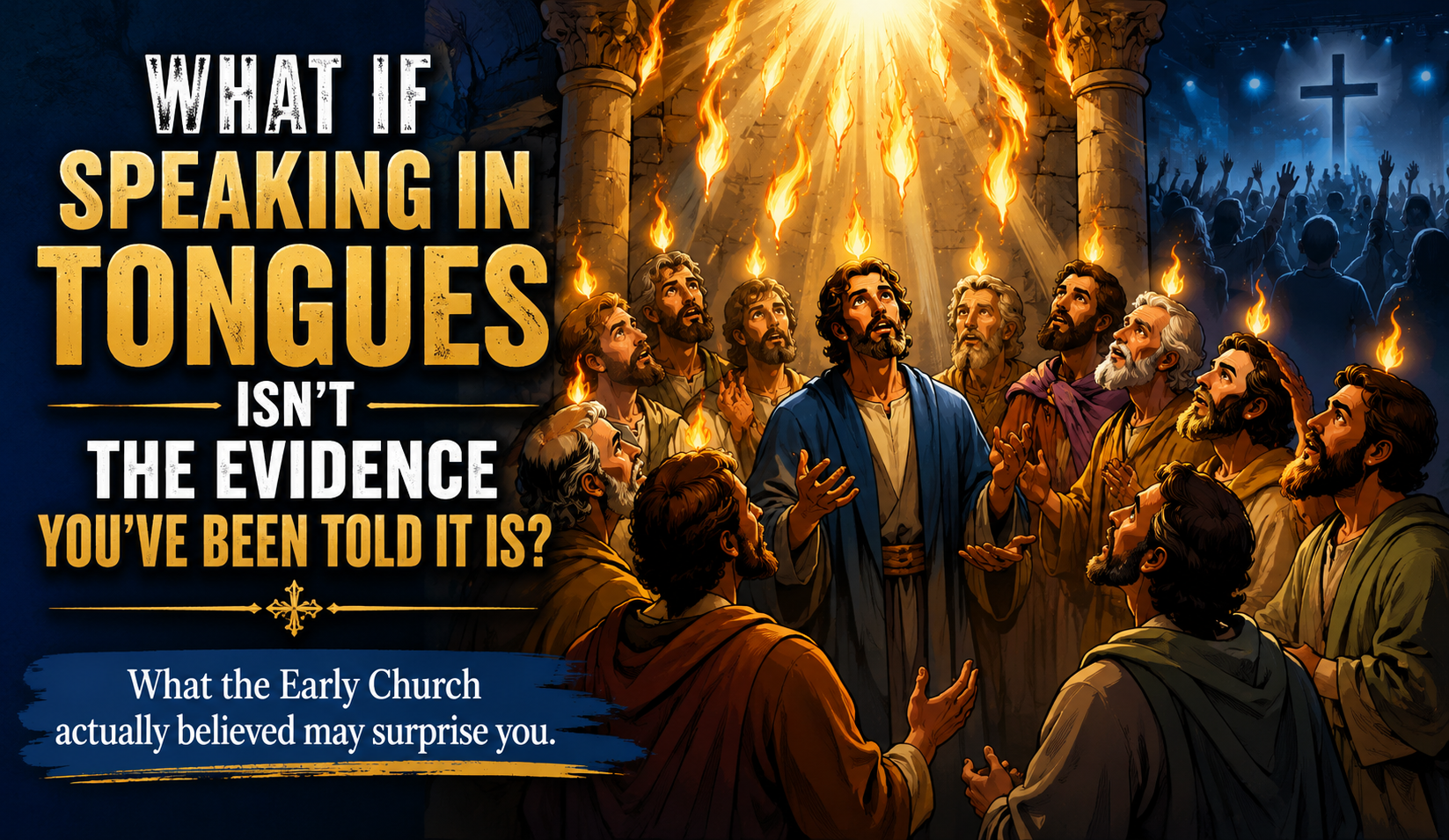
The first major occurrence of speaking in tongues occurs in Acts chapter 2 on the Day of Pentecost.
The Holy Spirit descended upon the Apostles as tongues of fire rested upon them, and they began speaking in languages they had never learned.
Notice something important.
The miracle was not random sounds.
The miracle was intelligible languages.
People from many different nations heard the Apostles proclaiming the mighty works of God in their own native tongues.
This was not given merely for personal edification.
It was given for the mission of the Church.
The Gospel was about to spread throughout the world, and God empowered His Apostles for that mission.
The gift served a purpose.
It was not an end in itself.
The Orthodox Understanding of Spiritual Gifts
The Orthodox Church has never denied the reality of spiritual gifts.
We believe the Holy Spirit is active today just as He was in the first century.
We believe miracles still occur.
We believe healings still occur.
We believe prophecy can still occur.
We believe God can grant extraordinary gifts whenever He chooses.
The question is not whether God can do these things.
The question is whether every Christian should seek tongues as proof that they have received the Holy Spirit.
The answer is no.
The Scriptures themselves reject that idea.
In 1 Corinthians 12, Saint Paul asks a series of rhetorical questions:
“Are all apostles? Are all prophets? Are all teachers? Do all work miracles? Do all possess gifts of healing? Do all speak with tongues?”
The obvious answer is no.
The Holy Spirit distributes gifts according to His will.
Not every Christian receives the same gifts.
Just as not every member of the body has the same function, not every Christian receives the same spiritual manifestations.
The Greater Gift
One of the tragedies of modern Christianity is that many believers have become fascinated with the gifts while neglecting the Giver.
Saint Paul addressed this exact problem in Corinth.
The Corinthians were obsessed with spiritual manifestations.
They prized spectacular experiences.
They elevated certain gifts above others.
Paul’s response was striking.
He did not point them toward more experiences.
He pointed them toward love.
Immediately after discussing spiritual gifts in 1 Corinthians 12, Paul transitions into 1 Corinthians 13.
Why?
Because love is greater than every gift.
A person can speak with the tongues of men and angels and still be spiritually bankrupt.
A person can prophesy and still lack holiness.
A person can work miracles and still fail to become like Christ.
The true evidence of the Holy Spirit is not tongues.
The true evidence of the Holy Spirit is transformation.
What Is the Evidence of the Holy Spirit?
This is where I believe many Christians ask the wrong question.
Instead of asking:
“Have I spoken in tongues?”
we should ask:
“Am I becoming more like Christ?”
The Scriptures consistently point us toward the fruit of the Spirit rather than the manifestations of the Spirit.
Saint Paul writes:
“The fruit of the Spirit is love, joy, peace, patience, kindness, goodness, faithfulness, gentleness, and self-control.”
Notice that Paul does not list tongues as a fruit.
The fruit reveals the health of the tree.
A person may have extraordinary gifts and still lack Christlike character.
But a person who is growing in humility, repentance, love, mercy, patience, and self-control is displaying the unmistakable work of the Holy Spirit in their life.
This is consistent with the ancient Christian understanding that theology is not merely about talking about God but experiencing God through a life of transformation and communion with Him. The Christian life is “the Way,” a path of purification and union with Christ rather than a pursuit of religious experiences.
What About Modern Tongues?
Can someone speak in tongues today?
Certainly.
God can do whatever He desires.
The Orthodox Church has never taught that God has ceased working miracles.
However, Orthodoxy also approaches extraordinary experiences with caution and discernment.
The Desert Fathers repeatedly warned that spiritual deception often begins when people become preoccupied with signs, visions, experiences, and supernatural manifestations.
The enemy is quite content to distract us from repentance if he can keep us fascinated with experiences.
The saints teach us to seek Christ Himself, not spiritual phenomena.
If God grants a gift, receive it with humility.
If He does not, give thanks anyway.
The presence of Christ is infinitely more valuable than any spiritual manifestation.
Why the Orthodox Church Does Not Teach That Tongues Are Required
One of the greatest dangers in some modern Christian circles is the belief that speaking in tongues is the necessary evidence of salvation or Spirit baptism.
This teaching creates two classes of Christians:
Those who have spoken in tongues.
Those who have not.
The New Testament never creates such a distinction.
The Church Fathers never created such a distinction.
The Orthodox Church has never created such a distinction.
The mark of a mature Christian is not ecstatic speech.
The mark of a mature Christian is holiness.
A holy grandmother who quietly prays the Jesus Prayer and serves her family with sacrificial love may be far closer to God than someone who displays dramatic spiritual gifts.
The saints consistently remind us that humility, repentance, and love are the true signs of spiritual maturity.
The Real Question
At the end of the day, I think the question about tongues often reveals a deeper longing.
People want assurance that God is with them.
They want confirmation that the Holy Spirit is active in their lives.
They want to know they belong to Christ.
And that longing is understandable.
But your assurance is not found in whether you have had a particular experience.
Your assurance is found in your relationship with Jesus Christ.
Do you repent when you sin?
Do you hunger for God?
Do you desire holiness?
Do you love what God loves?
Do you grieve over your sins?
Do you find yourself becoming more patient, more merciful, more forgiving, and more Christlike than you were a year ago?
Those are the questions that matter.
The greatest miracle is not speaking in another language.
The greatest miracle is that a sinner becomes a saint.
The greatest evidence of the Holy Spirit is not an ecstatic moment.
It is a transformed life.
Final Thoughts
So what is my stand regarding speaking in tongues?
I believe speaking in tongues was a genuine gift of the Holy Spirit in the Early Church.
I believe God can still grant that gift today.
I do not believe every Christian will receive that gift.
I do not believe every Christian should seek tongues as proof of receiving the Holy Spirit.
I do not believe speaking in tongues is the universal evidence of salvation, Spirit baptism, or spiritual maturity.
Instead, I believe Christians should seek Christ Himself.
Seek repentance.
Seek purity of heart.
Seek humility.
Seek the sacraments.
Seek prayer.
Seek holiness.
If God grants extraordinary gifts, receive them with gratitude.
If He does not, rejoice anyway.
Because the greatest gift the Holy Spirit gives is not tongues.
The greatest gift He gives is Christ living within us.
Want to go deeper?
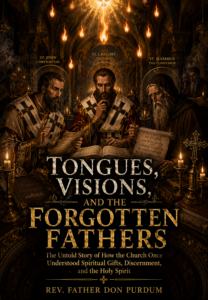
If this subject has challenged some of your assumptions about speaking in tongues, spiritual gifts, and the work of the Holy Spirit, I invite you to read my new book, Tongues, Visions, and the Forgotten Fathers: The Untold Story of How the Ancient Church Once Understood Spiritual Gifts, Discernment, and the Holy Spirit.
In this comprehensive study, I examine the biblical, historical, and patristic evidence surrounding tongues, prophecy, healing, spiritual warfare, discernment, and the pursuit of spiritual experiences. Most importantly, I explore how the great Fathers of the Church understood the Holy Spirit’s work in the life of the believer and why their wisdom is desperately needed in our generation.
If you are seeking a deeper, historically grounded, and authentically Orthodox understanding of these issues, this book will provide a roadmap for that journey.
Click Here to Learn More About the eBook
Want the entire article distilled into one clear, printable page?
Download your free summary and keep it with you.
Get the free PDF + join thousands receiving short, practical Orthodox insights in the “Morning Brew with Father Don” to help you grow in Christ each week.