
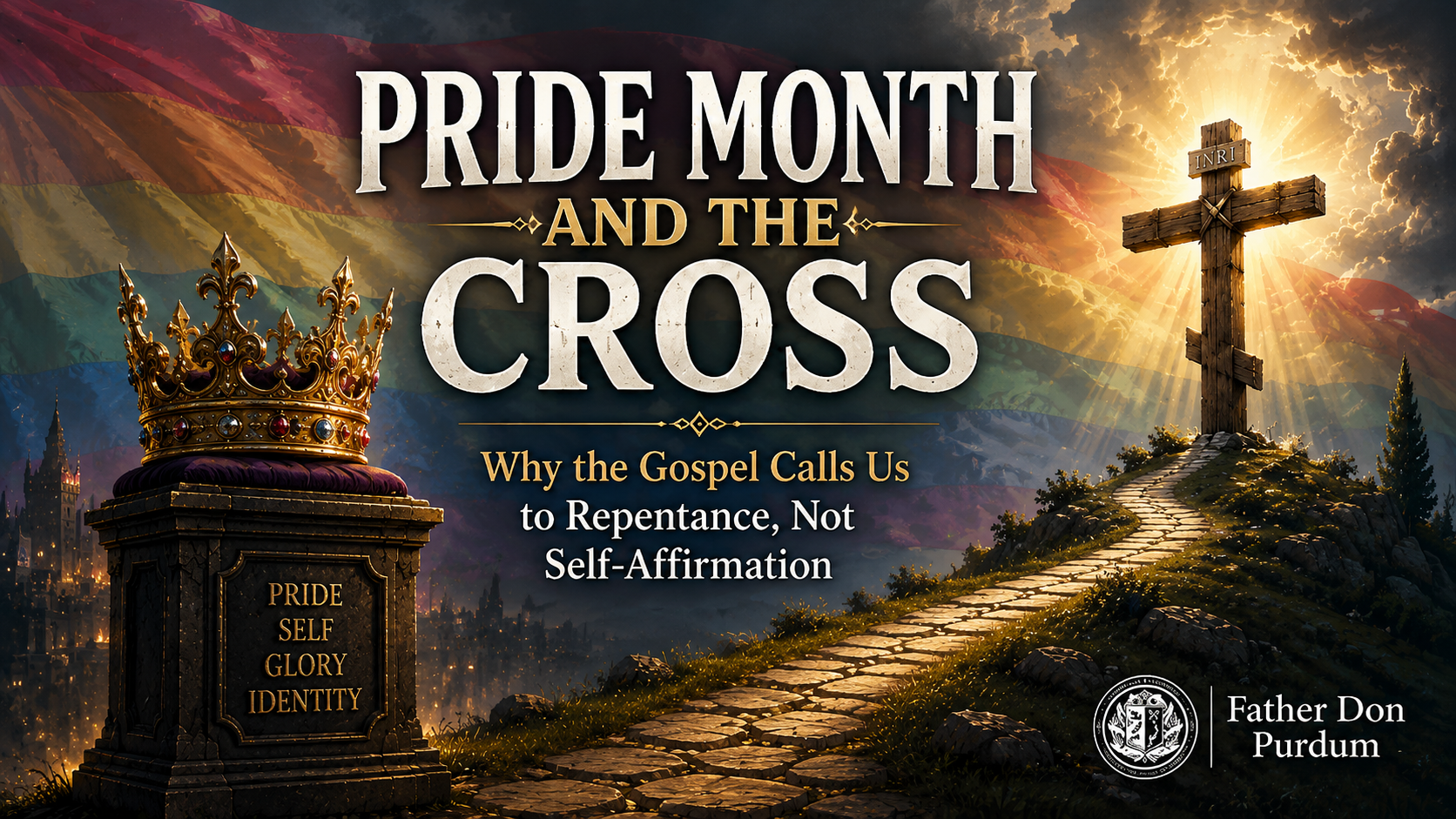
Every June, our culture enters into what has become known as Pride Month. Flags are raised, corporations adjust their branding, public institutions participate in celebrations, and countless conversations emerge about identity, sexuality, rights, and acceptance.
For many Christians, these conversations create tension. Some respond with anger. Others respond with fear. Still others remain silent, uncertain how to navigate the cultural moment faithfully.
Yet perhaps the most important question confronting Christians during Pride Month is not what the culture believes about sexuality.
The more important question is this:
What do we believe about repentance?
Because at its core, the conflict between Christianity and Pride is not fundamentally about sexual ethics. It is about two radically different understandings of the human person and the purpose of life itself.

You can Now Listen to Each Article
The Age of Self-Affirmation
Modern Western culture increasingly teaches that fulfillment is found through self-expression.
The highest good is authenticity.
The greatest virtue is self-acceptance.
The ultimate authority is the self.
The message is clear: discover who you are, embrace it without reservation, and demand that others affirm it.
Tragically, this philosophy has not remained outside the Church. Many Christians have embraced the language of affirmation rather than transformation. In an effort to appear compassionate, they have exchanged the ancient Christian call to repentance for the modern demand for validation. Yet genuine love never asks someone to remain captive to the very passions from which Christ came to deliver them. To affirm sin is not an act of participation in Christ. It is participation in the very bondage from which Christ seeks to free us.
While this philosophy sounds liberating, it stands in direct contrast to the Gospel of Jesus Christ.
Christ never taught self-affirmation.
He taught self-denial.
He never taught us to enthrone our desires.
He taught us to crucify them.
He never invited people to construct an identity apart from God.
He invited them to lose themselves so they could find themselves.
The Lord says:
“If anyone would come after Me, let him deny himself, take up his cross, and follow Me.”
This command is not directed toward a particular group of people.
It is directed toward every human being.
The Forgotten Sin Behind Pride Month
One of the greatest ironies of our age is that the word pride itself has historically been understood by Christians as the root of every other sin.
The Holy Fathers consistently identified pride as the passion that gave birth to rebellion against God.
Pride was the sin of Lucifer.
Pride was the temptation offered to Adam and Eve.
Pride remains the disease that blinds the human heart.
In the Orthodox tradition, pride is not merely arrogance or boastfulness.
Pride is something far deeper.
It is the refusal to submit ourselves to God.
It is the belief that our judgment is superior to His.
It is the conviction that we possess the right to determine good and evil on our own terms.
Pride whispers:
“I know better than God.”
“I do not need to change.”
“I should be accepted exactly as I am.”
Yet the Gospel declares something entirely different.
The Gospel says that all of us need healing.
All of us need transformation.
All of us need repentance.
The Problem Is Not One Passion
When Christians speak about Pride Month, the conversation often becomes narrowly focused on sexual behavior.
But the Orthodox understanding of sin is much broader and much deeper.
Every human being is fallen.
Every human being is disordered.
Every human being wrestles with passions.
For some, those passions are sexual.
For others, they are greed, anger, gluttony, envy, gossip, resentment, vanity, self-righteousness, addiction, or the love of power.
The specific passion may differ.
The spiritual problem remains the same.
This is where many contemporary Christians become confused. While Scripture commands us to love every person, it never commands us to affirm every desire. Love and affirmation are not synonymous. The Church welcomes every sinner because Christ welcomes every sinner. But Christ welcomes us in order to transform us, not to leave us unchanged. When Christians celebrate or affirm behaviors that God calls us to repent of, they cease participating in Christ’s work of healing and instead become participants in the normalization of sin.
The Christian life is not about identifying one group of sinners.
It is about recognizing that we are all sinners.
The Church is not a museum for the righteous.
It is a hospital for the sick.
And every one of us enters through the same door.
Repentance.
Repentance Is Not Rejection
One of the greatest misunderstandings in contemporary discussions is the belief that repentance is somehow an act of self-hatred.
The Orthodox Church has never taught this.
Repentance does not mean despising ourselves.
Repentance means refusing to settle for less than what God created us to become.
The Greek word for repentance, metanoia, literally means a change of mind.
It is a reorientation of the heart.
It is turning away from the false self and moving toward the true self found in Christ.
This is why repentance is not oppression.
It is liberation.
The passions promise freedom but ultimately enslave.
Christ calls us to surrender those passions not because He wishes to diminish us but because He desires to heal us.
The commandments are not arbitrary restrictions.
They are medicine.
God does not command repentance because He hates us.
He commands repentance because He loves us.
For this reason, the refusal to call someone to repentance is not an act of mercy. It is an act of abandonment. If sin truly separates us from God, then encouraging someone to remain comfortable in sin cannot be love. Christian compassion does not consist in affirming disordered desires. Christian compassion consists in walking alongside one another toward Christ, even when that journey requires sacrifice, struggle, and the crucifixion of deeply held passions.
The Cross Before the Crown
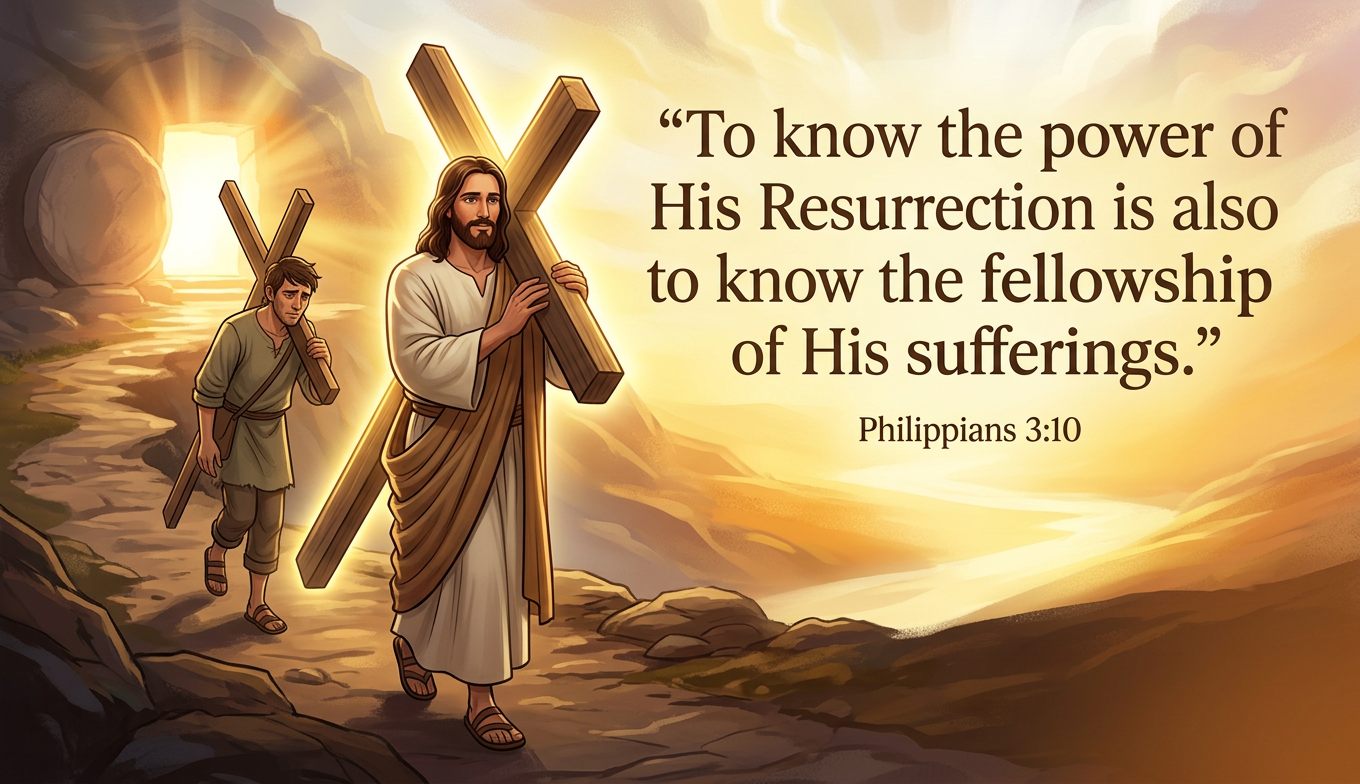
The modern world seeks resurrection without crucifixion.
It wants affirmation without transformation.
It desires glory without sacrifice.
But Christianity has always proclaimed a different path.
Before Easter comes Holy Friday.
Before resurrection comes the cross.
Before glory comes repentance.
There is no spiritual life apart from dying to ourselves.
This is why every Christian, regardless of his or her particular struggles, must continually ask difficult questions:
Which passions am I protecting?
Which sins have I normalized?
Which desires have I chosen to celebrate rather than crucify?
Where have I demanded that God affirm me rather than transform me?
Those questions matter far more than any cultural debate.
Because they expose the true battlefield of the Christian life.
The Real Battle Is Within
The greatest spiritual danger during Pride Month is not that we might be influenced by the surrounding culture.
The greater danger is that we might become Pharisees.
It is possible to oppose cultural pride while being consumed by spiritual pride.
It is possible to condemn someone else’s passions while excusing our own.
It is possible to defend Christian morality while lacking Christian humility.
The saints consistently remind us that salvation begins not with examining the sins of others but with examining our own hearts.
The person who sees his own sins clearly has little time left to be obsessed with the sins of his neighbor.
This does not mean truth becomes irrelevant.
It means truth must always be joined with humility.
Truth without love becomes cruelty.
Love without truth becomes sentimentality.
Christ embodies both perfectly.
A Better Response Than Condemnation
As Orthodox Christians, we must refuse two equally dangerous errors.
The first is compromise.
We cannot redefine Christian teaching in order to accommodate cultural trends.
Truth does not change because society changes.
The second error is condemnation.
We must never forget that every person we encounter bears the image of God.
Every person is loved by Christ.
Every person is someone for whom Christ shed His blood.
The goal of Christianity is not to win arguments.
The goal is the salvation of souls.
The Church must speak the truth clearly.
But she must do so with tears rather than triumphalism.
With humility rather than superiority.
With compassion rather than contempt.
The Invitation of the Gospel
Ultimately, Pride Month presents Christians with an opportunity.
Not merely an opportunity to critique culture.
Not merely an opportunity to discuss sexuality.
But an opportunity to rediscover the heart of the Gospel itself.
The Gospel does not call us to celebrate ourselves.
It calls us to become new creations.
It does not call us to build an identity around our desires.
It calls us to build our lives around Christ.
It does not invite us to affirm every impulse.
It invites us to crucify whatever separates us from God.
This is why the Church cannot participate in Pride as an institution, nor can faithful Christians participate in the celebration of any passion. Whether the passion is sexual immorality, greed, anger, vanity, or pride itself, Christians are called to crucify passions, not celebrate them. To celebrate what Christ calls us to repent of is to participate in something other than Christ. The Church’s calling is not affirmation but transformation; not self-expression but sanctification; not pride but repentance.
That invitation extends equally to every human being.
To the proud.
To the fearful.
To the angry.
To the greedy.
To the lustful.
To the self-righteous.
To all of us.
The Christian answer to Pride is not hatred.
The Christian answer to Pride is not condemnation.
The Christian answer to Pride is repentance.
And repentance remains the doorway to true freedom.
Want the entire article distilled into one clear, printable page?
Download your free summary and keep it with you.
Get the free PDF + join thousands receiving short, practical Orthodox insights in the “Morning Brew with Father Don” to help you grow in Christ each week.