
The Orthodox Practice Everyone Talks About—But Few Understand
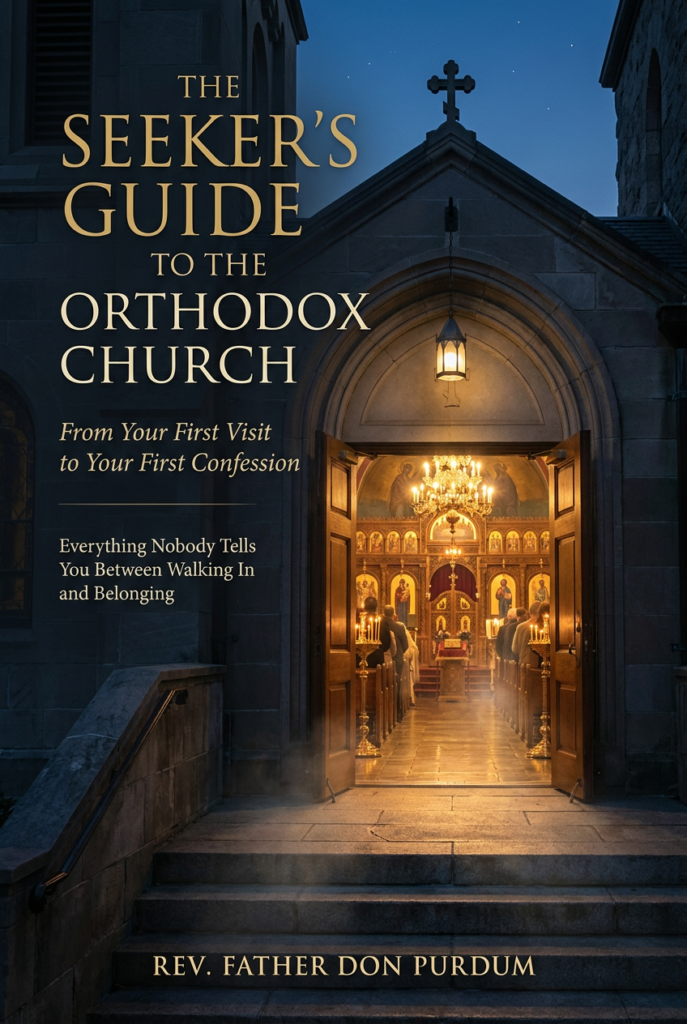
Walk into an Orthodox church long enough and you’ll eventually hear someone mention confession.
For many people exploring Orthodoxy, confession is one of those practices that creates a strange mixture of attraction and anxiety.
On one hand, they’re fascinated by it.
In a culture that has become increasingly therapeutic but rarely transformative, the idea of honestly confronting your sins before God feels refreshingly real. It feels demanding. Serious. Ancient. Authentic.
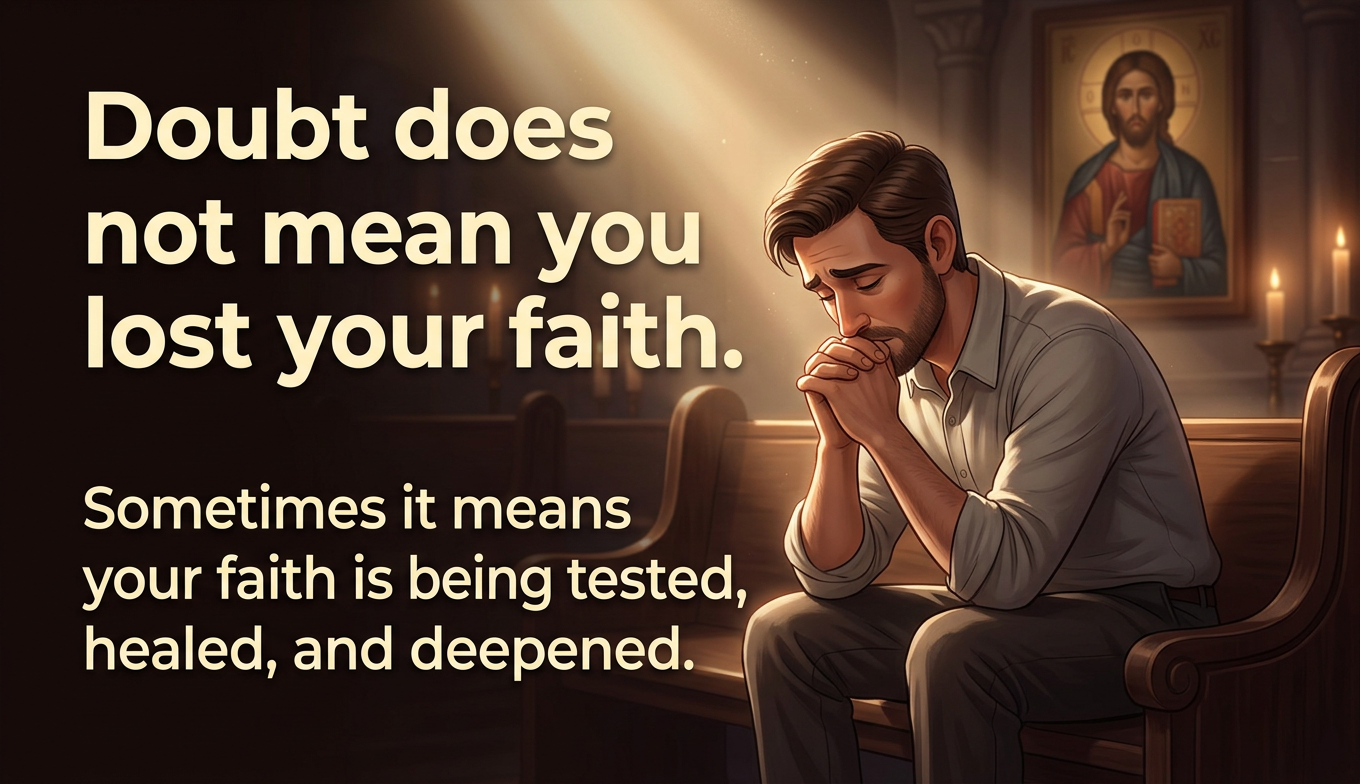
On the other hand, confession can be terrifying.
Questions begin to swirl.
“Do I have to tell a priest everything?”
“What if I’ve done something horrible?”
“Will he judge me?”
“Why can’t I just confess directly to God?”
“What actually happens in there?”
The irony is that many people who are deeply attracted to Orthodoxy are attracted precisely because of practices like confession. They recognize that modern Christianity often asks very little of people. Orthodoxy asks everything.
Yet the very practices that draw people toward the Church can also intimidate them enough to keep them standing at the door.
So let’s pull back the curtain.
Let’s talk honestly about what confession is—and perhaps even more importantly—what it is not.

You can Now Listen to Each Article
Confession Is Not a Religious Performance
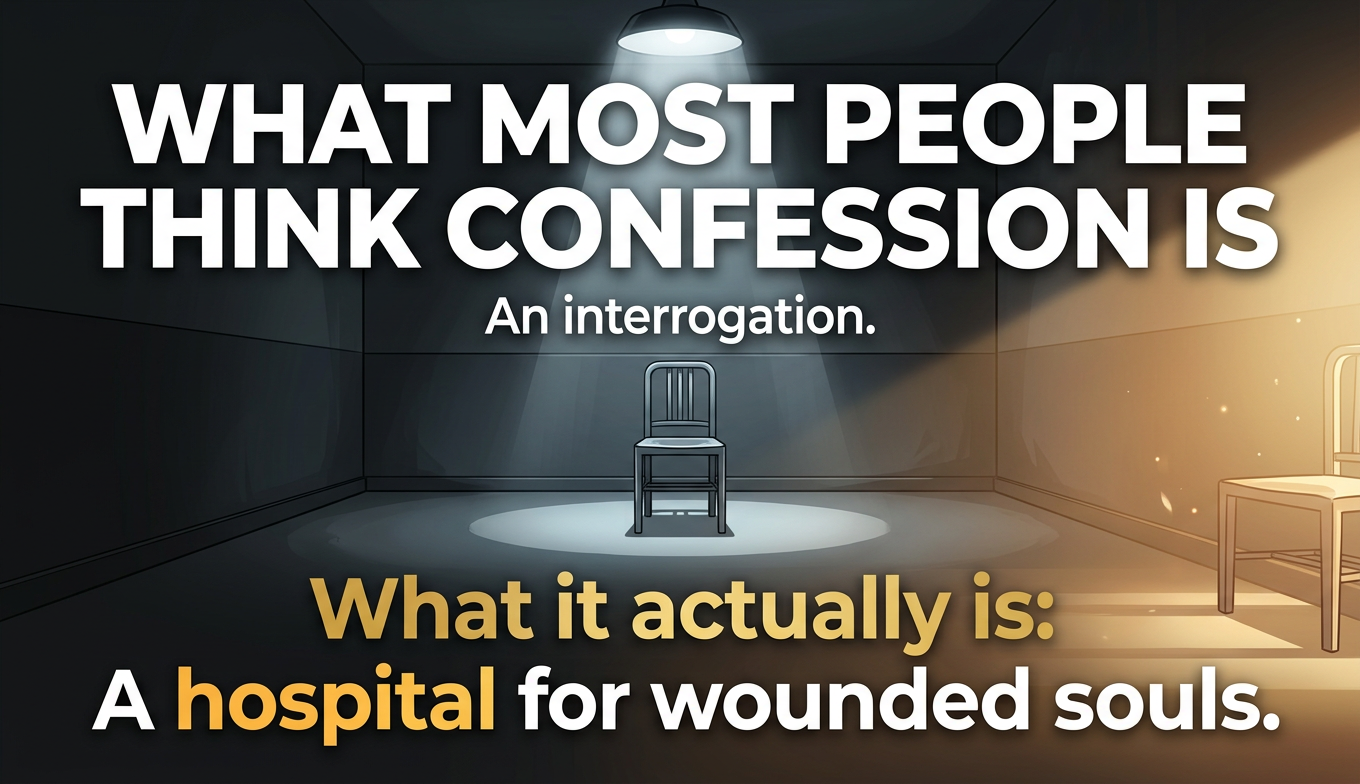
The first thing to understand is that confession is not a courtroom.
Many people imagine themselves standing before a priest as though they are appearing before a judge. They picture a spiritual trial where every mistake is examined and every failure is cataloged.
That is not the Orthodox understanding.
The priest is not the judge.
Christ is the Judge.
The priest is a witness.
In the traditional prayers of confession, the priest explicitly reminds the penitent that he is merely a witness bearing testimony before Christ. The confession is not fundamentally a conversation between you and the priest. It is a conversation between you and God, with the priest standing beside you as a fellow sinner who has been entrusted with a sacred ministry.
That distinction changes everything.
When confession is understood incorrectly, people fear exposure.
When confession is understood correctly, people begin to seek healing.
Confession Is About Healing, Not Punishment
One of the great differences between modern thinking and Orthodox thinking is how we understand sin.
Modern culture often views wrongdoing primarily through legal categories.
Orthodoxy certainly recognizes guilt, responsibility, and accountability. But the deeper understanding is that sin is a sickness of the soul.
When a person is consumed by pride, lust, greed, anger, envy, resentment, or despair, something inside them has become disordered.
The image of God remains.
But the heart has become wounded.
This is why the Church has historically viewed itself as a hospital.
You do not go to a physician because you are healthy.
You go because you need healing.
Likewise, you do not go to confession because you are the worst sinner in the room.
You go because you desire to become well.
In fact, one of the greatest misconceptions is that confession is for people who are failing spiritually.
The truth is often the opposite.
Confession is usually a sign that someone is taking their spiritual life seriously.
What Actually Happens During Confession?
The answer may surprise you.
Usually, nothing dramatic happens.
There are no flashing lights.
No mystical visions.
No emotional manipulation.
Most confessions are remarkably simple.
You stand before Christ, often in front of an icon of the Savior and the Gospel book.
The priest may begin with prayers.
You confess your sins.
You speak honestly.
You avoid excuses.
You avoid blaming others.
You avoid presenting yourself as either a villain or a victim.
You simply tell the truth.
For perhaps the first time in weeks, months, or years, you stop managing appearances and allow yourself to stand naked before God.
And that moment can be profoundly liberating.
The modern world trains us to curate an image.
Confession dismantles the image.
The modern world teaches us to hide.
Confession teaches us to come into the light.
Why Not Just Confess Directly to God?
This is probably the most common question converts ask.
And it’s a good question.
The answer is that we absolutely should confess directly to God.
Orthodox Christians do this every day.
Every prayer of repentance is a direct confession to God.
So why involve a priest?
Because Christianity has never been merely private.
Throughout Scripture, repentance has a communal dimension.
Christ gave His apostles authority to bind and loose sins. The Church has always understood confession as one of the ways Christ continues His healing ministry through His Body.
But there is another reason, and it is deeply practical.
Human beings are masters of self-deception.
We rationalize.
We minimize.
We excuse.
We hide.
We tell ourselves stories.
There is something profoundly humbling about speaking our sins aloud before another human being.
The very act destroys pride.
Things hidden in darkness lose much of their power when brought into the light.
This is one reason confession has endured for two thousand years.
It works.
Not because of psychology alone.
Not because of ritual alone.
But because humility creates space for grace.
The Sins That Trouble Us Most Are Often the Ones We Avoid Mentioning
Every priest eventually notices a pattern.
People will confess dozens of minor faults while carefully stepping around the one thing that truly troubles their conscience.
Why?
Because shame is powerful.
The enemy of our souls loves secrecy.
He thrives in darkness.
He thrives in isolation.
He thrives when we believe that our sins are uniquely terrible and therefore must remain hidden.
But healing begins where honesty begins.
One of the great discoveries people make in confession is that the thing they feared saying out loud was often the very thing preventing their freedom.
The wound hidden the longest is usually the wound that requires the most healing.
Will the Priest Think Less of Me?
Another fear many converts carry is this:
“What if the priest is shocked?”
The short answer is that he probably won’t be.
Priests have heard confessions from thousands of people.
More importantly, priests hear their own confessions.
They know what human nature is capable of because they carry the same fallen nature.
A good priest is not sitting there calculating your worth.
He is praying for your healing.
He is listening not as a prosecutor but as a spiritual physician.
The goal is not condemnation.
The goal is restoration.
Why Converts Are Drawn to Confession
I find it fascinating that many converts are simultaneously frightened by confession and attracted to it.
I think there is a reason.
Deep down, people are exhausted.
They are tired of pretending.
Tired of image management.
Tired of carefully crafted personas.
Tired of carrying guilt that never seems to go away.
Modern society offers endless opportunities for self-expression but very few opportunities for genuine repentance.
Confession offers something different.
It offers truth.
Not the truth about everyone else’s sins.
The truth about our own.
And strangely enough, that truth becomes the doorway to freedom.
What Happens After Confession?
This may be the most important question of all.
After confession, you get up.
You return to your life.
Your circumstances may not change.
Your temptations may not disappear.
Your struggles may still be waiting for you tomorrow morning.
But something has changed.
You have stopped hiding.
You have stepped into the light.
You have acknowledged reality before God.
And where humility exists, grace begins to work.
Repentance is not about achieving perfection overnight.
It is about turning toward Christ again and again and again.
Every confession is another step on that path.
The early Christians were first called “The Way” because Christianity is not merely a set of beliefs but a journey into union with God. Confession is one of the most important tools the Church gives us for staying on that path, helping us cultivate purity of heart and deeper communion with Christ.
Final Thoughts
If you are exploring Orthodoxy and confession intimidates you, know that you are not alone.
Almost everyone feels that way at first.
But eventually many discover something unexpected.
The thing they feared was actually a gift.
The place they expected judgment became a place of mercy.
The burden they had carried for years became lighter.
Confession is not about humiliation.
It is about healing.
It is not about earning God’s love.
It is about learning to receive it.
And in a world where almost everyone is hiding behind something, there is extraordinary freedom in standing before Christ and simply telling the truth.
Want the entire article distilled into one clear, printable page?
Download your free summary and keep it with you.
Get the free PDF + join thousands receiving short, practical Orthodox insights in the “Morning Brew with Father Don” to help you grow in Christ each week.