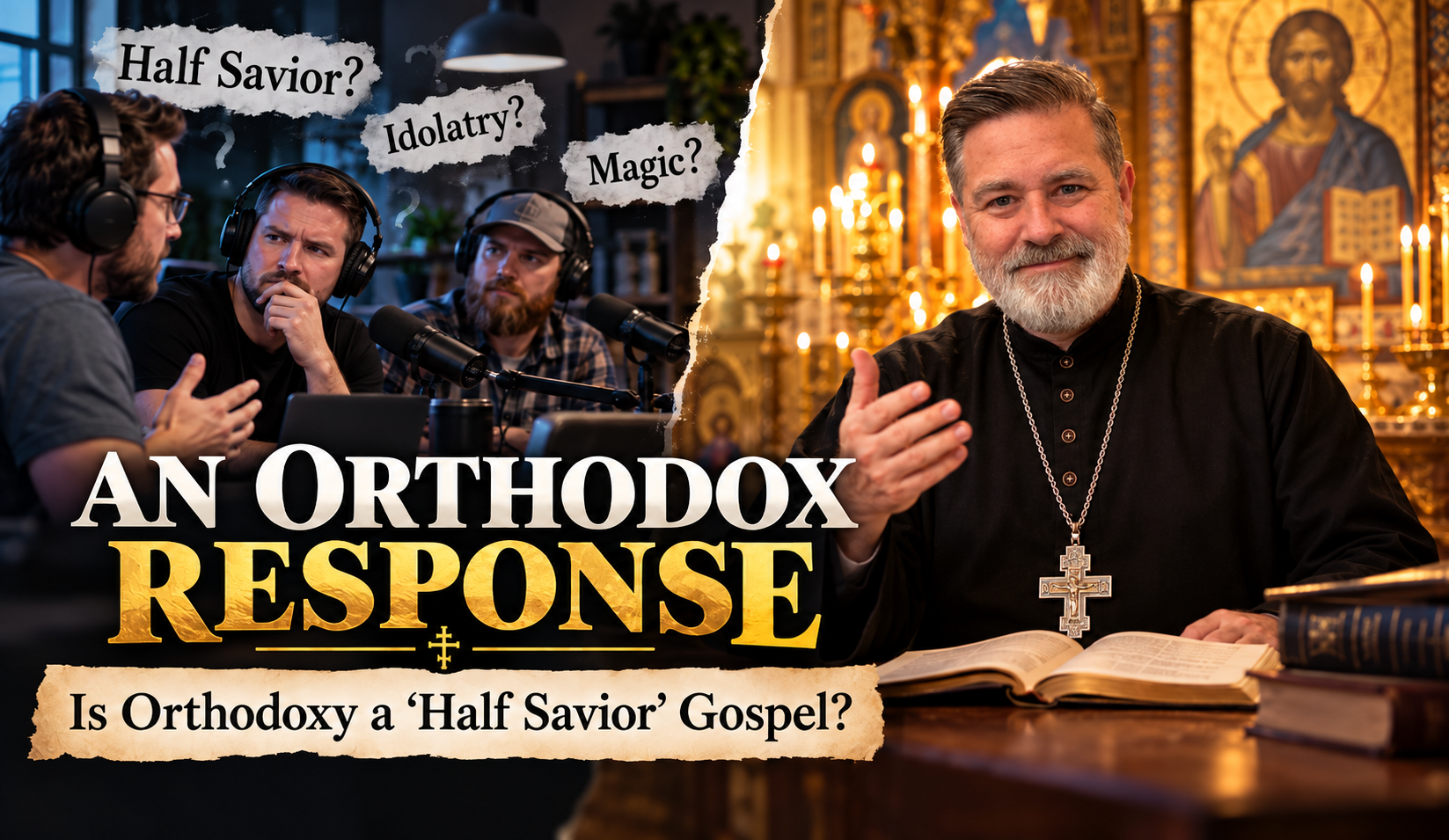
In many modern Christian circles, icons are misunderstood. Some see them as unnecessary religious decoration. Others mistakenly believe that Orthodox Christians “worship images.” Yet for the Orthodox Church, icons are neither decoration nor idols. They are deeply theological, profoundly biblical, and inseparably connected to the mystery of the Incarnation of Jesus Christ.
Icons matter because Christianity is not merely an abstract philosophy. Christianity is the revelation of God in history, in matter, in flesh, and in visible reality. The Son of God became visible. Because He became visible, He can be depicted.
The icon is therefore not an optional artistic tradition. It is a confession of faith.
You can Now Listen to Each Article
What Is an Icon?
The word icon comes from the Greek word eikon (εἰκών), meaning “image” or “likeness.”
An icon is a sacred image used by the Church to reveal spiritual truth. Icons depict:
- Christ
- The Theotokos (Virgin Mary)
- Angels
- Saints
- Biblical events
- Feasts of the Church
- Spiritual realities
But icons are not merely “religious paintings.” They are theology in color. The Orthodox Church often says that icons are the Gospel written visually. That phrase is important because it helps us understand how the early Christians viewed the relationship between truth and beauty. In the modern world, we tend to separate art from theology, but the ancient Church never thought that way.
For the early Christians, beauty itself had theological significance. A sacred image was not merely meant to decorate a wall. It was meant to proclaim truth, form the soul, and direct the heart toward God. The icon becomes a visual participation in the life of the Church.
The Foundation of Icons: The Incarnation
The theology of icons begins with one central truth: God became man.
This is where many conversations about icons either become clear or completely confusing. If we start merely with the Old Testament prohibition against graven images, we can easily misunderstand why the Church embraces icons. But if we begin with the Incarnation, everything changes.
In the Old Testament, Israel was commanded:
“You shall not make for yourself a carved image…” (Exodus 20:4)
At first glance, many assume this means all religious images are forbidden. Yet if that were true, God would not later command Moses to create cherubim over the Ark of the Covenant, nor would He command sacred imagery within the Tabernacle itself. The issue was never the existence of images. The issue was idolatry.
The nations surrounding Israel attempted to trap divinity inside idols made by human hands. Pagan worship reduced gods into objects. Israel was forbidden from doing this because the true God cannot be contained, manipulated, or reduced to created matter.
But then something extraordinary happened.
The invisible God became visible in Jesus Christ.
This is why Saint Paul calls Christ:
“the image (eikon) of the invisible God” (Colossians 1:15)
That single verse changes the entire conversation.
Christianity is not the story of humanity trying to climb upward toward God. Christianity is the story of God descending into human history, taking flesh, entering matter, and revealing Himself visibly. Christ could be seen. He could be touched. He walked among men.
Saint John of Damascus, one of the great defenders of icons, famously wrote:
“When the Invisible One becomes visible in the flesh, you may then depict the likeness of Him who has appeared.”
That statement gets to the heart of Orthodox theology. To reject icons entirely creates a dangerous theological problem because it risks minimizing the reality of the Incarnation itself. If Christ truly became man—not merely appearing human, but fully assuming human nature—then His humanity can be depicted.
Icons therefore proclaim:
- Christ had a real body
- Christ entered history
- Matter can be sanctified
- Creation can become a vehicle of divine grace
This is why icons matter so deeply within Orthodox Christianity. They are not peripheral to theology. They emerge directly from the theology of Christ Himself.
Icons and the Sacramental Vision of Christianity
One of the greatest differences between ancient Christianity and the modern secular mindset is how each views the material world.
Modern culture often divides life into categories:
- spiritual versus physical
- sacred versus ordinary
- heavenly versus earthly
But ancient Christianity did not think this way.
Orthodox Christianity has always viewed creation sacramentally. In other words, matter can become a means of communion with God.
We already accept this principle in many areas of Christian life:
- Water becomes baptism
- Bread and wine become Eucharist
- Oil becomes anointing
- Human words proclaim divine revelation
- Human bodies become temples of the Holy Spirit
Christianity is not anti-material. God created the material world and declared it good. Sin corrupted creation, but Christ came not merely to rescue souls from matter, but to transfigure creation itself.
Icons participate in this sacramental worldview.
An icon is still wood and paint, but it becomes something more than ordinary artwork because it is consecrated to reveal heavenly reality. The icon becomes a witness to the sanctification of matter itself.
This is where many misunderstand Orthodoxy. Orthodox Christians do not worship wood and paint. They venerate the person depicted in the icon. The icon is a window, not the destination itself.
Worship vs. Veneration
This distinction between worship and veneration is absolutely essential.
One of the oldest accusations against icons is that they constitute idolatry. But the Orthodox Church has always carefully distinguished between:
- worship (latreia), which belongs to God alone
- veneration (proskynesis), which is honor given to holy persons or sacred things
Even within Scripture, we see gestures of honor constantly:
- people bow before kings
- Israel reverences holy objects
- prophets receive acts of respect
- the Ark of the Covenant is treated with immense reverence
None of these acts constituted worship in the absolute sense reserved for God alone.
The Seventh Ecumenical Council articulated this beautifully when it declared:
“The honor shown to the image passes to the prototype.”
This means the reverence given before an icon is directed toward the person depicted, not toward the material object itself.
When an Orthodox Christian kisses an icon of Christ, he is expressing love for Christ.
When he venerates an icon of a saint, he honors the grace of God manifested in that saint’s life.
In many ways, people already understand this principle instinctively. A photograph of a loved one is not merely paper and ink. People kiss photographs of deceased spouses, soldiers carry pictures of their families, and children treasure images of parents. The honor shown toward the image is connected to the person represented.
The Church simply understands icons within a much deeper theological framework.
Why Icons Matter Spiritually
Icons are not merely historical artifacts or theological teaching tools. They actively shape the spiritual life of believers.
One of the most powerful realities about icons is that they form the imagination of the soul.
Modern people often underestimate how much imagery shapes human consciousness. Every day we are catechized visually through:
- advertising
- entertainment
- social media
- politics
- celebrity culture
Images preach sermons constantly.
The question is not whether images shape us. The question is which images are shaping us.
Icons reorient the Christian imagination toward holiness. They remind believers that sanctity is possible, that heaven is real, and that human beings are capable of transfiguration through union with Christ.
This is one reason Orthodox homes traditionally contain icon corners. The home itself becomes a small sanctuary, a little church, where daily life is lived before the presence of God.
Icons also reveal something deeply important about the communion of saints.
In the modern world, death is often viewed as absolute separation. But Christianity proclaims that Christ has conquered death. The saints are alive in Him.
Hebrews speaks of believers being surrounded by a “great cloud of witnesses.” Icons visually manifest this reality. When Orthodox Christians stand in church surrounded by icons, they are reminded that worship is never an isolated individual act. The Church worships together with angels, saints, martyrs, and all the faithful who have gone before us.
The icon therefore becomes a visible reminder that heaven and earth are joined in Christ.
Did the Early Church Use Icons?
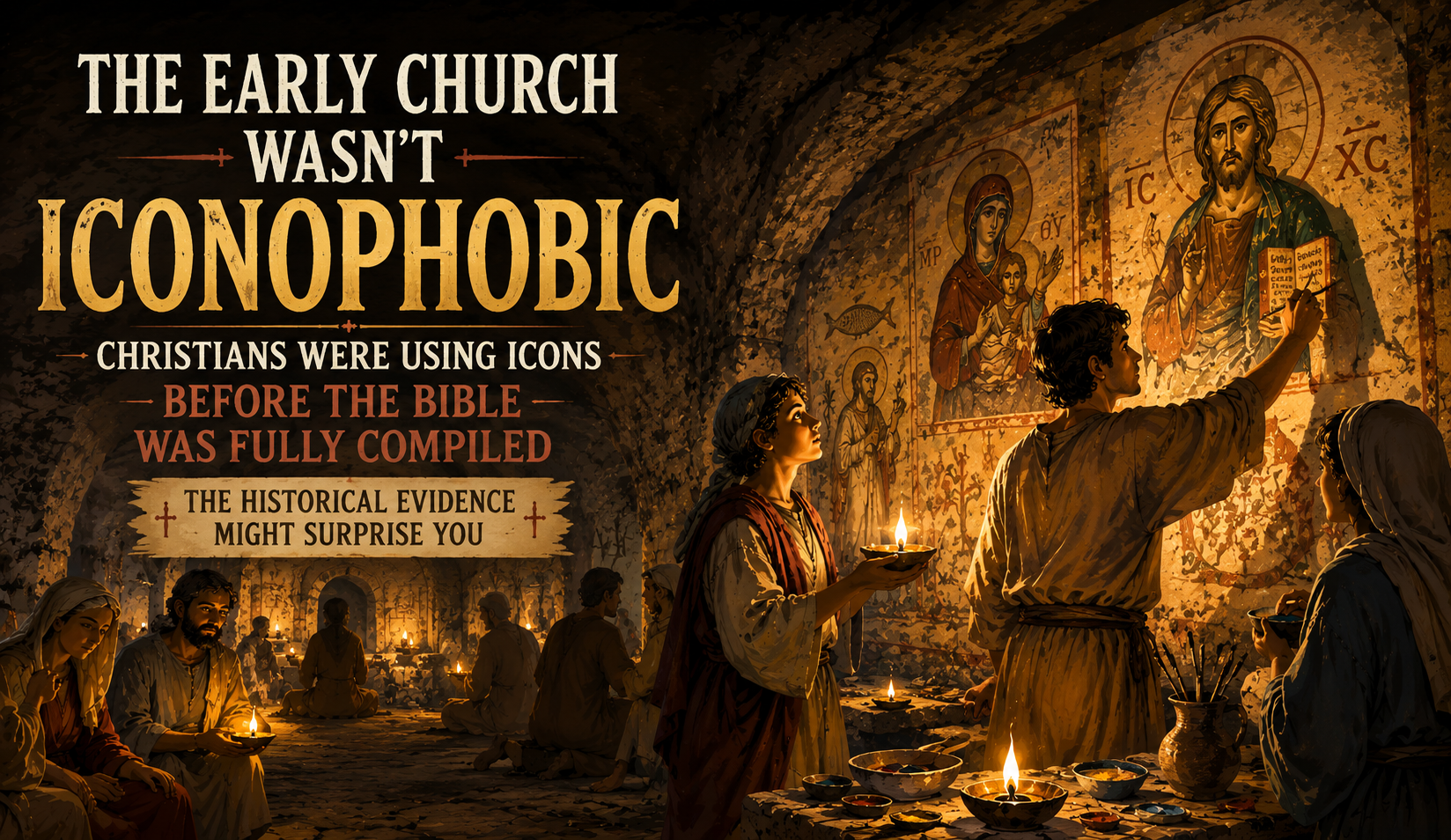
This is one of the most important historical questions because many people assume icons developed centuries later as some kind of corruption of Christianity. Yet the historical evidence says otherwise.
The early Church absolutely used sacred imagery.
In fact, the archaeological evidence is overwhelming.
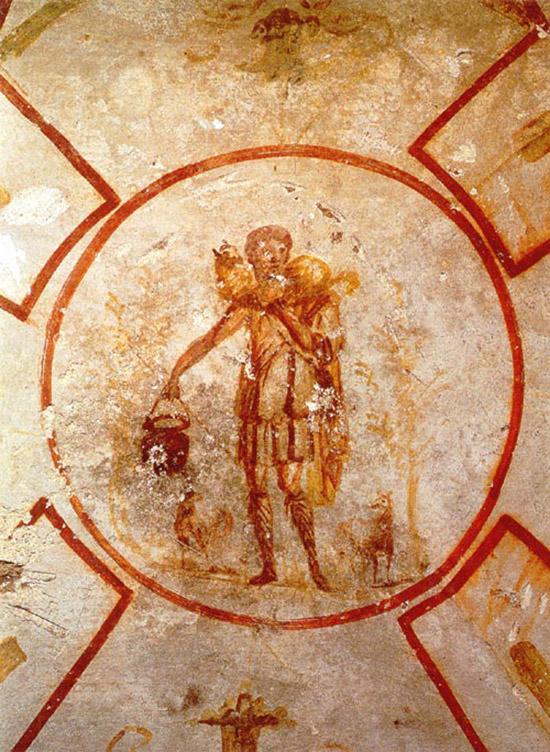
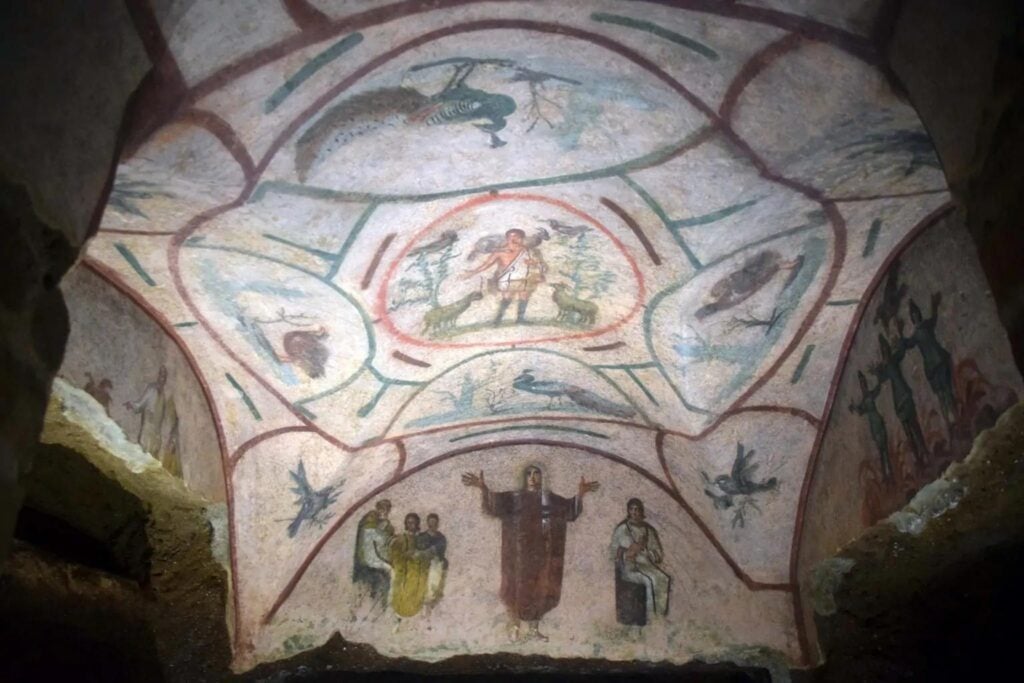
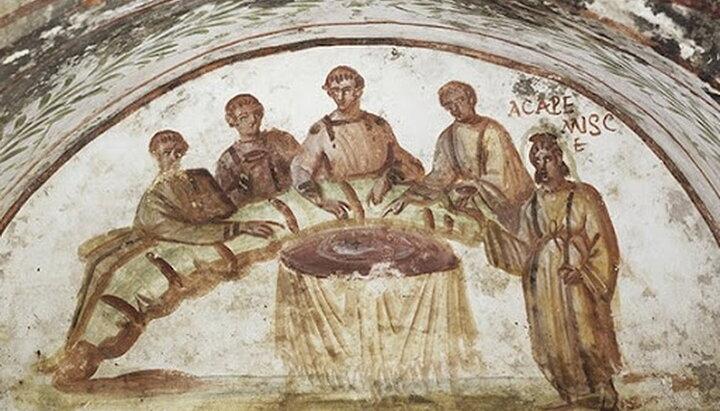
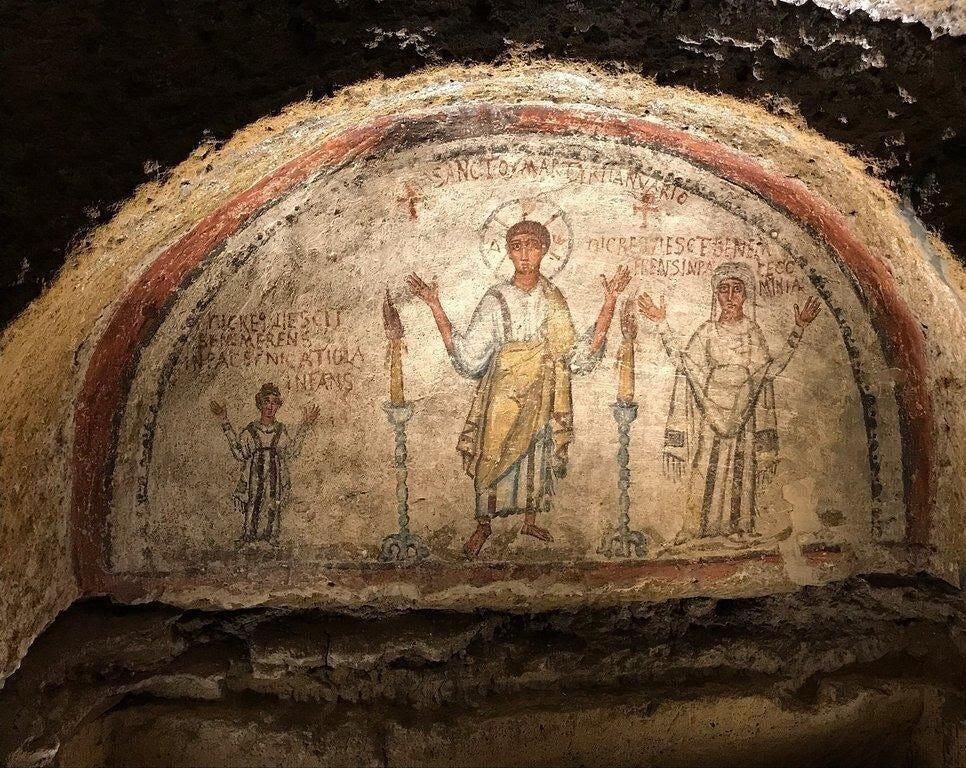
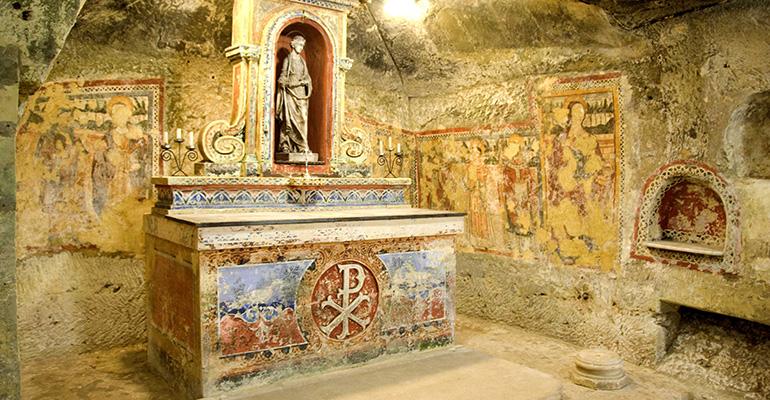
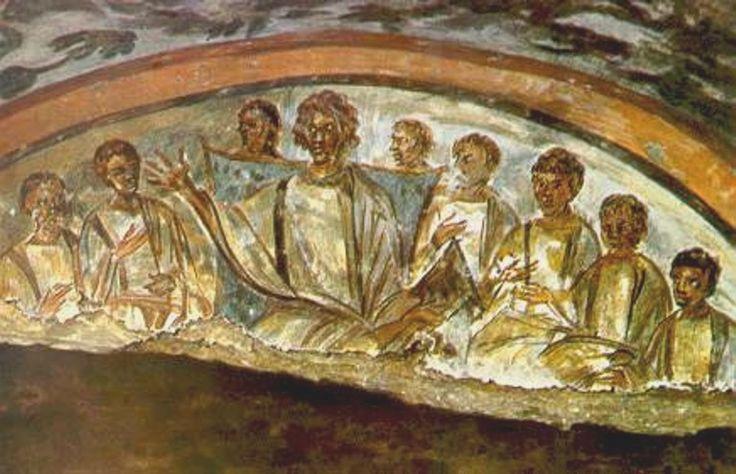
The Roman catacombs, dating to the second and third centuries, contain extensive Christian imagery. These underground burial chambers include depictions of:
- Christ as the Good Shepherd
- Jonah and the whale
- biblical miracles
- Eucharistic scenes
- saints and martyrs
- the Virgin Mary holding Christ
The Catacomb of Priscilla contains one of the earliest known images of the Theotokos with the Christ Child. This alone demonstrates that sacred Christian imagery existed generations before Constantine.
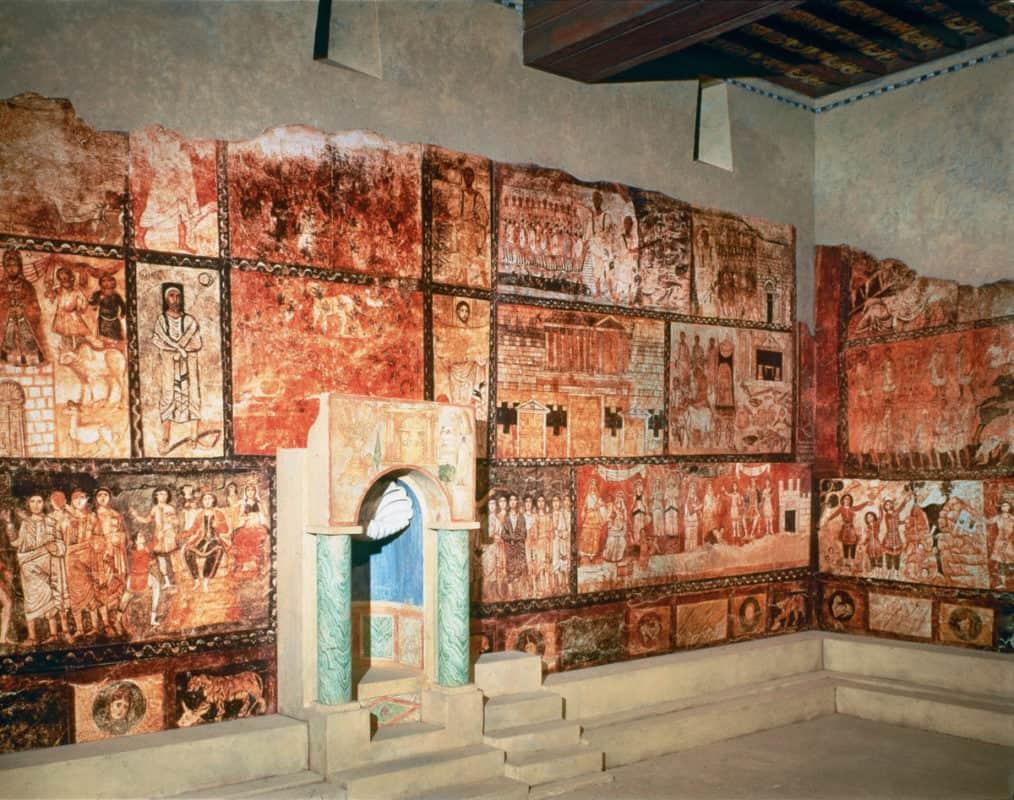
Even more striking is the discovery of the church at Dura-Europos in Syria, dating to around AD 240. This ancient house church contains painted biblical scenes depicting:
- Christ healing the paralytic
- Christ walking on water
- the women at the tomb
- the Good Shepherd
This discovery is critically important because it completely dismantles the idea that early Christians rejected visual depictions of Christ. Christians were already decorating places of worship with sacred imagery very early in Church history.
And then there are the surviving icons themselves.
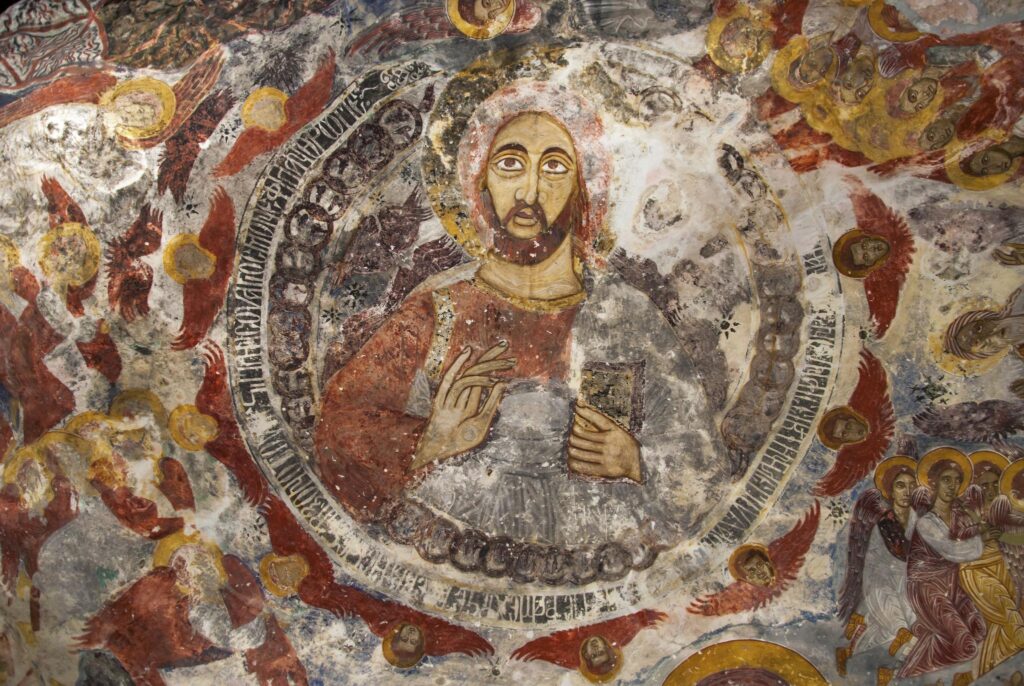
One of the most famous is the Christ Pantocrator icon at Saint Catherine’s Monastery at Mount Sinai, dating to the sixth century. It remains one of the oldest surviving icons of Christ in existence.
What makes this icon especially important is not merely its age, but its sophistication. Artistic traditions do not emerge fully formed overnight. The existence of highly developed iconography by the sixth century proves that the tradition itself stretches back much earlier.
What Did the Early Church Fathers Say?
The writings of the early Church Fathers also support the use of sacred images.
Saint Basil the Great wrote:
“The honor paid to the image passes to the prototype.”
This became one of the foundational theological principles later affirmed at the Seventh Ecumenical Council.
Saint Gregory of Nyssa described sacred imagery depicting biblical scenes and martyrdoms in ways that clearly indicate Christians used visual theology devotionally.
Eusebius of Caesarea even records the existence of images of Christ, Peter, and Paul among early Christians. Interestingly, Eusebius himself expressed caution about certain uses of images, but his testimony is still important because it confirms that such images undeniably existed.
This is a crucial historical point. Even those who were hesitant about icons still acknowledged that Christians were using them.
The Iconoclastic Controversy
In the eighth and ninth centuries, the Church entered one of the most intense theological conflicts in its history: Iconoclasm.
Some Byzantine emperors attempted to abolish and destroy icons. Influences from Islamic aniconism, political pressures, and misunderstandings of Old Testament theology all contributed to the controversy.
But the Church understood that something much deeper was at stake than art.
The debate ultimately centered on Christology.
Did God truly become man?
The defenders of icons argued that if Christ truly assumed material flesh, then matter itself could reveal divine glory. To reject icons entirely risked undermining the full reality of the Incarnation.
This is why the Seventh Ecumenical Council in AD 787 defended the use of icons so forcefully. The council affirmed that icons are a necessary consequence of the Incarnation itself.
Christ sanctified matter by entering it.
Why Modern Christianity Often Struggles With Icons
Many modern Christians unknowingly inherit assumptions shaped more by the Enlightenment and post-Reformation reactions than by the worldview of the early Church.
Modern thought often reduces faith to ideas, propositions, and internal beliefs. But ancient Christianity understood salvation as participation in divine life.
The Orthodox worldview remains deeply incarnational:
- God works through matter
- beauty reveals truth
- creation can be sanctified
- heaven and earth overlap
Icons stand directly against modern secularism because they proclaim that the material world is not meaningless. Matter matters because God entered matter.
In a culture flooded with distorted images that shape the soul toward pride, lust, greed, and self-worship, icons call believers toward holiness, humility, repentance, and communion with God.
Conclusion: Why Icons Matter
Icons matter because Christianity is incarnational.
They proclaim:
- God became man
- matter can be sanctified
- heaven and earth are united in Christ
- the saints are alive
- beauty reveals divine truth
The earliest Christians used sacred imagery. Archaeology confirms it. The Church Fathers defended it. The Ecumenical Councils affirmed it.
Icons are not a corruption of Christianity. They are witnesses to the ancient Christian understanding of salvation itself.
In many ways, the modern discomfort with icons reveals how deeply disconnected modern culture has become from the sacramental worldview of the early Church. Ancient Christians understood that human beings are shaped by what they behold. The icon exists to direct human vision toward Christ and toward the transfiguration of humanity in Him.
The icon is ultimately not about art alone.
It is about the Gospel.
It is theology in color.
A witness to the Incarnation.
A visible proclamation that God truly entered human history and sanctified creation forever.
Want the entire article distilled into one clear, printable page?
Download your free summary and keep it with you.
Get the free PDF + join thousands receiving short, practical Orthodox insights in the “Morning Brew with Father Don” to help you grow in Christ each week.