
There are moments in life when a memory comes crashing back into your mind out of nowhere.
Maybe you’re driving to work.
Maybe you’re lying awake at 2:00 in the morning.
Maybe you’re praying.
And suddenly, there it is.
That thing you did.
That person you hurt.
That lie you told.
That relationship you destroyed.
That season of your life that you wish had never happened.
Your stomach tightens.
Your heart sinks.
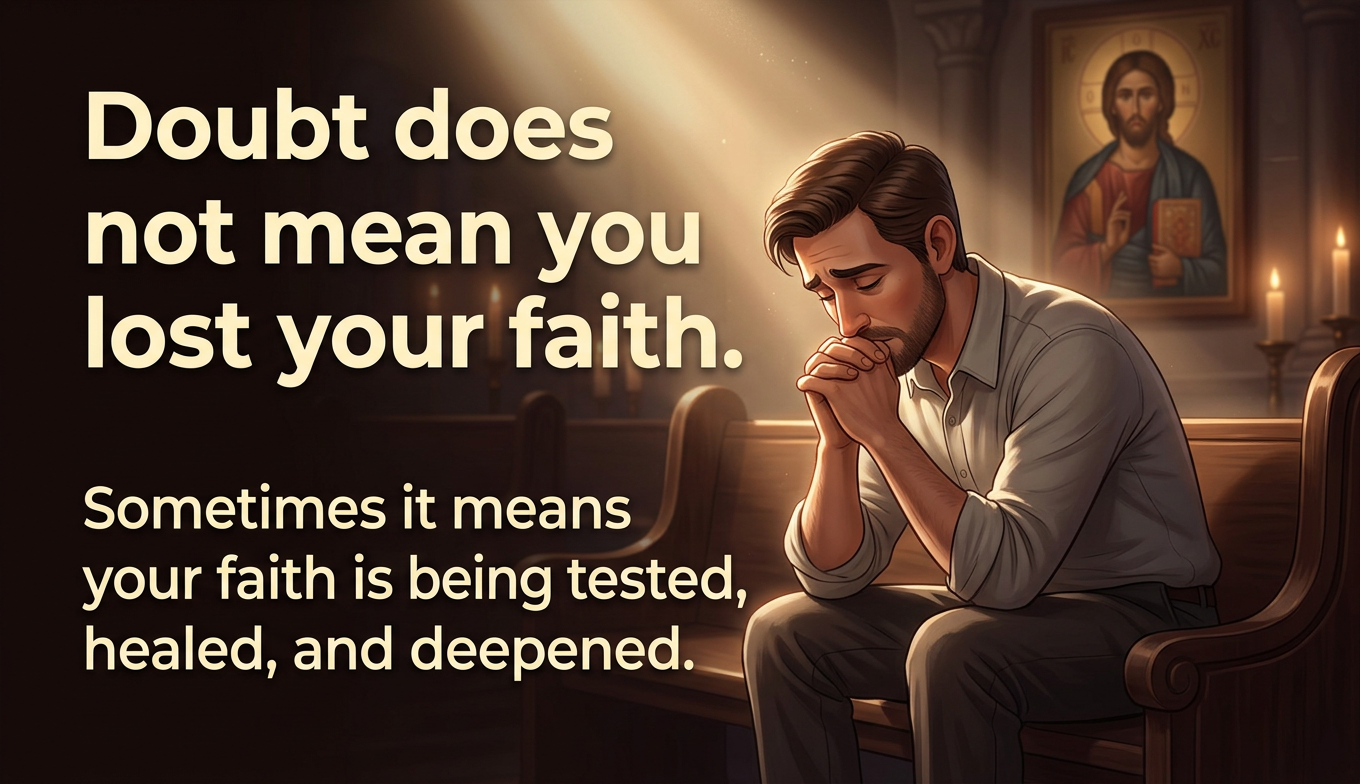
And a question begins to whisper in the darkness:
“Did God really forgive me?”
Then comes the second question, and for many people, it is even more frightening:
“When I die, am I going to have to answer for this again?”
“If I confessed it years ago, if I repented, if I asked Christ to forgive me, will that sin be brought up again on my soul’s journey?”
If you’ve ever wrestled with that question, you’re not alone.
In fact, I think every serious Christian has wrestled with it at some point.
Because the deeper we grow in Christ, the more aware we become of just how much we need His mercy.
You can Now Listen to Each Article
Why This Question Matters
This article was inspired by a thoughtful question that was asked on Facebook after my recent article discussing the Orthodox concept of the tollhouses.
The reader asked:
“Will the sins we committed be brought up if we confess them on earth? If we recall something we did in the past and ask for the Lord’s forgiveness, will we be reminded of them again on our soul’s journey?”
It’s an important question because for many Christians, especially those who are encountering the Orthodox understanding of the tollhouses for the first time, the conversation can initially create anxiety.
So before we answer the question, let’s briefly establish some context.
The tollhouses are part of an ancient Orthodox tradition that describes the soul’s passage after death and its encounter with spiritual realities. In the broadest sense, the tollhouses illustrate a spiritual truth that every Christian already knows from Scripture. We are engaged in spiritual warfare, our choices matter, and the enemy continually seeks to accuse and separate us from God.
The tollhouses are not a second chance for salvation.
They are not a place where demons decide your eternal destiny.
They are not some kind of celestial courtroom where Christ is absent.
Rather, the tradition emphasizes the reality of spiritual accountability and the importance of living a life of repentance and union with Christ.
Unfortunately, when some people first hear about the tollhouses, they immediately begin asking questions like:
“What if I forgot a sin?”
“What if I confessed something imperfectly?”
“What if something I did twenty years ago suddenly comes up again?”
“What if I sincerely repented but still remember what happened?”
Those are understandable concerns.
But they also reveal something deeper.
Many of us have a tendency to place more confidence in our ability to remember every sin than we do in Christ’s ability to forgive them.
And that is exactly why this question deserves a careful answer.
Because the heart of Christianity is not the strength of your memory.
The heart of Christianity is the mercy of Jesus Christ.
The Fear That Many Christians Carry
One of the greatest misunderstandings in Christianity is that God’s forgiveness works the same way human forgiveness works.
It doesn’t.
Human beings say they forgive, but they often remember.
Human beings say they forgive, but sometimes they keep score.
Human beings say they forgive, but years later they can still weaponize the past.
God is not like that.
The problem is that many of us project our own brokenness onto Him.
We imagine God sitting in heaven with a giant ledger, waiting for the opportunity to reopen old files and remind us of every failure we’ve ever committed.
But that is not the God revealed to us in Jesus Christ.
The God revealed in Christ is the Father who runs toward the prodigal son.
The Shepherd who leaves the ninety-nine to find the one.
The Physician who heals wounded souls.
The One who desires mercy and restoration.
What Happens When We Truly Repent?
Repentance is not merely saying, “I’m sorry.”
Repentance is a turning.
The Greek word metanoia literally means a change of mind, a transformation of heart, a reorientation of one’s entire life toward God.
This is why the Orthodox Church does not view salvation as merely a legal transaction.
Salvation is healing.
Sin wounds us.
Sin distorts us.
Sin darkens our understanding.
Sin separates us from the life of God.
Repentance is the process through which Christ begins restoring what sin has broken.
When we confess our sins and genuinely repent, we are not informing God of something He did not already know.
We are stepping out of the darkness and into the light.
And once something has been brought into the light of Christ, it loses its power.
That is one of the reasons transparency is so important in the spiritual life. The things we hide continue to wound us. The things we surrender to Christ can finally begin to heal.
But Why Do I Still Remember My Sins?
This is where many Christians get confused.
They assume that because they still remember a sin, God must still be holding it against them.
Nothing could be further from the truth.
Think about the Apostle Peter.
Do you think Peter ever forgot denying Christ three times?
Of course not.
Do you think King David ever forgot Bathsheba?
Certainly not.
Do you think Saint Paul ever forgot persecuting Christians?
Absolutely not.
The memory remained.
The guilt did not.
There is a difference.
Sometimes God allows us to remember our past so that we remain humble.
Sometimes He allows us to remember so that we never forget His mercy.
Sometimes He allows us to remember because the memory itself becomes part of our testimony.
The enemy wants you to remember your sins so you despair.
God allows you to remember His mercy so you give thanks.
Those are two very different things.
Will These Sins Be Brought Up Again After Death?
The short answer is this:
A sin that has been genuinely confessed and repented of is covered by the mercy of Christ.
Now let’s go deeper.
God already knows every sin you’ve ever committed.
Nothing is hidden from Him.
Nothing surprises Him.
Nothing catches Him off guard.
The issue is not whether God knows.
The issue is whether you have brought that sin before Him.
The devil is called the accuser of the brethren because accusation is what he does.
Christ is called Savior because salvation is what He does.
The enemy points at your failures.
Christ points toward His Cross.
The enemy says, “Look what you did.”
Christ says, “Look what I have done.”
There is an enormous difference between those two voices.
What If I Suddenly Remember Something From Years Ago?
This happens more often than people realize.
A person will remember something they did twenty years ago.
Maybe they never specifically confessed it.
Maybe they forgot about it completely.
Then one day it comes rushing back.
What should they do?
Simply bring it before Christ.
Do not panic.
Do not become obsessed.
Do not spiral into fear.
Just confess it.
Offer it to God.
Ask for mercy.
Receive His forgiveness.
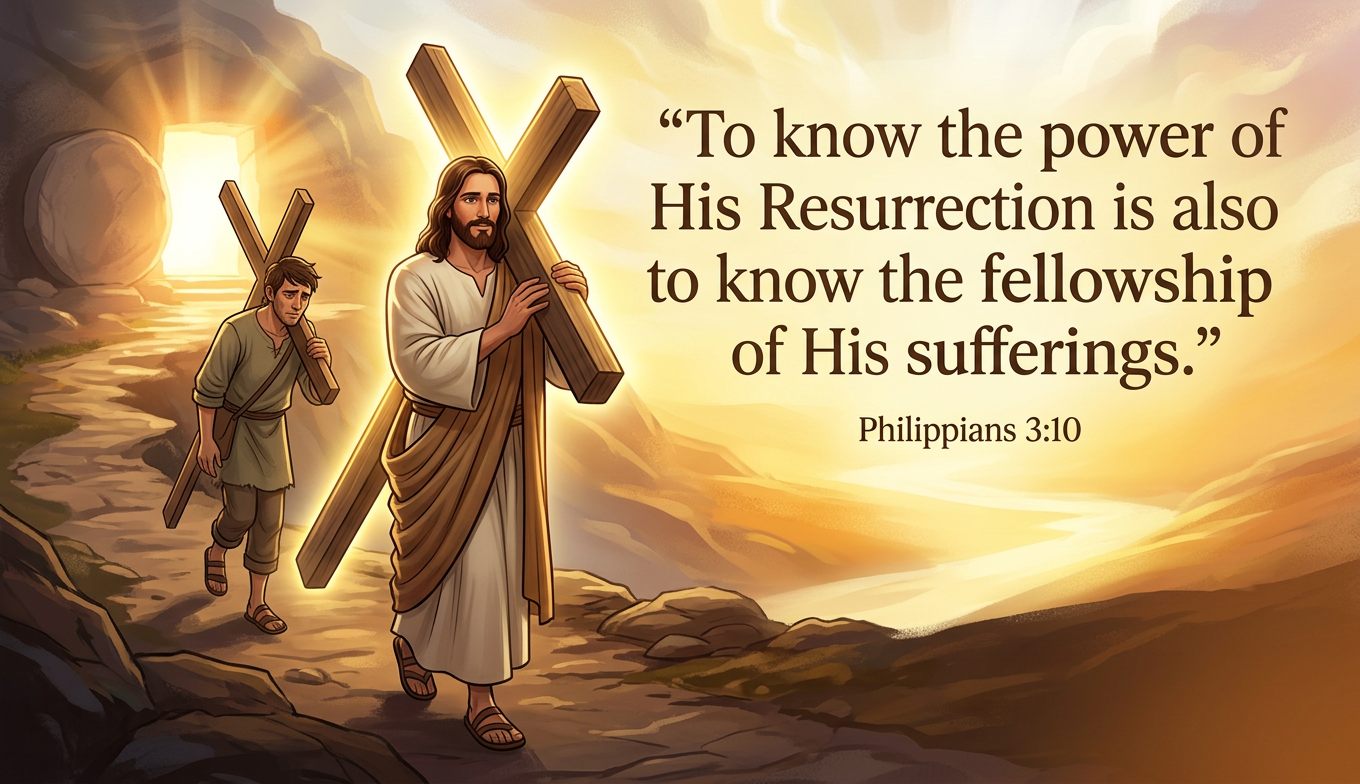
And then leave it at the foot of the Cross.
One of the greatest acts of faith is believing that God’s mercy is bigger than your memory.
Many Christians continue carrying sins that Christ has already carried away.
The Real Danger
The real danger is not a confessed sin.
The real danger is an unrepentant heart.
The real danger is refusing to surrender ourselves to God.
The real danger is clinging to sin while expecting peace.
The Christian life is not about achieving perfection through our own strength.
It is about remaining in covenant relationship with Christ.
It is about continually returning to Him.
Continually repenting.
Continually growing.
Continually allowing His grace to transform us.
The question is not whether you have sinned.
Of course you have.
The question is this:
What are you doing with your sin?
Are you hiding it?
Defending it?
Justifying it?
Or are you bringing it to Christ?
The Final Judgment Is an Encounter With Christ
Many people imagine the Final Judgment as though God is waiting to publicly humiliate them.
That is not the picture the Church gives us.
The Final Judgment is ultimately an encounter with Jesus Christ.
The One who died for you.
The One who pursued you when you were lost.
The One who forgave you every time you fell and returned to Him.
The One who never stopped loving you even when you wandered.
For those who love Christ, that encounter is not something to fear.
It is something to long for.
The goal of the Christian life is not merely avoiding hell.
The goal is union with Christ.
The goal is purity of heart.
The goal is becoming the kind of person who can stand in His presence and rejoice.
A Final Thought
Let me leave you with this.
If the tollhouses teach us anything, they teach us that spiritual warfare is real.
The enemy accuses.
The enemy lies.
The enemy wants us to live in fear.
But the tollhouses are not ultimately about demons.
They are about Christ.
They are about whether we have spent our lives moving toward Him or away from Him.
They are about whether we have embraced repentance or resisted it.
And they remind us that our hope has never been in our ability to perfectly remember every sin we have ever committed.
Our hope has always been in the mercy of Jesus Christ.
If there is a sin weighing on your heart right now, confess it.
If there is something from your past that still haunts you, bring it to Christ.
If you have already confessed it and repented, stop digging it up and carrying it around as though His Cross was not enough.
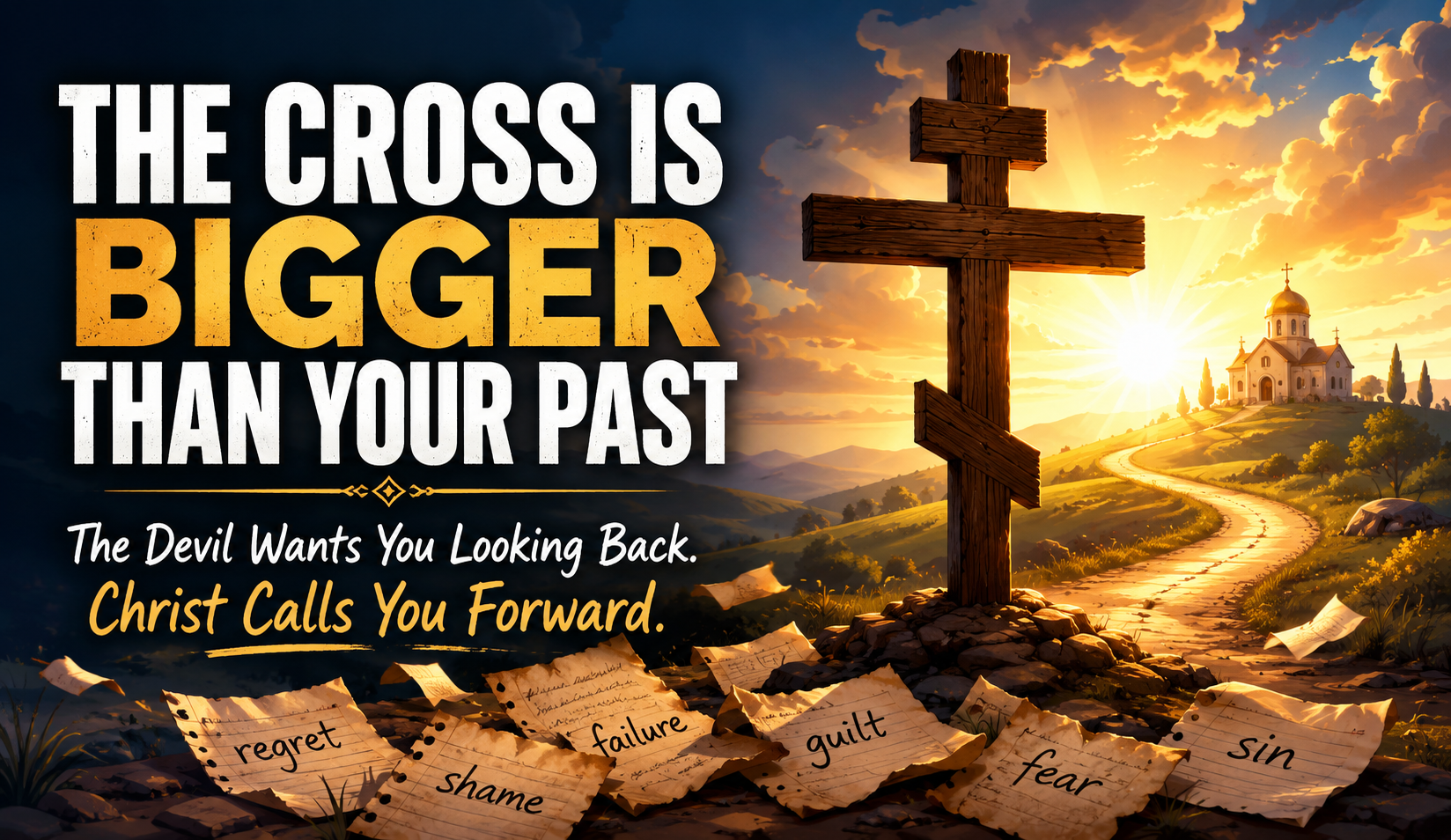
The devil wants you staring backward.
Christ calls you forward.
The devil wants you focused on your failures.
Christ wants you focused on His mercy.
So the next time an old sin comes knocking at the door of your memory, don’t answer it with fear.
Answer it with faith.
“Yes, I did that.”
“Yes, I regret it.”
“Yes, I repented.”
“And yes, Jesus Christ has forgiven me.”
Because at the end of the day, your hope is not in the strength of your repentance.
Your hope is in the greatness of His mercy.
And His mercy is far greater than your sin.
Want the entire article distilled into one clear, printable page?
Download your free summary and keep it with you.
Get the free PDF + join thousands receiving short, practical Orthodox insights in the “Morning Brew with Father Don” to help you grow in Christ each week.