
Being the only Orthodox Christian in your family or circle of friends is one of the loneliest places to stand.
You’ve discovered something ancient. Something beautiful. Something that changed everything for you.
And yet, when the theological questions come up at the dinner table and they always do, you find yourself reaching for words that don’t quite translate into the language the people you love have always spoken.
I understand.
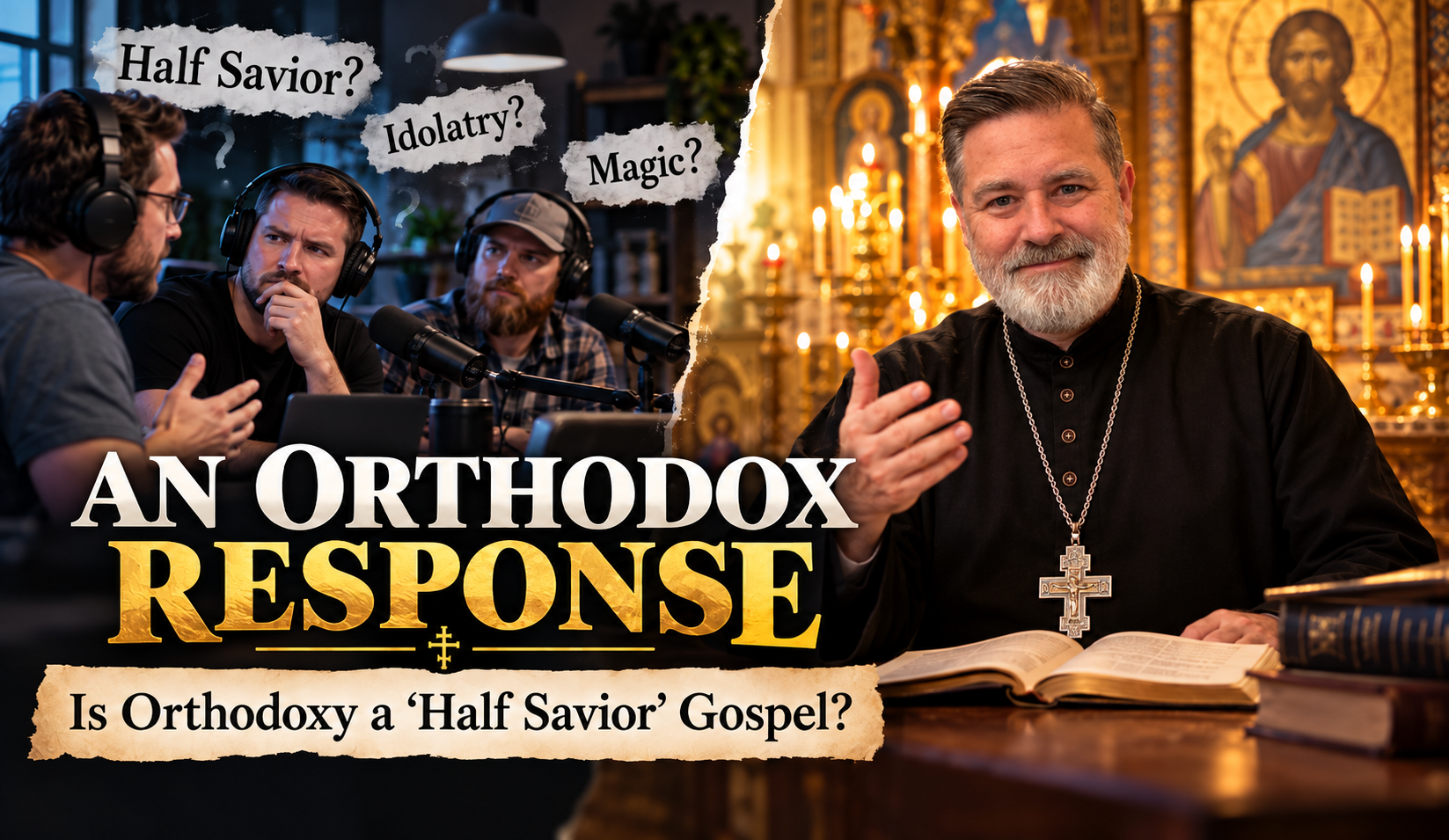
And the question you’re wrestling with is one of the most important ones a new Orthodox Christian can ask.
If salvation is theosis, a process of transformation and union with God, why does the Creed say Christ will come again to judge the living and the dead?
Is there a contradiction here?
No.
But to understand why, we need to briefly look at where the confusion comes from.
Two Very Different Starting Points
The Protestant tradition, particularly in the Reformed and Evangelical world, understands salvation primarily as a legal transaction.
God is a Judge. We are sinners. We owe a debt we cannot pay.
Christ pays that debt. His righteousness is imputed to us, transferred to our account. God then declares us righteous. Theologians call this forensic justification.
It’s not that you’ve changed on the inside. It’s that God’s legal verdict about you has changed.
Under this framework, judgment makes perfect sense. The question at the Last Day becomes: whose account has Christ’s righteousness been credited to?
Sola fide, faith alone, is the answer. Believe it and the verdict is set.
Now…
I’m not here to dismiss the sincerity of those who hold this view. Many of them love God deeply and genuinely.
But the Orthodox Church reads Scripture differently.
And the difference isn’t small.
Salvation Is Not a Declaration. It’s a Transformation.
The Orthodox understanding of salvation begins not in a courtroom but in the Garden of Eden.
When Adam and Eve fell, something died within them. Not just legally. Ontologically. The very nature of human existence was wounded. The image of God became distorted. Death entered, spiritual and physical.
What Christ came to do was not simply change God’s verdict about us.
He came to heal what was broken.
He became what we are so that we could become what He is.
This is theosis. Deification. Union with God.
St. Athanasius said it plainly: “God became man so that man might become god.”
Not gods in a pagan sense. But partakers of the divine nature, as St. Peter writes in 2 Peter 1:4.
Salvation, then, is a process. A journey. A lifelong cooperation between God’s grace and our free response to it.
It’s not a one-time event.
It’s a direction.
So Where Does Judgment Fit?
This is the heart of your question.
And here is what I want you to see.
In Orthodox theology, the Last Judgment is not a legal proceeding where God checks a list. It is the full and final revelation of what we have become.
Christ does not come as a judge in the Western forensic sense, holding a verdict in one hand and a gavel in the other.
He comes in glory.
And His very presence is the judgment.
Think about it this way. Light doesn’t decide what it illuminates. It simply reveals what is already there.
When Christ appears in the fullness of His glory, every soul will stand in that light.
For those who have spent their lives moving toward God, cooperating with His grace, receiving His sacraments, loving their neighbors, repenting and returning, His presence will be experienced as warmth, joy, and rest.
For those who have spent their lives moving away from God, hardening their hearts, rejecting His love, living for themselves alone, that same light will be experienced differently.
The fire doesn’t change. God doesn’t change.
But what we have become in response to His grace determines how we receive Him.
This is precisely why St. Paul wrote in 1 Corinthians 3:13, “each man’s work will become evident; for the day will show it because it is to be revealed with fire.”
And in 2 Corinthians 5:10, he says plainly: “For we must all appear before the judgment seat of Christ, so that each one may receive what is due for what he has done in the body, whether good or evil.”
Judgment and Theosis Are Not in Conflict
Here’s what I want you to hold onto.
Judgment doesn’t contradict the process of theosis.
It completes it.
The Last Judgment is the moment when the direction of every human life is fully revealed and sealed for eternity.
Those who have been united to Christ, even imperfectly, even haltingly, even through years of stumbling and repenting, will enter fully into that union forever.
Those who persistently reject the love of God do not encounter His absence, but rather experience His unchanging presence as judgment because they have not been transformed to receive Him as love.
Notice what Jesus says in Matthew 25, the great judgment passage.
The King doesn’t ask the sheep and the goats what they believed about Him in a doctrinal sense. He looks at what they did. How they treated the hungry. The stranger. The prisoner. The sick.
Why?
Because how we treat one another reveals the true condition of our hearts toward God.
This is why Romans 14:12 tells us simply: “each of us will give an account of himself to God.”
Not someone else’s account. Not a borrowed righteousness draped over a heart that was never transformed.
Our own account.
The verdict of the Last Judgment isn’t arbitrary. It’s the final, unambiguous revelation of what we chose to become in response to the God who loved us and gave Himself for us.
John 3:19, Judgment Is Already at Work
Here is something that might surprise you.
The judgment didn’t begin at Calvary. And it doesn’t wait until the Second Coming.
In John 3:19, Jesus says, “This is the judgment, that the Light has come into the world, and men loved the darkness rather than the Light, for their deeds were evil.”
The Last Judgment is, in one sense, simply the consummation of something already unfolding in every human heart right now.
Every day, we choose.
Union with God or separation from Him.
Light or darkness.
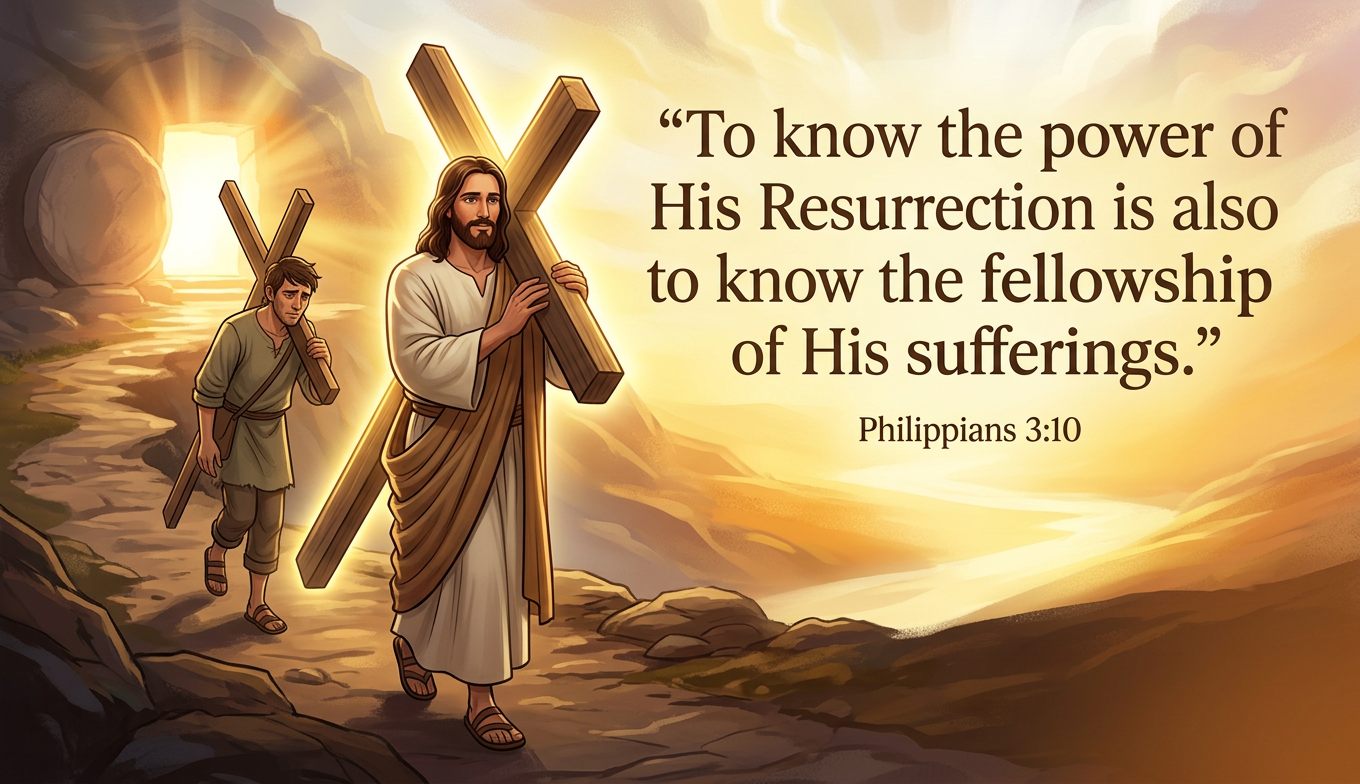
Theosis is not automatic. It requires our cooperation. Our repentance. Our willingness to be transformed.
And it is precisely because we are accountable, because our choices matter, because our response to grace matters, that judgment is real.
You Are Not Alone in This
I want to say something to you directly.
Being the only Orthodox Christian in your family and social circle is hard. I won’t minimize that.
There will be moments when you won’t have all the answers. When someone challenges you and you’re not sure how to respond.
That’s okay.
You don’t need to win every theological debate at the dinner table.
What you need is to go deeper in your own faith. To root yourself so firmly in Christ and in the Church He established that the confusion around you doesn’t shake what He has placed within you.
The Creed isn’t a list of abstract doctrines.
It’s a declaration of a living reality.
Christ will come again. He will judge. And for those who have loved Him and sought to be conformed to His image throughout their lives…
That day is not something to fear.
It is something to long for.
Want the entire article distilled into one clear, printable page?
Download your free summary and keep it with you.
Get the free PDF + join thousands receiving short, practical Orthodox insights in the “Morning Brew with Father Don” to help you grow in Christ each week.