There is a fundamental misunderstanding at the heart of modern Christianity, and it is not a small one. It is a misunderstanding that reshapes how people approach truth, authority, and ultimately Christ Himself.
Many today live as though Christ descended from heaven, handed His apostles a neatly bound New Testament, and said, “Here, just follow this.” As if the faith began as a book. As if the Church is a byproduct of Scripture rather than its very source and guardian.
But that is not what happened.
Christ did not leave behind a book. He left behind a Body.
He established His Church.
He appointed apostles, not authors. He breathed authority into men, not parchment. He gave them the Holy Spirit, not a finalized canon. He instituted a living, sacramental, hierarchical reality that would carry His presence into the world. The Church was not an afterthought. It was the very means through which salvation, truth, and communion with God would be experienced.
This distinction is not academic. It is foundational.
You can Now Listen to Each Article
The Church Came First
Before a single word of the New Testament was formally recognized as Scripture, the Church was already alive, functioning, and expanding.
The apostles preached. They baptized. They ordained. They corrected error. They established liturgical life. They governed communities. They suffered martyrdom.
All of this happened without a New Testament as we know it.
This should cause us to pause.
Because if Christianity were meant to be built solely on a text, then the earliest Christians were at a severe disadvantage. And yet, they were not. They possessed something deeper. They possessed the fullness of the faith through the living tradition of the Church.
As I have often emphasized in teaching, Christianity is not merely intellectual assent to ideas about God. It is participation in the life of God. It is a lived reality, not just a read one.
The early Christians did not say, “Let us go study a book and figure this out individually.” They said, “Let us remain in the Apostles’ teaching, in the breaking of bread, and in the prayers.”
That is the Church.
The Canon Was Discerned, Not Dropped From Heaven
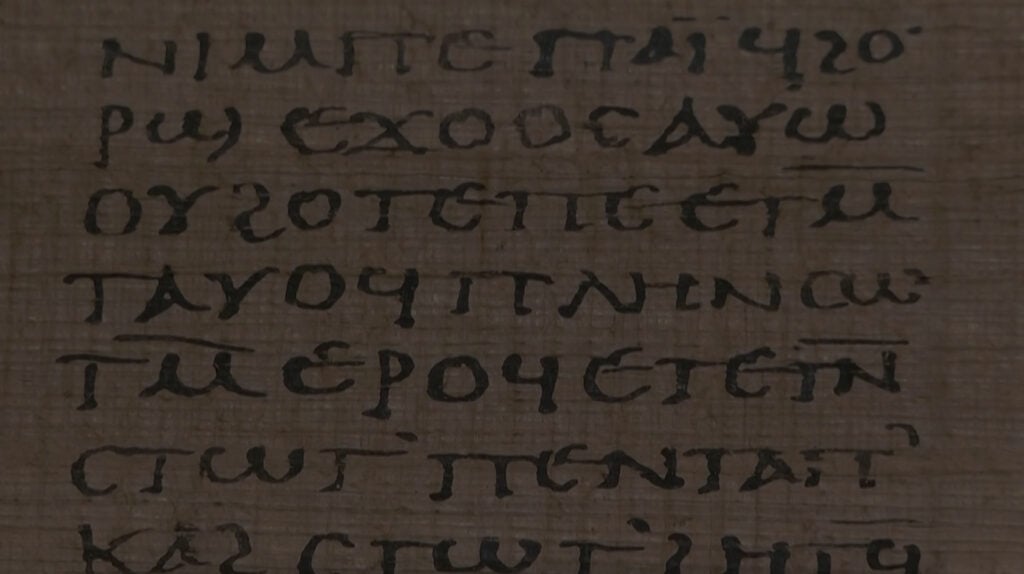
It took roughly three to four centuries for the Church to formally recognize and canonize the New Testament.
Think about that.
For hundreds of years, there were dozens of writings circulating. Some were authentic. Some were heretical. Some were useful but not inspired. The Church had to discern, debate, and ultimately define what belonged within the canon.
And who made that decision?
Not isolated individuals reading Scripture alone.
Not competing groups forming denominations.
The Church made that decision.
The same Church that had been preaching, teaching, and preserving the faith from the beginning. The same Church guided by the Holy Spirit. The same Church that traced its authority directly back to the apostles.
This means something very important.
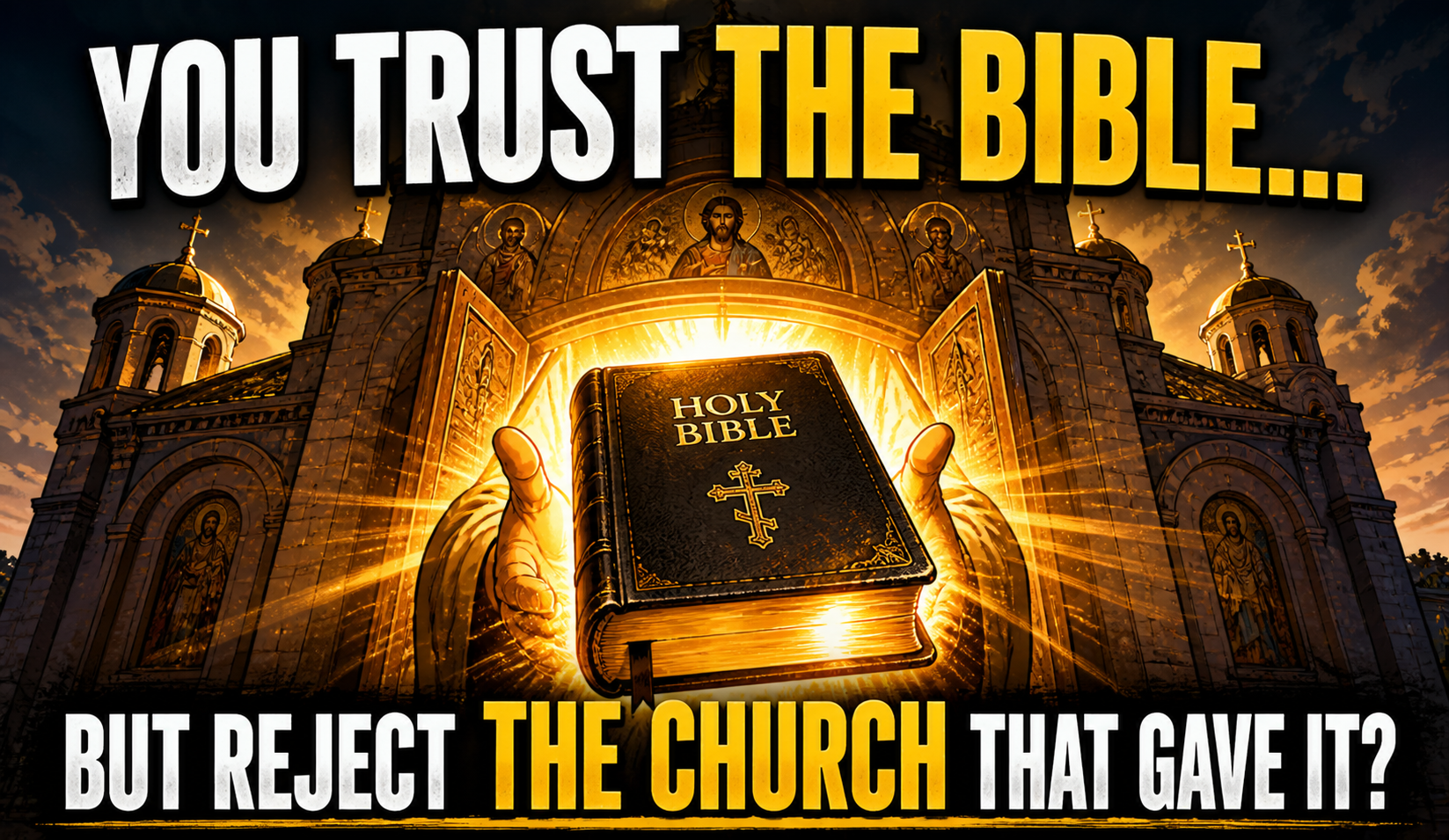
If you trust the authority of the Bible, then you are already trusting the authority of the Church that preserved and canonized it.
There is no way around this.
You cannot separate the fruit from the tree.
The Illusion of Private Interpretation
Modern Christianity, especially in the West, has largely embraced the idea that Scripture is self-interpreting and that each individual, guided by personal conviction, can arrive at truth independently.
This has led to thousands of denominations, each claiming fidelity to the same Bible, yet arriving at radically different conclusions.
This is not unity.
This is fragmentation.
And it raises a serious question. If Scripture alone, interpreted individually, is sufficient, then why does it produce such division?
Christ did not establish a faith that would fracture endlessly based on personal interpretation. He prayed that His followers would be one.
One Body. One faith. One baptism.
The multiplicity of interpretations is not a sign of spiritual freedom. It is often a sign of spiritual disconnection from the authoritative life of the Church.
Authority Is Not the Enemy
There is a deep suspicion of authority in modern culture. People want autonomy. They want control. They want the ability to define truth for themselves.
But this mindset is not new. It is as old as the garden.
“Did God really say?”
The rejection of authority is not liberation. It is vulnerability.
Christ did not leave us to navigate truth alone. He gave us a Church with teaching authority. A priesthood. A sacramental life. A continuity that spans generations.
This is not oppression. This is protection.
In pastoral ministry, I have seen the consequences of individuals trying to navigate spiritual truth on their own terms. Whether in marriage, personal struggle, or theological confusion, the pattern is often the same. When people detach from the authority of the Church, they begin to construct a version of Christianity that aligns with their preferences rather than with truth.
And that always leads to instability.
The Church Is a Living Reality
One of the greatest errors in modern thinking is reducing Christianity to information rather than transformation.
The Church is not merely an institution that teaches doctrine. It is the living Body of Christ.
It is where heaven and earth intersect.
It is where the sacraments are administered.
It is where the faithful are formed, corrected, healed, and sanctified.
It is not just about knowing what is true. It is about becoming what God has called us to be.
This is why theology is not just about speaking about God. It is about knowing God through lived experience.
And that experience happens within the life of the Church.
One Church, Not Many Interpretations
Christ did not establish multiple competing versions of truth.
He established one Church.
That Church carried His authority, preserved His teaching, and maintained continuity through apostolic succession.
The idea that truth can be endlessly reinterpreted based on personal conviction undermines the very nature of revelation. Truth is not something we invent. It is something we receive.
And it is received within the life of the Church.
Final Thought
If we are honest, many today want the benefits of Christianity without the structure that sustains it.
They want the Bible without the Church.
They want truth without authority.
They want Christ without submission.
But it does not work that way.
You do not get the fruit while rejecting the tree that produced it.
The Bible is not self-originating. It is the product of the Church. And the Church is not optional. It is the very Body through which Christ continues His work in the world.
If we are serious about truth, then we must be serious about where that truth has been preserved.
And that leads us back, not to isolated interpretation, but to the one, holy, catholic, and apostolic Church that Christ Himself established.
Want the entire article distilled into one clear, printable page?
Download your free summary and keep it with you.
Get the free PDF + join thousands receiving short, practical Orthodox insights in the “Morning Brew with Father Don” to help you grow in Christ each week.