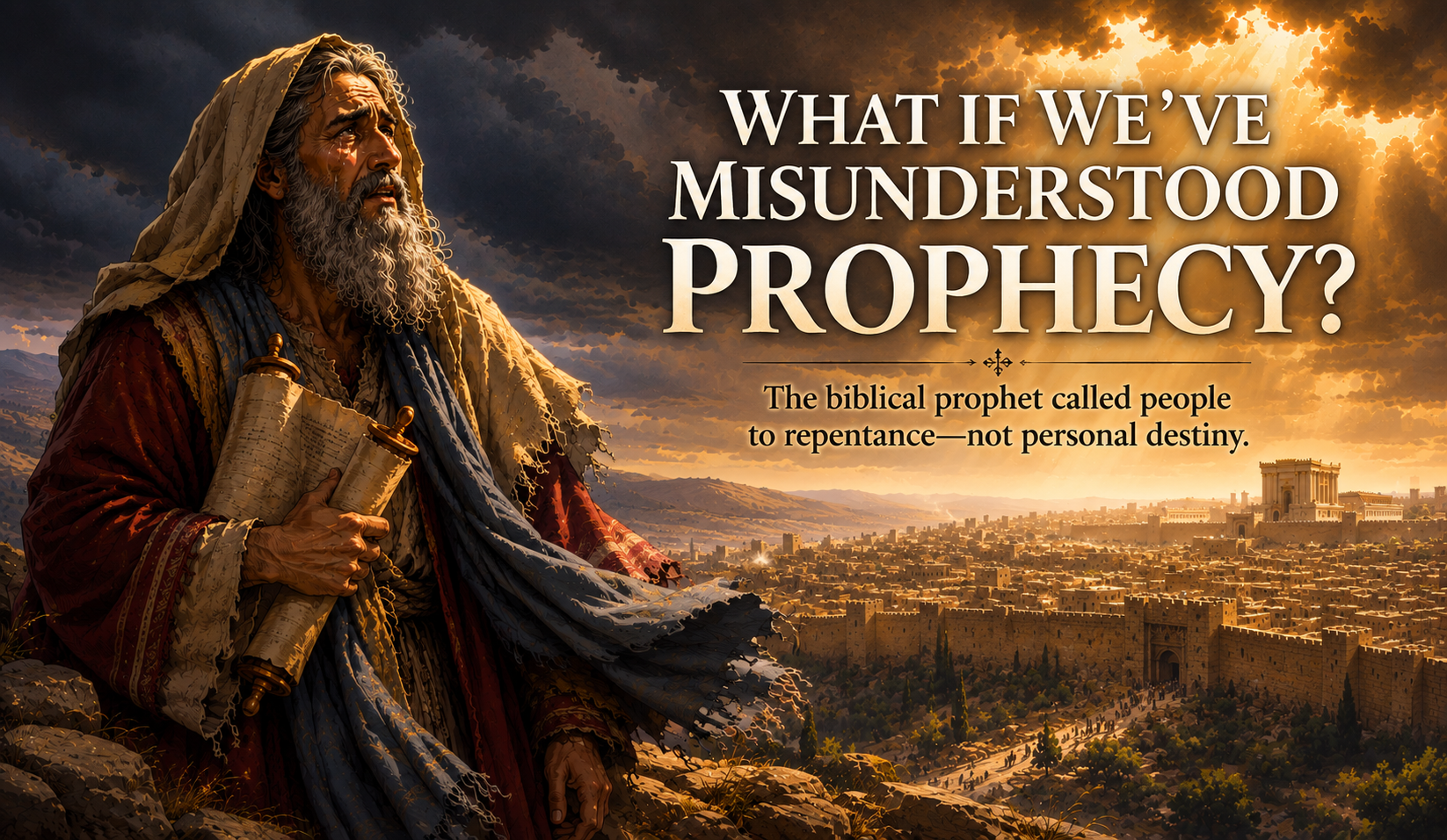
If I were to ask most Christians today what a prophet is, I suspect I would hear answers like these:
“A prophet tells you your future.”
“A prophet receives words of knowledge.”
“A prophet speaks destiny over your life.”
“A prophet tells you who you’re going to marry, where you’re going to work, or what blessing God has waiting for you around the corner.”
In fact, if you spend any time on social media, you’ll find countless videos of men and women claiming to be prophets. They’ll tell someone their address, reveal a hidden detail about their life, predict a healing, announce a promotion, or speak some future event into existence.
And while all of that may appear impressive on the surface, I want to suggest something that may be uncomfortable for many Christians:
What if that isn’t what the Bible primarily means by prophecy at all?
What if our modern understanding of the prophet bears little resemblance to the prophets we encounter in Scripture?
More importantly, what if our fascination with knowing the future is distracting us from the very thing the prophets were actually sent to accomplish?
I believe this is one of the most important conversations facing Christians today because the way we understand prophecy ultimately affects how we understand repentance, salvation, spiritual maturity, and even our relationship with Christ Himself.
The question is not whether God can reveal things to people.
Of course He can.
The question is whether we have confused a rare manifestation of a spiritual gift with the central mission of the prophet.
To answer that question, we have to set aside modern assumptions and return to Scripture, the Apostles, and the Fathers of the Church.
And what we discover may surprise us.
You can Now Listen to Each Article
The Prophet in the Old Testament
When most people think about prophecy, they immediately think about predicting future events.
Certainly, there are prophetic passages that foretell future realities. Isaiah foretells the coming Messiah. Daniel speaks of kingdoms yet to come. Ezekiel describes events that would unfold in Israel’s future.
But if we step back and examine the ministries of the prophets themselves, something becomes abundantly clear.
Their primary message was not:
“Here’s what’s going to happen tomorrow.”
Their primary message was:
“Repent and return to the Lord.”
Isaiah called Israel back to covenant faithfulness.
Jeremiah warned Judah about the consequences of abandoning God.
Amos confronted injustice.
Hosea exposed spiritual adultery.
Micah condemned corruption.
Ezekiel called a rebellious people to repentance.
The prophet stood in the gap between God and His people and proclaimed God’s truth regardless of the consequences.
Far more often than predicting the future, the prophet was exposing sin, confronting idolatry, and calling God’s people back into communion with Him.
In many ways, the prophet functioned like a physician.
Before healing can occur, the disease must be identified.
The prophets diagnosed the sickness of the human heart.
Why Nobody Wanted to Be a Prophet
One of the greatest misunderstandings about prophecy is the assumption that being a prophet was somehow glamorous.
It wasn’t.
In fact, if you carefully read the Old Testament, you’ll notice something fascinating:
Nobody wanted the job.
Jeremiah wept over it.
Jonah ran from it.
Moses tried to avoid it.
Elijah fled into the wilderness.
Why?
Because prophets were rarely celebrated.
They were rejected.
They were mocked.
They were imprisoned.
They were persecuted.
And sometimes they were killed.
The false prophets were usually the popular ones because they told people exactly what they wanted to hear.
The true prophets told people what they needed to hear.
The false prophets promised peace.
The true prophets demanded repentance.
The false prophets protected comfort.
The true prophets exposed sin.
Not much has changed.
Christ: The Fulfillment of All Prophecy
The prophets ultimately pointed beyond themselves.
Every prophetic voice in the Old Testament was preparing the world for the coming of Christ.
The author of Hebrews writes:
“God, who at various times and in various ways spoke in time past to the fathers by the prophets, has in these last days spoken to us by His Son.”
This is critical to understand.
Christianity is not ultimately centered on prophets.
It is centered on Christ.
The prophets were signposts.
Christ is the destination.
Everything they proclaimed finds its fulfillment in Him.
This is why the New Testament shifts the focus away from fascination with prophetic personalities and toward union with Jesus Christ.
What Does the New Testament Say About Prophets?
Many Christians assume the New Testament transformed prophets into spiritual forecasters.
But that’s not what we find.
St. Paul certainly recognizes prophecy as a gift of the Holy Spirit.
He lists prophets among those given to the Church.
Yet notice how he defines prophecy:
“He who prophesies speaks edification and exhortation and comfort to men.” (1 Corinthians 14:3)
That definition alone should cause us to pause.
Paul does not define prophecy primarily as predicting the future.
He defines it as building up the Church.
Strengthening believers.
Calling people deeper into faithfulness.
Encouraging repentance.
Offering comfort in times of suffering.
In other words, the New Testament prophet sounds remarkably similar to the Old Testament prophet.
Even when Agabus foretells a famine or Paul’s imprisonment, those instances are exceptional rather than normative. The purpose is not personal advancement, entertainment, or curiosity about the future.
The purpose is preparing God’s people for faithful obedience.
Even more importantly, the New Testament repeatedly warns Christians not to blindly accept prophetic claims.
“Test the spirits.”
“Test all things.”
“Hold fast what is good.”
The Apostles understood something many modern Christians have forgotten:
Not every spiritual claim originates with God.
Discernment is essential.
How the Fathers Understood the Gift of Prophecy
The Fathers of the Church inherited the Apostolic understanding of prophecy, and their teaching is remarkably consistent.
For them, prophecy was never about spiritual celebrity.
It was never about gathering followers.
It was never about building a ministry around extraordinary experiences.
The Fathers viewed prophecy as the fruit of holiness.
St. John Chrysostom taught that prophecy is the operation of the Holy Spirit working through a purified soul.
St. Basil the Great taught that the heart must become receptive to God through repentance and obedience.
St. Gregory the Theologian famously wrote:
“One must first be purified; then purify others.”
In other words, before someone can truly speak for God, they must first be transformed by God.
Perhaps no Father captured this more beautifully than St. Isaac the Syrian.
For St. Isaac, spiritual vision emerges from humility, repentance, prayer, and purity of heart.
The saints did not seek prophetic experiences.
They sought Christ.
And when prophetic insight appeared, it was viewed as a byproduct of communion with God rather than proof of spiritual superiority.
This is why many saints concealed their gifts.
The closer a person came to God, the less interested they became in promoting themselves.
A true prophet does not draw attention to himself.
He draws attention to Christ.
The Orthodox Understanding of Prophecy
This is precisely why Orthodoxy has always been cautious about sensational prophetic claims.
The Orthodox Church absolutely believes that God can reveal things to His saints.
Church history is filled with holy elders who possessed extraordinary discernment.
Yet Orthodoxy has never encouraged Christians to seek experiences.
Instead, we are called to seek purification.
Repentance.
Prayer.
Humility.
Participation in the sacramental life of the Church.
The goal is not to become prophetic.
The goal is to become holy.
And there is a tremendous difference between those two pursuits.
The Prophetic Life of the Church
The most profound prophetic experience in Orthodoxy does not occur when someone tells you your future.
It occurs when the Church calls you to repentance.
Every Divine Liturgy is prophetic.
Every fast is prophetic.
Every feast is prophetic.
Every prayer is prophetic.
Why?
Because all of them proclaim the same message that Isaiah, Jeremiah, John the Baptist, and Christ Himself proclaimed:
Repent. Return to the Lord.
In Holy Confession, the prophetic call becomes personal.
The hidden things of the heart are brought into the light.
Sin is exposed.
Healing begins.
In Holy Baptism, the old man dies and a new creation emerges.
In the Holy Eucharist, communion with God becomes reality rather than theory.
The prophets longed for restoration between God and His people.
In the sacraments, that restoration is actually experienced.
The Church does not simply talk about repentance.
She leads us into it.
The Danger of Modern Prophetic Culture
Many modern prophetic movements have unintentionally shifted the focus away from repentance and toward personal fulfillment.
The emphasis often becomes:
“What is God going to do for me?”
“What blessing is coming?”
“What does my future look like?”
“Who am I going to marry?”
“What’s my destiny?”
Yet the prophets of Scripture asked entirely different questions.
Are you faithful?
Are you living in repentance?
Are you becoming holy?
Are you united to Christ?
The modern obsession with hidden knowledge often resembles the ancient temptation that has confronted humanity since Eden.
We want certainty.
We want control.
We want secret information.
But Christ calls us to something deeper.
Trust.
Obedience.
Repentance.
Faithfulness.
The saints did not spend their lives trying to know the future.
They spent their lives preparing for eternity.
The Real Test of a Prophet
The ultimate test of a prophet is not whether he can reveal information.
It is whether his message leads people toward Christ.
Does it produce repentance?
Does it cultivate humility?
Does it encourage holiness?
Does it deepen participation in the life of the Church?
Does it lead souls toward salvation?
A person may accurately predict future events and still not possess the spirit of the biblical prophets.
The true prophet does what the prophets have always done.
He exposes sin.
He confronts idolatry.
He calls people to repentance.
He directs hearts toward God.
And then he gets out of the way so that Christ may be seen.
That is why the greatest prophetic message remains the same today as it was two thousand years ago:
Repent, for the Kingdom of Heaven is at hand.
Want to go deeper?
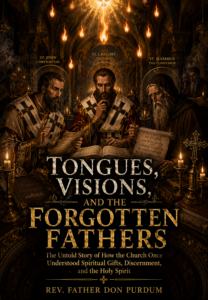
If this subject has challenged some of your assumptions about speaking in tongues, spiritual gifts, and the work of the Holy Spirit, I invite you to read my new book, Tongues, Visions, and the Forgotten Fathers: The Untold Story of How the Ancient Church Once Understood Spiritual Gifts, Discernment, and the Holy Spirit.
In this comprehensive study, I examine the biblical, historical, and patristic evidence surrounding tongues, prophecy, healing, spiritual warfare, discernment, and the pursuit of spiritual experiences. Most importantly, I explore how the great Fathers of the Church understood the Holy Spirit’s work in the life of the believer and why their wisdom is desperately needed in our generation.
If you are seeking a deeper, historically grounded, and authentically Orthodox understanding of these issues, this book will provide a roadmap for that journey.
Click Here to Learn More About the eBook
Want the entire article distilled into one clear, printable page?
Download your free summary and keep it with you.
Get the free PDF + join thousands receiving short, practical Orthodox insights in the “Morning Brew with Father Don” to help you grow in Christ each week.