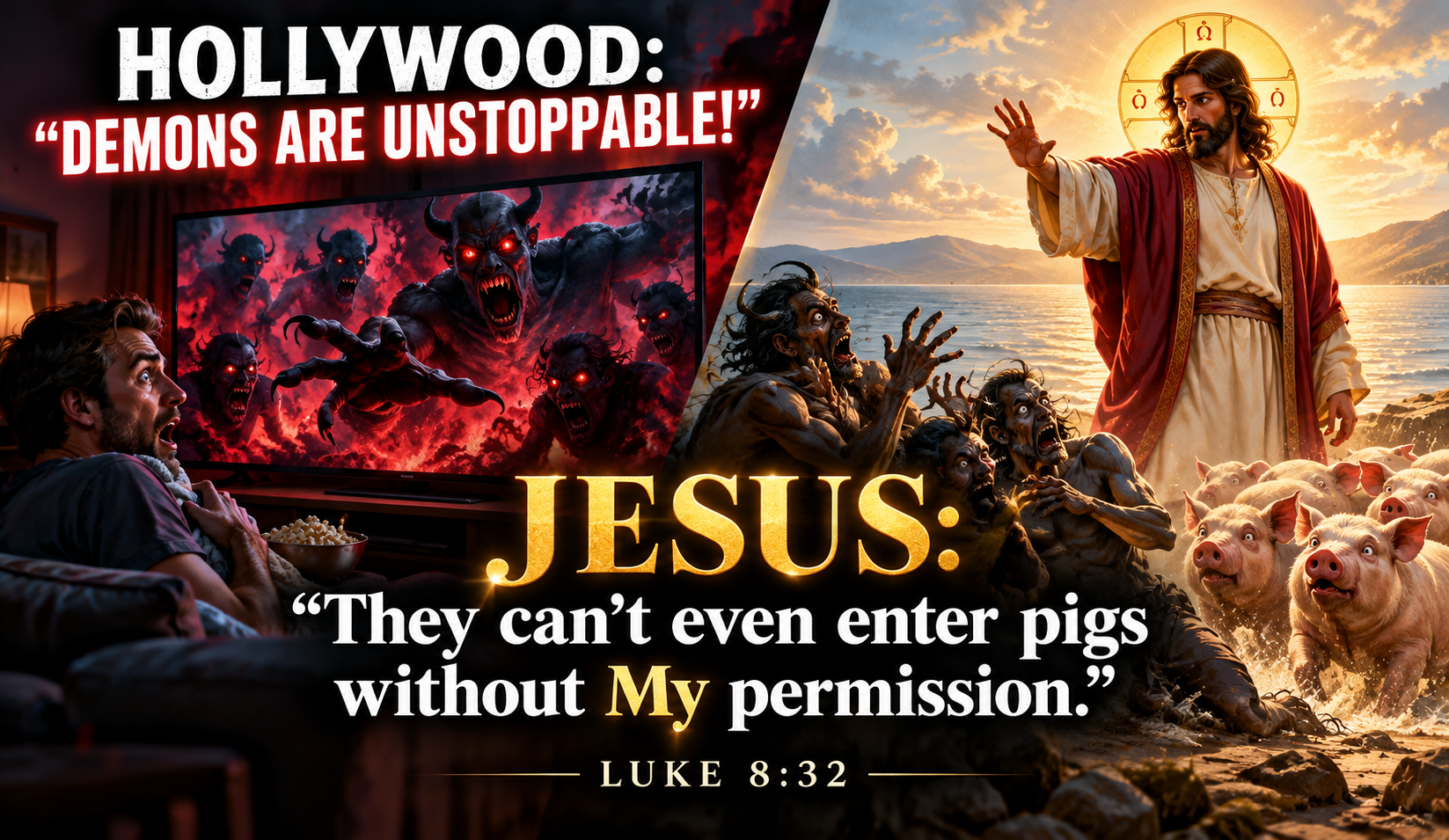
Why Christians should take spiritual warfare seriously without ever living in fear.
Imagine being so tormented that you no longer recognize yourself.
Imagine losing your family, your friends, your home, and even your sense of who you are. Imagine living in such terrible isolation that the only place you feel you belong is among the dead.
Now imagine that everyone around you has given up hope.
They cannot help you. They cannot control what is happening to you. They cannot restore what has been lost.
And then one day, Jesus Christ steps into your life.
Everything changes.
This is not the plot of some Hollywood horror movie. It is the story of a real encounter recorded in Luke 8:26-39. And as we approach Halloween, I believe it contains a message that Christians desperately need to understand.
Everywhere we look, our culture seems fascinated with darkness.
Skeletons hang from houses. Demons and witches decorate storefronts. Horror movies invite us to experience terror as entertainment. Images of death, suffering, and supernatural evil have become an increasingly familiar part of popular culture.
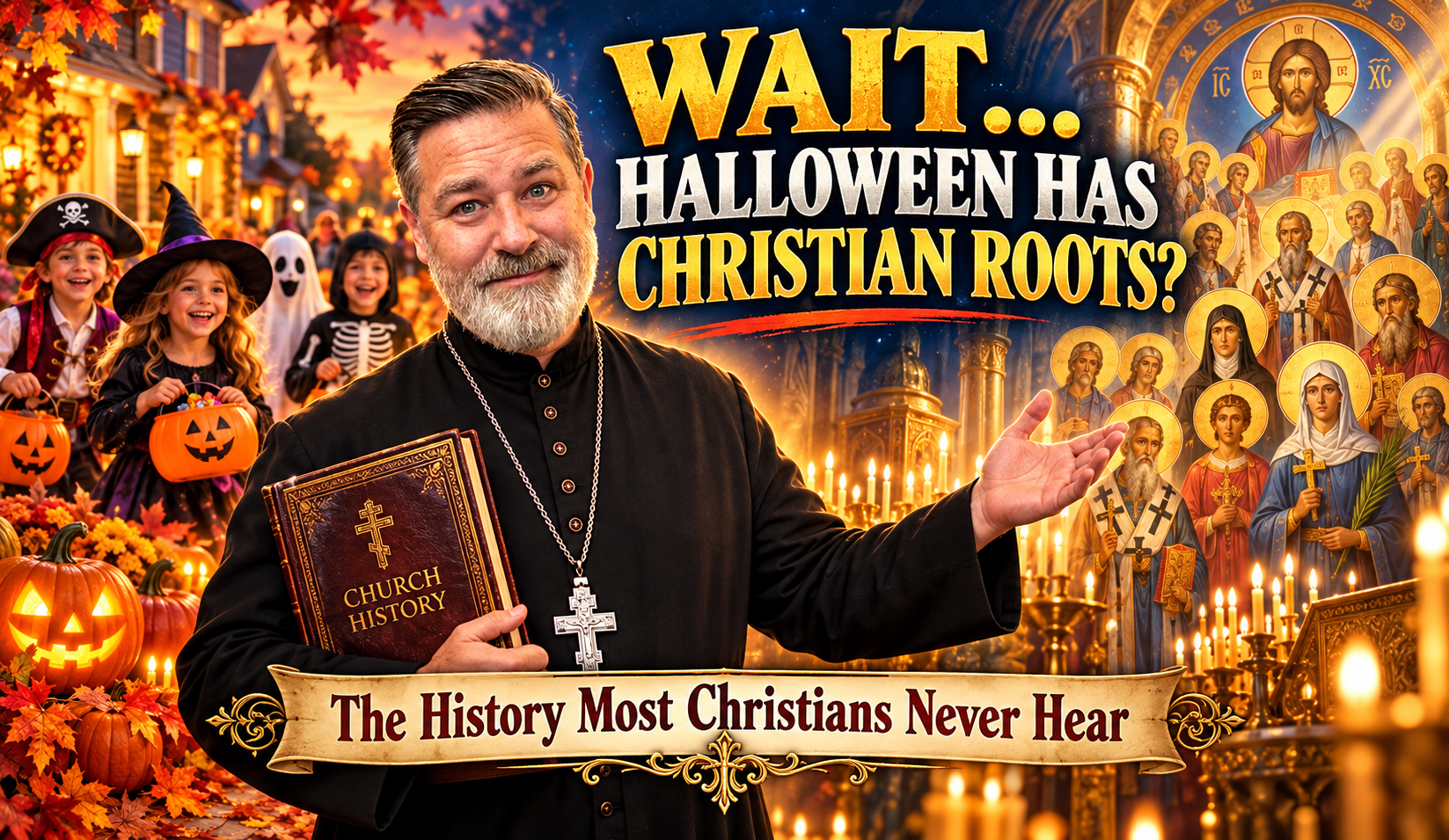
Now, I understand that for many families, Halloween is simply an evening of costumes, candy, and neighborhood fun. I am not suggesting that every child dressed as a superhero or every family handing out candy is participating in something demonic.
But there is a question I believe we need to take seriously.
Why have we become so comfortable entertaining ourselves with the very darkness from which Jesus Christ came to deliver us?
And perhaps an even more important question is this:
Do we actually believe that demons exist?
For two thousand years, the Orthodox Church has consistently taught that the spiritual world is real. Angels are real. Demons are real. And the spiritual warfare described throughout Scripture is not simply an ancient way of explaining psychological problems or human suffering.
But there is something else the Church has taught just as consistently.
The Christian life is not about being afraid of demons.
It is about living in the victory of Jesus Christ.
And nowhere do we see that truth more powerfully than in the story of the demon-possessed man in the country of the Gadarenes.
What Happens When Evil Takes Hold of a Human Life?
When Jesus arrives in the country of the Gadarenes, He encounters a man whose life has been devastated by demonic oppression.
St. Luke tells us that the man had been possessed for a long time. He wore no clothing. He had no home. He lived among the tombs.
The townspeople had attempted to restrain him with chains and shackles, but he repeatedly broke free and was driven into the wilderness.
Think about the tragedy of this man’s existence.
He was alive, but living among the dead.
He was surrounded by people, yet completely alone.
He was created in the image and likeness of God, yet his existence had become one of extraordinary suffering.
And then Jesus arrives.
What strikes me about this encounter is not simply the power Jesus demonstrates over the demons.
It is the compassion He shows toward the man.
Jesus does not approach him with disgust or condemnation. He does not treat him as someone beyond hope.
He sees a human being who needs to be restored.
This reveals something essential about Orthodox Christianity.
The devil seeks to distort what God has created. Christ comes to heal and restore it.
The devil divides. Christ reconciles.
The devil isolates. Christ restores communion.
The devil brings darkness. Christ brings light.
The devil seeks death. Christ gives life.
Jesus tells us in John 10:10:
“The thief comes only to steal and kill and destroy; I came that they may have life, and have it abundantly.”
That is exactly what we see happening in this encounter.
The demons have robbed this man of his dignity, freedom, peace, and relationships.
Jesus has come to give them back.
We should be careful not to confuse this extraordinary case of demonic possession with ordinary human suffering. Depression, anxiety, addiction, and mental illness are not automatically evidence of demonic activity. Those who struggle with these conditions need our compassion, our prayers, and appropriate medical and professional care.
But the larger spiritual lesson remains.
Evil seeks to separate us from God and one another.
Christ comes to restore that communion.
Something Remarkable Happens: The Demons Beg Jesus for Permission
One of the most extraordinary details in this Gospel is something many Christians overlook.
When the demons encounter Jesus, they immediately recognize Him.
They cry out:
“What have you to do with me, Jesus, Son of the Most High God? I beseech you, do not torment me.” (Luke 8:28)
Consider what is happening.
Throughout the Gospels, religious leaders question Jesus’ authority. Even His own disciples sometimes struggle to understand His identity.
But the demons know exactly who stands before them.
And notice their response.
They do not challenge Him as an equal.
They do not threaten Him.
They beg Him.
When Jesus asks their name, the answer is “Legion,” because many demons had entered the man.
The demons plead with Jesus not to command them into the abyss. They then ask permission to enter a nearby herd of pigs.
And Scripture tells us:
“They begged him to let them enter these. So he gave them leave.” (Luke 8:32)
Did you catch that?
The demons could not even enter a herd of pigs without the permission of Jesus Christ.
Now compare that picture with what our culture teaches us about demons.
Hollywood frequently presents demonic beings as nearly unstoppable supernatural forces. Movies portray Satan and God almost as opposing powers locked in some cosmic struggle for control of the universe.
But that is not what Christianity teaches.
Satan is not God’s equal.
He is not some opposing deity with authority comparable to the Creator.
God is uncreated, eternal, and all-powerful.
Satan is a created being who rebelled against God.
There is no contest between two equal kingdoms.
The demons possess limited power, and even that power remains subject to God’s sovereign providence.
St. Cyril of Alexandria makes this very point in his Commentary on Luke, Sermon 44.
Commenting on the demons’ request to enter the swine, St. Cyril explains that their need to ask permission reveals the limitations of their authority.
If they possessed unrestricted power, why would they need to ask?
We encounter the same principle in the Book of Job.
Satan was not free to do whatever he wished. His activity was restricted by limits established by God.
This does not mean God approves of evil or causes the wickedness of demons. It means that even rebellious spiritual powers cannot escape His authority.
And that should bring tremendous comfort to every Christian.
The enemy can tempt. He can deceive. He can attempt to discourage us and separate us from God.
But he cannot overthrow the purposes of God.
And he certainly cannot defeat Jesus Christ.
As St. Paul declares:
“At the name of Jesus every knee should bow, in heaven and on earth and under the earth, and every tongue confess that Jesus Christ is Lord.” (Philippians 2:10-11)
The demons understand something that many people today have forgotten.
Jesus Christ is Lord.
How the Incarnation Forever Changed the Spiritual World
There is an even deeper theological truth in this encounter.
To understand it, we need to understand the Incarnation.
When we think about the spiritual world, we sometimes imagine heaven and earth as two entirely separate realities.
Heaven is somewhere far away, while earth is where we live our daily lives.
But Orthodox Christianity teaches that both the visible and invisible worlds belong to God’s creation.
Human beings occupy a unique place within that creation because we possess both material bodies and spiritual souls.
We were created for communion with God.
But sin introduced corruption, death, and alienation into human existence. The devil exploited humanity’s fallen condition through temptation, deception, and spiritual bondage.
Then something happened that changed human history forever.
God became man.
St. John tells us:
“And the Word became flesh and dwelt among us.” (John 1:14)
Consider the astonishing reality of those words.
The eternal Son of God, through whom all things were created, entered His own creation.
The One whom heaven and earth cannot contain was carried in the womb of the Virgin Mary.
The One who created the oceans was baptized in the Jordan River.
The invisible God became visible in Jesus Christ.
And He did not merely appear to be human.
He became fully human while remaining fully divine.
St. Athanasius the Great explains in On the Incarnation that Christ came to overcome the corruption and death that held humanity captive.
He did not save us from a distance.
He entered our humanity, taking upon Himself our mortal nature without sin, so that through His death and Resurrection we might be restored to life.
This is at the very heart of Orthodox theology.
Through the Incarnation, the eternal Son of God united Himself to human nature, opening the way for humanity to participate in His divine life.
We call this theosis, our transformation through communion with God.
And this is also why the sacramental life of the Church matters so profoundly.
Through Baptism, we participate in Christ’s death and Resurrection.
Through Chrismation, we receive the gift of the Holy Spirit.
Through the Holy Eucharist, we receive the true Body and Blood of Jesus Christ.
God uses the material elements of His creation to communicate His saving grace.
He did not abandon the physical world.
He entered it to redeem us.
And through His Cross and Resurrection, Christ broke the tyranny of sin, death, and the devil.
St. Paul tells us in Colossians 2:15 that Christ disarmed the principalities and powers, triumphing over them through the Cross.
Think about the significance of that statement.
The Cross, which appeared to be Christ’s greatest humiliation, became the revelation of His victory.
Death could not hold Him.
The tomb could not contain Him.
And the powers of darkness could not prevent His Resurrection.
This is why the Orthodox Church joyfully proclaims every Pascha:
“Christ is risen from the dead, trampling down death by death, and upon those in the tombs bestowing life!”
The liberation of the man among the tombs reveals the authority of the incarnate Son of God. His victory over the demonic powers points us toward the greater victory accomplished through His death and Resurrection.
The One who commanded the demons to leave is the same Lord who shattered the gates of Hades.
And this changes how we should understand spiritual warfare.
Halloween, Horror Movies, and Our Growing Fascination With Darkness
With that theological foundation, I want to return to Halloween.
Because I believe Christians sometimes make two very different mistakes when discussing demons and the spiritual world.
The first is pretending that demons do not exist.
We dismiss the spiritual world as superstition, explain away every supernatural reference in Scripture, and treat spiritual warfare as something that belonged only to the ancient world.
The second mistake is becoming so fascinated with demons that they begin to occupy more of our attention than Jesus Christ.
Neither response reflects the balanced spiritual wisdom of the Orthodox Church.
We are called to discernment, not panic.
But discernment requires us to ask questions that our culture would rather ignore.
Why do we increasingly entertain ourselves with images of torture, cruelty, and demonic evil?
Why do we laugh at things that should remind us of human suffering?
Why do we treat occult practices as harmless entertainment when Scripture consistently warns against attempting to communicate with spirits or manipulate spiritual powers?
And perhaps most importantly, what happens to our hearts when we repeatedly expose ourselves to these things?
The Orthodox spiritual tradition has always understood that what we place before our eyes and ears influences our interior lives.
What we watch matters.
What we celebrate matters.
What we allow to occupy our thoughts matters.
The Desert Fathers frequently warned about logismoi, the thoughts and suggestions that enter our minds and can draw us toward sin when we entertain and embrace them.
This is why watchfulness is so important in Orthodox spirituality.
We are not called merely to avoid certain outward behaviors.
We are called to guard the condition of our hearts.
St. Anthony the Great understood this profoundly.
In The Life of St. Anthony, written by St. Athanasius, we encounter a man who endured extraordinary spiritual warfare.
Demons attempted to frighten him, deceive him, and discourage him from pursuing holiness.
But St. Anthony did not respond by becoming obsessed with demons.
He persevered in prayer, fasting, faith, and confidence in the power of Christ.
He understood that the demons’ attempts to inspire fear were themselves evidence of their weakness before God.
That is an important lesson for us today.
I am not going to tell you that every pumpkin on someone’s porch is demonic.
Nor am I suggesting that every child collecting candy is opening the door to spiritual oppression.
But there is a tremendous difference between innocent family activities and deliberately cultivating a fascination with cruelty, occult practices, and spiritual darkness.
As Christians, we should be teaching our children that holiness is beautiful.
We should be filling our homes with prayer, celebrating the lives of the saints, and reminding our families that Christ has conquered death.
Instead of being fascinated with darkness, we should be drawn toward the Light.
The Spiritual Warfare We Often Overlook
There is another issue I believe deserves our attention.
Sometimes Christians become so concerned about extraordinary demonic activity that they overlook the spiritual battles happening in their own hearts.
We want to know whether a particular movie might attract demons.
We wonder whether certain objects could be spiritually dangerous.
We ask whether a house might be haunted.
But how often do we examine the bitterness we are allowing to grow in our hearts?
How often do we confront our pride, resentment, anger, selfishness, or refusal to forgive?
How often do we recognize the subtle temptation to place everything else ahead of God?
For most Christians, the greatest spiritual danger is not some frightening supernatural manifestation.
It is the slow, almost unnoticed process of allowing our hearts to drift away from Christ.
The devil does not need to appear in our bedrooms if he can quietly convince us that prayer is unnecessary.
He does not need to frighten us with dramatic manifestations if he can persuade us to abandon confession, neglect the Eucharist, or stop participating in the life of the Church.
He does not need to create a terrifying scene if he can convince us to nurture resentment toward someone we should forgive.
This is why the Orthodox spiritual life places such tremendous emphasis on repentance, humility, watchfulness, and prayer.
St. Paul reminds us in Ephesians 6:12 that our struggle is not ultimately against flesh and blood, but against spiritual powers of wickedness.
And what does he tell us to do?
Put on the whole armor of God.
Truth. Righteousness. Faith. Salvation. The Word of God. Prayer.
Our greatest protection is not found in becoming experts on demons.
It is found in growing closer to Jesus Christ.
Think about what happens every time we celebrate the Divine Liturgy.
We enter into the worship of heaven, joining our voices with the angels and saints.
We stand in the presence of the Lord who defeated death.
And in the Holy Eucharist, we receive His very Body and Blood.
What greater source of spiritual life could we possibly desire?
Our confidence should never rest in our own strength or spiritual abilities.
It rests entirely in Christ.
From Living Among the Dead to Sitting at the Feet of Jesus
Now I want us to return to the man in the Gospel.
Because the conclusion of this encounter may be the most beautiful part of the entire story.
After Jesus commands the demons to leave, the townspeople come to see what has happened.
And they discover something extraordinary.
The man who had been tormented is sitting at the feet of Jesus.
He is clothed.
He is calm.
He is in his right mind.
Consider the transformation.
The man who had been naked is now clothed.
The man who had lived among the tombs is now sitting among the living.
The man who had been driven into the wilderness is now resting at the feet of Christ.
The man who had lost his dignity and freedom has been restored.
This is what salvation looks like.
It is not simply escaping punishment.
It is the healing and restoration of the human person through communion with God.
But something surprising happens next.
The townspeople ask Jesus to leave.
Imagine that.
They have witnessed a man restored from terrible suffering, and rather than welcoming the One who healed him, they are overcome with fear.
They ask Christ to depart.
And I wonder whether we sometimes do the same thing.
We say that we want Jesus in our lives.
We want His blessings. We want His protection. We want Him to answer our prayers.
But what happens when His presence begins to challenge the things we do not want to surrender?
What happens when He calls us to forgive someone we would rather resent?
What happens when He confronts our pride, selfishness, or attachment to sin?
Do we welcome Him?
Or do we quietly ask Him to leave?
There is a striking contrast in this Gospel.
The demons recognize Christ’s authority and must obey His command.
But the townspeople, who are free to welcome Him, ask Him to depart.
And Jesus does not force Himself upon them.
He gets into the boat and prepares to leave.
Before He departs, however, the man who has been delivered begs to accompany Him.
But Jesus gives him another mission.
“Return to your home, and declare how much God has done for you.” (Luke 8:39)
And that is exactly what he does.
The man who had once terrified his community becomes a witness to God’s mercy.
The man who had been separated from everyone becomes a messenger to those very people.
The man whose life had been devastated by evil becomes living evidence of the healing power of Jesus Christ.
That is what the Lord desires to accomplish in each of us.
He calls us out of our spiritual tombs.
He invites us to abandon whatever has enslaved our hearts.
He restores us through His grace, draws us into communion with Him, and then sends us into the world to proclaim what He has done.
The Darkness Has Already Been Defeated
As Halloween approaches, our neighborhoods will once again fill with images of ghosts, demons, skeletons, and death.
But I want you to remember something that is infinitely more important than anything displayed on a front porch or movie screen.
Jesus Christ has already conquered death.
The devil is not equal to God.
The demons are not sovereign.
Their authority is limited, their power remains subject to divine providence, and they cannot overturn the victory of Christ.
That does not mean we should become careless about spiritual warfare.
Temptation is real. Evil is real. The battle for our hearts is real.
But the Christian response is not fear.
It is faithfulness.
Pray.
Repent.
Forgive those who have hurt you.
Guard what enters your heart and mind.
Participate faithfully in the sacramental life of the Church.
Teach your children to love what is holy and beautiful.
And when you experience temptation, do not become overwhelmed by the power of darkness.
Turn toward Jesus Christ.
The world may celebrate darkness, but we belong to the Light.
The world may glorify death, but we belong to the Resurrection.
And while the world may tremble before demons, we worship the One before whom the demons themselves tremble.
Jesus Christ, the eternal Son of the living God, is Lord over everything visible and invisible.
And that is why Christians should never allow fear of the demonic to become greater than their confidence in Him.
The darkness is real.
But the Light has overcome it.
Christ is risen! Indeed He is risen!
Want the entire article distilled into one clear, printable page?
Download your free summary and keep it with you.
Get the free PDF + join thousands of people receiving short, practical Orthodox insights in the “Morning Brew with Father Don” to help you grow in Christ each week.