I have met many sincere Christians who are terrified by their own questions.
They love Christ. They pray. They come to church. They want to be faithful. Yet somewhere along the way, a question enters their mind that they cannot answer, or they go through a season where God feels distant, and suddenly they begin wondering whether they have lost their faith altogether.
I want to say this carefully because the Church does not teach us to romanticize doubt.
Doubt can become dangerous. If we nurture it carelessly, it can turn into distrust, cynicism, pride, resentment, and eventually unbelief.
But Scripture and the Fathers also do not teach us that faith means possessing perfect certainty every moment of every day. A person can genuinely believe and still struggle. A person can love God and still ask questions. A person can remain faithful while passing through confusion, suffering, fear, or spiritual darkness.
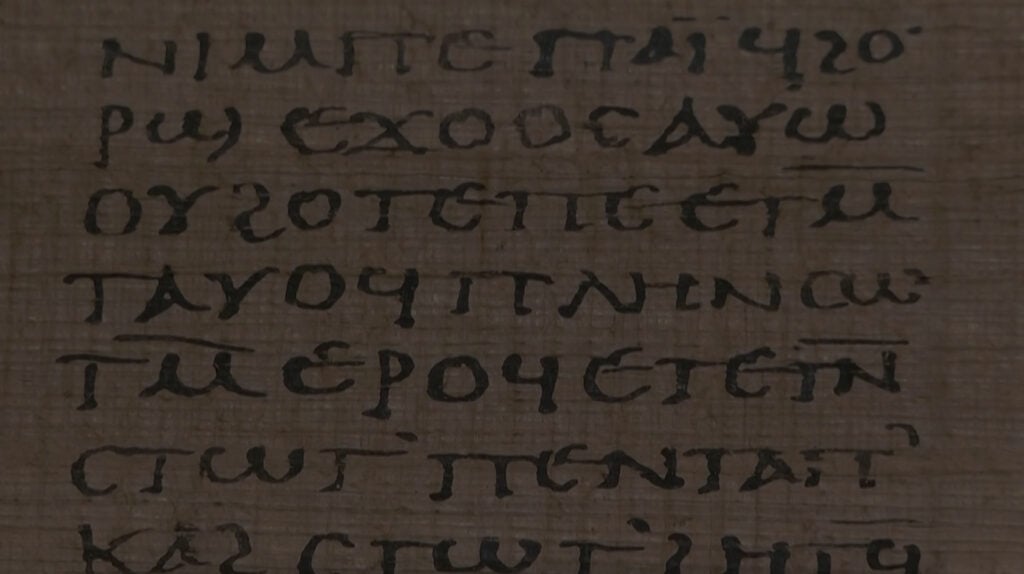
One of the most honest prayers in all of Scripture comes from a desperate father who stands before Christ and cries:
“Lord, I believe; help my unbelief!”
Mark 9:24
Think about that prayer.
“I believe.”
And then immediately:
“Help my unbelief.”
Faith and struggle exist in the same human heart.
St. Augustine comments on this passage:
“I believe; therefore there was faith. But ‘help my unbelief,’ therefore there was not full faith.”
That distinction is enormously important.
The man possessed faith. His faith simply was not yet complete.
And if we are truthful, neither is ours.
Faith Can Be Real Without Being Perfect
Sometimes we speak about faith as though it were an electrical switch.
Either it is on or it is off.
Either you believe completely or you do not believe at all.
But Scripture presents something far more dynamic.
The Apostles themselves once came to Christ and prayed:
“Increase our faith.”
Luke 17:5
That prayer only makes sense if faith can grow.
Faith can be weak and become stronger.
Faith can be immature and become mature.
Faith can be wounded and become healed.
Faith can be tested and become purified.
Our relationship with Christ is alive. We are not statues. We are human beings being transformed by grace.
That is one reason I have often emphasized the difference between knowing theology about God and actually knowing God.
There is a tremendous difference between being able to explain God and living in communion with Him.
Orthodox Christianity is not merely an intellectual system.
It is a life.
Faith Is More Than Having the Right Answers
Modern people tend to think intellectually.
We like explanations.
We want everything categorized, defined, systematized, and solved.
And there is nothing wrong with wanting answers. Christianity is not opposed to reason. The Fathers were brilliant thinkers.
But faith is not merely agreeing with a collection of theological propositions.
Faith is communion.
Faith is trust.
Faith is fidelity.
Faith is obedience.
Faith is repentance.
Faith is prayer.
Faith is remaining with Christ.
The earliest Christians were called followers of “the Way.”
I love that description because it tells us something essential about Christianity.
This is a path.
And someone who stumbles on the path has not necessarily left the path.
Someone who walks slowly has not necessarily abandoned the journey.
Someone who falls can get back up.
Someone who cries because the road has become difficult may still be walking toward Christ.
So perhaps the question is not simply:
“Have I ever doubted?”
Perhaps the better question is:
“Which direction am I moving?”
Thomas Did Not Stay in His Doubt
No discussion of doubt would be complete without St. Thomas.
After the Resurrection, the other Apostles told Thomas they had seen Christ.
Thomas responded:
“Unless I see in His hands the print of the nails, and put my finger into the print of the nails, and put my hand into His side, I will not believe.”
John 20:25
Those are serious words.
Christ does not congratulate Thomas for doubting.
Eight days later, Jesus appears and says:
“Reach your finger here, and look at My hands; and reach your hand here, and put it into My side. Do not be unbelieving, but believing.”
John 20:27
Then Thomas gives one of the greatest confessions of Christ in the entire New Testament:
“My Lord and my God!”
John 20:28
St. John Chrysostom draws attention not merely to Thomas, but to the mercy of Christ.
He writes:
“Consider the lovingkindness of the Lord, how for the sake of a single soul He showed Himself with His wounds.”
That moves me deeply.
Christ does not abandon Thomas.
He comes to him.
He meets him in his weakness.
He confronts the unbelief, but He does so in love.
And then He leads Thomas into deeper faith.
That is what Christ does.
He does not tell us that unbelief is good.
He heals unbelief.
Scripture Is Filled With Faithful People Asking Questions
Sometimes Christians feel guilty because they have asked God a difficult question.
But have you read the Psalms?
“How long, O Lord? Will You forget me forever?”
Psalm 13:1
“Why are you cast down, O my soul?”
Psalm 42:5
“Why do You stand afar off, O Lord?”
Psalm 10:1
“My God, My God, why have You forsaken Me?”
Psalm 22:1
These are not sanitized prayers.
They are raw.
Job asks questions.
Jeremiah asks questions.
Habakkuk asks questions.
The Psalmists ask questions.
The important thing is what they do with those questions.
They turn them into prayer.
That distinction matters tremendously.
There is a difference between asking questions about God while walking away from Him and asking questions while standing before Him.
“God, where are You?” can itself become a prayer.
There is still relationship.
There is still a cry toward God.
There is still a heart reaching for Him.
Sometimes there may be more faith in a tearful “Where are You, Lord?” than in a thousand polished theological sentences.
Feeling Abandoned Is Not the Same as Abandoning God
This becomes especially important when we come to the Cross.
Jesus cries:
“My God, My God, why have You forsaken Me?”
Matthew 27:46
We would never say that Jesus stopped trusting the Father.
Christ enters the fullness of human suffering while remaining perfectly obedient.
And that reveals something important for all of us.
Feeling abandoned by God is not the same as abandoning God.
There will be seasons when prayer feels dry.
There may be times when God seems silent.
There may be moments when you kneel to pray and feel absolutely nothing.
There may be periods when Scripture seems difficult, worship feels heavy, and God seems a thousand miles away.
That experience alone does not mean faith has disappeared.
Sometimes faith looks like joy.
Sometimes faith looks like consolation.
Sometimes faith looks like standing in church overwhelmed by the beauty of God.
And sometimes faith simply looks like refusing to leave Christ even when you cannot feel Him.
That may be one of the deepest forms of trust.
Abraham Did Not Have All the Answers Either
Hebrews tells us:
“Faith is the substance of things hoped for, the evidence of things not seen.”
Hebrews 11:1
Faith concerns realities we do not yet completely see.
Consider Abraham.
Scripture says:
“He went out, not knowing where he was going.”
Hebrews 11:8
That is astonishing.
God did not give Abraham a complete map.
He did not explain every future circumstance.
He called him.
Abraham trusted the One who called.
Romans describes Abraham as the one who:
“Contrary to hope, in hope believed.”
Romans 4:18
Sometimes we imagine faith means that all uncertainty disappears.
But often faith becomes most visible precisely when we do not know how the story will end.
Faith says:
“I do not know what happens next, but I know Who called me.”
Mystery Is Not the Enemy of Faith
St. John of Damascus begins his great exposition of the Orthodox faith by reminding us that God is ultimately beyond complete human comprehension:
“The Deity… is ineffable and incomprehensible.”
That does not mean Christianity is irrational.
It means God is God and we are not.
There are things about God we can truly know because He has revealed Himself to us.
But we can never exhaust God intellectually.
We cannot place the infinite God inside the boundaries of the human mind.
I often tell people that Orthodoxy is comfortable with mystery.
Not everything is buttoned up neatly.
Not every question is answered exactly the way we want it answered.
Not every suffering is explained.
Not every act of divine providence becomes understandable in this life.
That does not mean we stop thinking.
It means we stop worshiping our ability to understand.
Reason is a gift from God.
Reason is simply not God.
Faith Must Be Lived
This is where the Orthodox approach becomes very practical.
When doubt comes, the answer is not always another book.
Sometimes a book helps.
Sometimes apologetics helps.
Sometimes a theological explanation is exactly what someone needs.
But eventually Christianity must be lived.
If you are struggling, pray.
If you are questioning, keep praying.
Go to Divine Liturgy.
Read the Psalms.
Go to confession.
Speak with your priest.
Receive the Eucharist if you are properly prepared.
Fast.
Repent.
Serve someone.
Forgive someone.
Continue walking.
Do not make the mistake of thinking that you must solve every intellectual difficulty before you can remain faithful to Christ.
The father in Mark 9 did not solve his unbelief.
He brought it to Jesus.
That is what we should do too.
“Lord, I believe. Help my unbelief.”
That may be enough for today.
Doubt Can Move in Two Directions
We should be careful here.
The Fathers do not celebrate permanent skepticism.
Christ tells Thomas:
“Do not be unbelieving, but believing.”
The goal is faith.
The goal is healing.
The goal is deeper communion with Christ.
So doubt can move in two very different directions.
It can move like this:
Doubt → humility → prayer → repentance → deeper faith
Or it can move like this:
Doubt → pride → isolation → resentment → hardened unbelief
The existence of the question is not always the decisive issue.
What we do with the question matters.
Do I bring my struggle to God?
Or do I use my struggle as a reason to move away from Him?
Do I humbly say, “Lord, help me”?
Or do I decide that unless God explains Himself to my satisfaction, I will no longer trust Him?
Those are very different spiritual postures.
Perhaps Fear Is Closer to the Opposite of Faith
I have spoken often about fear because fear has tremendous spiritual power when we allow it to govern us.
I do not mean normal human fear.
The Apostles were afraid.
The saints experienced fear.
Courage does not mean never feeling afraid.
But spiritually, fear becomes opposed to faith when it says:
“I cannot trust God unless I control what happens next.”
Faith responds:
“I do not control what happens next, but I trust the One who does.”
Jesus tells His disciples:
“Let not your heart be troubled; you believe in God, believe also in Me.”
John 14:1
Think about when He says those words.
Their entire world is about to fall apart.
Jesus will be arrested.
They will scatter.
Their expectations will collapse.
They will be frightened and confused.
Jesus does not give them control over the future.
He gives them Himself.
That is faith.
The Goal Is Not Certainty
This may be one of the most important things I can say.
The goal of the Christian life is not psychological certainty.
The goal is Christ.
The goal is communion with Him.
St. Peter says that through Christ we become:
“Partakers of the divine nature.”
2 Peter 1:4
That is theosis.
We are being healed.
We are being purified.
We are being illumined.
We are being united to God by grace.
Christianity is therefore not merely a journey from uncertainty to certainty.
It is a journey from death to life.
From self-reliance to trust.
From fragmentation to communion.
From fear to love.
From unbelief toward faith.
And yes, sometimes doubt appears somewhere along that road.
“Lord, I Believe; Help My Unbelief”
Perhaps that is why Mark 9:24 has remained such a beloved Christian prayer.
The father does not pretend.
He does not say:
“I understand everything.”
He does not say:
“I have no questions.”
He does not manufacture an artificial feeling of certainty.
But neither does he walk away.
He looks at Christ and says:
“Lord, I believe; help my unbelief!”
The first half is confession.
The second half is humility.
And both are directed toward Christ.
That is the key.
Doubt is not necessarily the opposite of faith.
Sometimes doubt reveals that our faith is still immature.
Sometimes it exposes a wound.
Sometimes it becomes a temptation.
Sometimes it reveals how desperately we want control.
Sometimes it forces us to admit that we do not understand nearly as much as we thought we did.
But if that doubt is carried toward Christ rather than away from Him, it can become the place where incomplete faith begins to grow.
I would be far more concerned about the person who says, “I understand everything about God, I have no questions, and I have never struggled,” than I would be about the Christian kneeling before Christ saying:
“Lord, I do not understand. But I will not leave You.”
That is not necessarily the absence of faith.
Very often, that is where faith begins to become real.
Grace and Peace,
Fr. Don
Want the entire article distilled into one clear, printable page?
Download your free summary and keep it with you.
Get the free PDF + join thousands of people receiving short, practical Orthodox insights in the “Morning Brew with Father Don” to help you grow in Christ each week.