The Cross, the Fellowship of Christ’s Sufferings, and the Way to Resurrection
There are few questions more difficult to answer than this one:
Why does suffering exist?
It is one thing to discuss suffering when life is going well. It is another thing entirely to ask the question while sitting beside a hospital bed, standing at a graveside, watching a marriage collapse, receiving a frightening diagnosis, grieving a child, being betrayed by someone you trusted, or wondering why God seems silent when you desperately need Him.
In those moments, philosophical explanations often sound painfully inadequate.
The Christian answer to suffering is not ultimately a theory.
It is a Person.
Christianity does not give us a God who remains safely in heaven explaining suffering to us from a distance. Christianity gives us the God who became flesh, entered our broken world, experienced rejection, betrayal, grief, violence, abandonment, pain, and death, and then transformed death itself through His Resurrection.
The answer to suffering is Jesus Christ.
This does not mean suffering is good.
Cancer is not good. Abuse is not good. War is not good. Murder is not good. Betrayal is not good. Death itself is called an enemy by St. Paul.
But Christianity makes an extraordinary claim.
When suffering is brought into communion with Christ, suffering can no longer accomplish what it ultimately seeks to accomplish: separation from God.
In Christ, suffering can become communion.
It can become purification.
It can become sacrificial love.
It can become a place where the ego dies and the life of Christ becomes visible within us.
It can even become joy.
Not because pain stops hurting, but because pain no longer has the final word.
And this is why St. Paul could say something that sounds almost incomprehensible to modern ears:
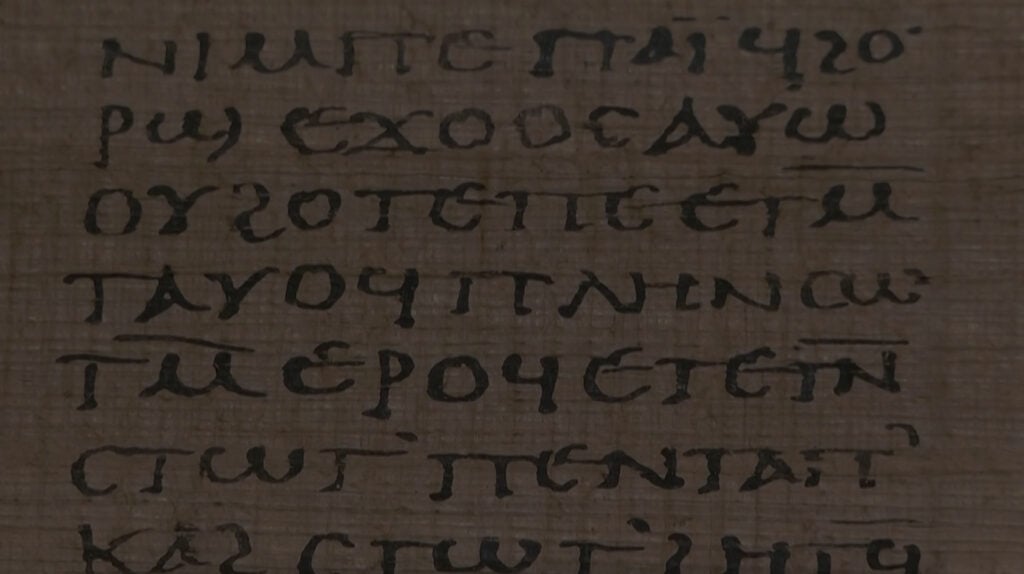
“That I may know Him and the power of His resurrection, and the fellowship of His sufferings, being conformed to His death, if, by any means, I may attain to the resurrection from the dead.”
Philippians 3:10-11
Paul wants to know the power of the Resurrection.
But strangely, he says that this means knowing the fellowship of Christ’s sufferings.
That paradox stands at the heart of the Christian understanding of suffering.
The Christian does not seek suffering.
The Christian seeks Christ.
But the Christ we seek is the Crucified and Risen Christ.
And therefore, to enter deeply into His life is inevitably to enter into the mystery of His Cross and Resurrection.
What Do We Mean by Suffering?
Before asking why suffering exists, we should define what we mean by suffering.
Suffering is much broader than physical pain.
It includes pain, loss, corruption, deprivation, grief, sickness, rejection, injustice, emotional anguish, temptation, mortality, and death.
There is natural suffering, such as sickness, aging, bodily pain, natural disasters, and death.
There is moral suffering, which occurs because of our own sins or because of the sins committed against us by others.
There is spiritual suffering, including temptation, warfare against the passions, repentance, estrangement, and the painful purification of the heart.
There is also ascetical suffering, which we voluntarily accept through fasting, self-denial, obedience, chastity, sacrifice, vigils, prayer, and the death of the ego.
And then there is something deeper still.
There is Christlike suffering.
This is the suffering produced by love.
It is the mother who suffers with her child.
It is the husband or wife who faithfully carries the burdens of a struggling spouse.
It is the priest who grieves for those entrusted to him.
It is forgiving someone who has wounded you.
It is loving an enemy.
It is bearing another person’s burdens.
It is the pain of watching someone you love destroy himself while you continue praying for him.
This kind of suffering brings us very close to the mystery of Christ Himself.
Because the deepest suffering of Christ cannot be measured only by the nails driven into His hands.
The Passion also reveals the agony of perfect Love confronting hatred, rejection, sin, betrayal, and death.
Did God Create Suffering?
To understand suffering, we have to begin in Eden rather than at Calvary.
God did not create humanity for suffering, corruption, and death.
Human beings were created for communion with God.
And God is Life.
This is important because the Fall should not be understood merely as the breaking of an arbitrary rule followed by an angry God imposing death as a penalty.
The tragedy is far deeper.
God warned Adam:
“Of the tree of the knowledge of good and evil you shall not eat, for in the day that you eat of it you shall surely die.”
Genesis 2:17
Humanity turned away from the Source of Life.
And turning away from Life inevitably means moving toward death.
St. Athanasius the Great explains this beautifully in On the Incarnation. Humanity was created by grace for incorruption and communion with God. But when humanity turned from God, humanity returned toward corruption.
This is why Wisdom says:
“God created man for incorruption, and made him in the image of His own eternity, but through the devil’s envy death entered the world.”
Wisdom of Solomon 2:23-24
And St. Paul writes:
“Through one man sin entered the world, and death through sin.”
Romans 5:12
The world we presently experience is therefore not the world in the fullness for which it was created.
Something has gone terribly wrong.
Creation itself bears the wound of humanity’s separation from God.
St. Paul says that the whole creation groans and labors with birth pangs together until now.
That groaning is everywhere.
We see it in hospital rooms.
We see it in cemeteries.
We see it in war.
We see it in disease.
We see it in broken families.
We see it in our own bodies as they age.
We experience it within our own hearts.
Suffering reminds us that creation has not yet reached its final destiny.
Is God Punishing Me?
One of the most damaging assumptions Christians sometimes make is this:
If something terrible is happening to me, God must be punishing me.
Scripture simply does not allow us to reduce suffering to that formula.
The entire Book of Job demolishes it.
Job’s friends desperately attempt to make Job’s suffering mathematically understandable.
Good people prosper.
Bad people suffer.
Job is suffering.
Therefore Job must secretly be wicked.
Their theology leaves no room for mystery.
Yet God ultimately exposes the inadequacy of their reasoning.
Jesus does the same thing.
When His disciples encounter a man blind from birth, they ask:
“Rabbi, who sinned, this man or his parents, that he was born blind?”
Jesus replies:
“Neither this man nor his parents sinned.”
John 9:2-3
Later, people tell Jesus about Galileans who were killed by Pilate.
Jesus refuses to accept the assumption that their terrible deaths prove they were greater sinners.
He does the same regarding eighteen people killed when the tower of Siloam fell.
This means Christians must be extremely careful about telling suffering people why their suffering happened.
Sometimes suffering is clearly connected to choices.
Sometimes we suffer because of our own sins.
Sometimes we suffer because of someone else’s sins.
Sometimes suffering comes through disease or natural events.
Sometimes we simply do not know.
And one of the cruelest things we can do to another person is invent a divine explanation God Himself has not revealed.
We do not always know why something happened.
But we know something far more important.
Christ has not abandoned us in it.
God Entered Human Suffering
This is where Christianity becomes astonishing.
God did not send humanity a philosophical essay explaining suffering.
He came Himself.
“And the Word became flesh and dwelt among us.”
John 1:14
The eternal Son of God assumed our humanity.
He became hungry.
He became tired.
He was tempted.
He wept.
He experienced rejection.
He was betrayed by a friend.
He was falsely accused.
He was beaten.
He was humiliated.
He was crucified.
He died.
The Epistle to the Hebrews tells us that Christ shared our flesh and blood so that through death He might destroy the one who had the power of death.
The immortal One entered mortality.
The incorruptible One entered corruption.
Life entered death.
This is the great mystery of the Incarnation.
There is no genuinely human suffering into which Christ refuses to descend.
The God revealed by Christianity is not a God who looks at your wounds from a distance.
He is the God who bears wounds.
Isaiah calls Him:
“A Man of sorrows and acquainted with grief.”
Isaiah 53:3
When you suffer, therefore, you are not entering a territory unknown to God.
Christ has already entered it.
The Cross Transforms Suffering From Within
Christ does not merely experience suffering.
He transforms it.
Look at what happens on the Cross.
Betrayal encounters faithfulness.
Hatred encounters love.
Violence encounters forgiveness.
Humiliation becomes glory.
Death encounters Life.
The tomb becomes the doorway into Resurrection.
This is why we must never separate Good Friday from Pascha.
Without Resurrection, the Cross would simply be another tragedy.
But Christ is risen.
And because Christ is risen, the Cross becomes the place where death itself begins to die.
Orthodox Christians sing at Pascha:
Christ is risen from the dead, trampling down death by death.
Notice the paradox.
Death is destroyed through death.
Christ enters the enemy’s territory and destroys the enemy from within.
St. Athanasius repeatedly emphasizes this reality. The Word assumes mortal humanity precisely so that death might encounter divine Life within human nature itself.
Christ does not stand outside death and shout instructions toward us.
He enters death.
And then He emerges victorious.
This changes everything about the Christian understanding of suffering.
“The Fellowship of His Sufferings”
Now we can return to St. Paul’s extraordinary words in Philippians.
Paul writes:
“That I may know Him and the power of His resurrection, and the fellowship of His sufferings, being conformed to His death.”
Notice the sequence.
Paul wants to know Christ.
He wants the power of Christ’s Resurrection.
He wants the fellowship of Christ’s sufferings.
He wants to be conformed to Christ’s death.
And he looks toward the resurrection from the dead.
The Greek word translated as fellowship is koinonia.
It means participation.
Communion.
Sharing.
Paul is not merely saying:
“Jesus suffered, and Christians sometimes suffer too.”
He is saying something much deeper.
The Christian life is actual participation in Jesus Christ.
We enter His death.
We enter His life.
We participate in His Cross.
We participate in His Resurrection.
This is why Paul writes elsewhere:
“If indeed we suffer with Him, that we may also be glorified together.”
Romans 8:17
And:
“Always carrying about in the body the dying of the Lord Jesus, that the life of Jesus also may be manifested in our body.”
2 Corinthians 4:10
And:
“I have been crucified with Christ; it is no longer I who live, but Christ lives in me.”
Galatians 2:20
Christianity is participation.
We are not spectators standing at a safe theological distance from Golgotha.
We enter the Paschal mystery.
Through Baptism we die and rise with Christ.
Through repentance the old man dies.
Through the Eucharist we participate in Christ.
Through asceticism we crucify the passions.
Through sacrificial love we participate in His self-emptying love.
Through suffering faithfully endured, we can even become conformed to His death.
This is why St. John Chrysostom understood Paul’s words so powerfully.
To participate in Christ’s suffering is inseparable from participation in the life of the One who rose from the dead.
Suffering Is Not a Curse When It Becomes Communion
We must be extremely precise here.
Christianity does not teach that evil is secretly good.
Disease is not good.
Abuse is not good.
Murder is not good.
War is not good.
Sin is not good.
Death is not good.
St. Paul explicitly calls death:
“The last enemy.”
1 Corinthians 15:26
Christianity does not sanctify evil by renaming it good.
The Christian claim is much more powerful.
Evil cannot separate us from Christ.
Paul asks:
“Who shall separate us from the love of Christ?”
Tribulation?
Distress?
Persecution?
Famine?
Nakedness?
Danger?
Sword?
His answer is astonishing.
Nothing.
Not suffering.
Not persecution.
Not demons.
Not death.
Nothing in all creation can separate those who are in Christ from the love of God.
That is the victory.
Pain does not become morally good.
Pain loses its ability to separate us from God.
This is why martyrs could sing while dying.
Not because torture felt good.
Not because suffering was enjoyable.
They rejoiced because even the worst thing their persecutors could do could not take Christ from them.
Kill the body?
Christ will raise it.
Take their possessions?
Their treasure is in heaven.
Separate them from family?
They remain within the communion of the saints.
Put them in darkness?
Christ is there.
Kill them?
Death itself becomes the doorway through which they enter more fully into the life of Christ.
The enemy discovers that the weapon of death has been broken.
“Count It All Joy”
This helps us understand why the Scriptures sometimes speak about suffering in ways modern people find almost shocking.
St. James writes:
“Count it all joy when you fall into various trials.”
James 1:2
Paul says:
“We also glory in tribulations.”
Romans 5:3
Peter writes:
“Rejoice to the extent that you partake of Christ’s sufferings.”
1 Peter 4:13
The Apostles leave the council in Acts after being beaten:
“Rejoicing that they were counted worthy to suffer shame for His name.”
Acts 5:41
What kind of people talk like this?
People who believe in the Resurrection.
Christian joy in suffering is not psychological pleasure.
It is not emotional denial.
It is not pretending everything is fine when everything hurts.
Christ Himself destroys that interpretation.
Jesus weeps at Lazarus’ tomb.
Jesus says in Gethsemane:
“My soul is exceedingly sorrowful, even to death.”
He sweats in agony.
He cries from the Cross.
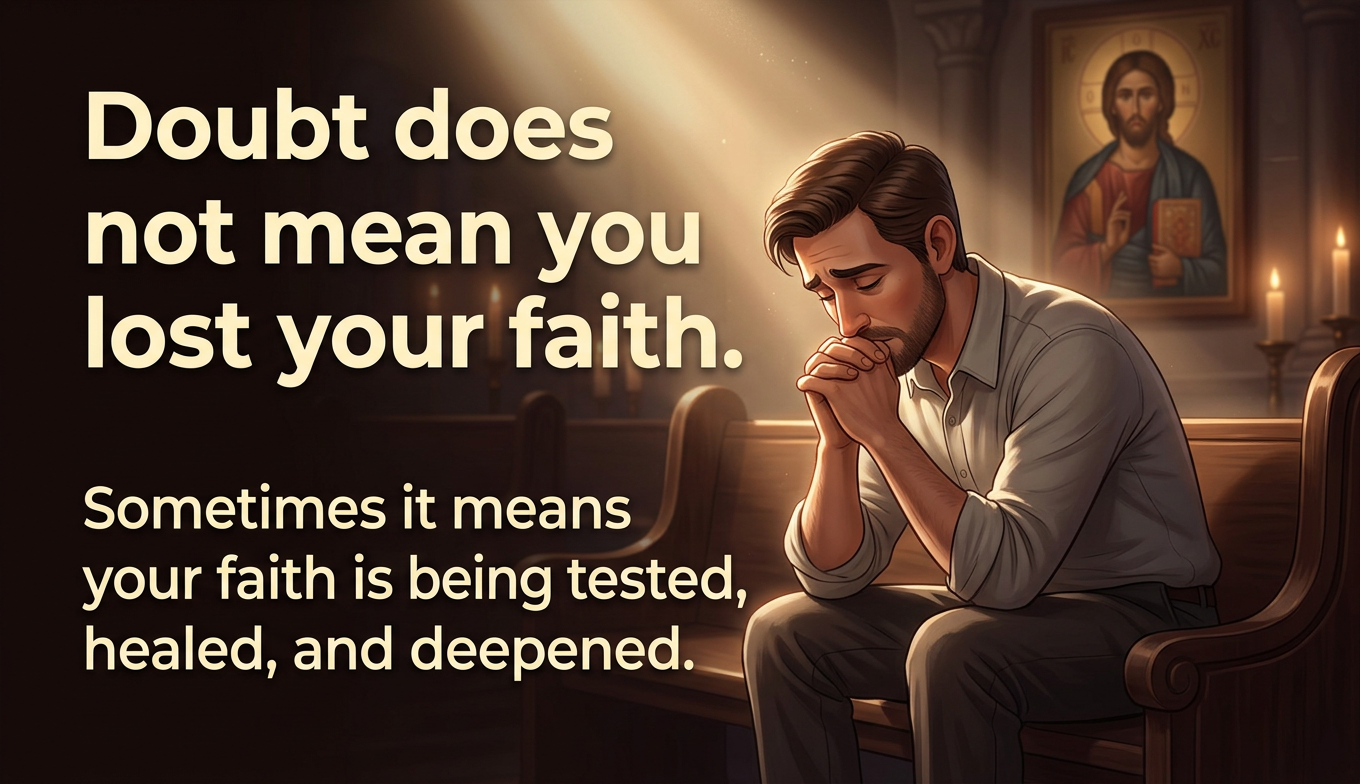
Christian joy and profound grief can coexist.
A Christian can cry and still have hope.
A Christian can mourn and still trust God.
A Christian can experience extraordinary pain while possessing an even deeper certainty that pain cannot have the final word.
That is Paschal joy.
St. Maximus and the Tyranny of Comfort
St. Maximus the Confessor helps us see another dimension of suffering.
Fallen humanity spends enormous amounts of energy trying to escape pain by pursuing pleasure.
We seek comfort.
We protect the ego.
We avoid sacrifice.
We organize our lives around the question:
How can I avoid discomfort?
But sinful pleasure frequently creates greater suffering.
We satisfy one appetite only to discover that the appetite has grown stronger.
We seek comfort and become slaves to comfort.
We avoid sacrifice and become unable to love sacrificially.
St. Maximus sees Christ as reversing this fallen cycle.
Christ voluntarily enters human suffering and death.
Through suffering He destroys suffering’s domination.
Through death He destroys death.
This is radically different from the philosophy of contemporary culture.
Modern society frequently assumes that the best life is the most comfortable life.
Christianity says otherwise.
Love, not comfort, is the measure of a human life.
And love is often costly.
Marriage is costly.
Parenthood is costly.
Forgiveness is costly.
Faithfulness is costly.
Caring for the sick is costly.
Serving Christ is costly.
Loving your enemies is extraordinarily costly.
The Cross exposes the lie that avoiding pain is life’s highest goal.
Sometimes the most human thing we can do is precisely the thing that costs us the most.
Stop Asking Only, “Why Am I Suffering?”
There is another question that may ultimately become more important:
Whom am I becoming in my suffering?
Suffering does not automatically make someone holy.
That needs to be said clearly.
Suffering can produce compassion.
But suffering can also produce bitterness.
It can create prayer.
Or resentment.
It can create humility.
Or self-absorption.
It can soften the heart.
Or harden it.
Two people may endure very similar tragedies and emerge from them spiritually very differently.
The difference is not necessarily the suffering itself.
The question is what happens to the suffering within the heart.
Does it become enclosed within the self?
Or does it become offered to Christ?
Paul learned this through his own weakness.
He begged God to remove what he calls a thorn in the flesh.
Instead, Christ told him:
“My grace is sufficient for you, for My strength is made perfect in weakness.”
2 Corinthians 12:9
Paul’s weakness became the place where divine strength became visible.
Sometimes we spend all our energy asking God to change the circumstance.
And sometimes He does.
We should pray for healing.
We should pray for deliverance.
We should pray for justice.
We should pray for restoration.
But there are times when God does something deeper than changing our circumstances.
He changes us within the circumstances.
The Highest Suffering May Be the Suffering of Love
Eventually the Christian understanding of suffering moves beyond merely asking:
“What is happening to me?”
Christ leads us toward another question:
What am I willing to bear for another?
This brings us close to St. Isaac the Syrian and his extraordinary vision of the merciful heart.
The mature Christian begins to suffer because he loves.
He grieves for those far from God.
He grieves over the suffering of others.
His heart begins to expand.
St. Paul describes something like this regarding his own people:
“I have great sorrow and continual grief in my heart.”
Romans 9:2
He goes so far as to say that he could almost wish himself accursed if doing so could save his brethren.
That is staggering love.
St. Isaac speaks of the merciful heart as one burning with compassion for all creation.
Humans.
Animals.
Enemies.
Sinners.
Even demons.
The closer the heart moves toward God, the more deeply it begins to love what God loves.
And love suffers when the beloved suffers.
At this point the question changes.
Instead of continually asking:
“Why must I suffer?”
The Christian increasingly asks:
“How can my suffering become love?”
This is the suffering of Christ.
“Father, forgive them.”
Those words were spoken from a Cross.
Why Orthodox Christians Practice Asceticism
This theology also explains something many outsiders find strange about Orthodoxy.
Why do Orthodox Christians fast?
Why make prostrations?
Why keep vigils?
Why practice self-denial?
Why embrace chastity?
Why give alms sacrificially?
Why deny ourselves things we could legitimately enjoy?
Are Christians supposed to enjoy suffering?
No.
Christian asceticism is not masochism.
Asceticism is training in freedom.
Jesus says:
“If anyone desires to come after Me, let him deny himself, and take up his cross daily, and follow Me.”
Luke 9:23
Paul says:
“I discipline my body and bring it into subjection.”
1 Corinthians 9:27
Why?
Because the person who can never say no to himself will eventually become enslaved to himself.
Fasting teaches us that hunger does not control us.
Chastity teaches us that desire does not control us.
Generosity teaches us that possessions do not control us.
Prayer teaches us that distraction does not control us.
Obedience attacks self-will.
Repentance attacks pride.
Asceticism prepares us to love.
Because eventually love will cost something.
The person who has never voluntarily surrendered anything may discover that involuntary suffering is unbearable when it arrives.
The Church trains us beforehand:
You are more than your appetites.
You are more than your comfort.
You are more than your ego.
You belong to Christ.
Suffering and Theosis
Now we arrive at the distinctly Orthodox heart of the matter.
Salvation is not merely being declared innocent in a heavenly courtroom.
Salvation is union with God.
The Fathers call this theosis.
St. Peter speaks of becoming:
“Partakers of the divine nature.”
2 Peter 1:4
We do not become God by nature.
We participate by grace in the divine life.
This changes how we understand the Cross.
The Cross is not merely something Jesus did while we stand at a distance receiving benefits from it.
We are joined to Christ.
Paul says in Romans 6 that through Baptism we were buried with Him into death so that we might walk in newness of life.
We enter His Paschal mystery.
We die with Christ.
We rise with Christ.
And therefore Paul’s desire to know “the fellowship of His sufferings” is part of the mystery of theosis.
We are being conformed to Christ.
What does Christ look like?
Self-emptying love.
Humility.
Faithfulness.
Mercy.
Forgiveness.
Obedience.
Sacrifice.
The Cross.
Resurrection.
If salvation means becoming like Christ by grace, then we should not be surprised when the path of transformation sometimes takes a cruciform shape.
Suffering is not necessarily evidence that Christian life has failed.
When received in faith, suffering may become one of the deepest places where conformity to Christ occurs.
Suffering Can Become Eucharistic
There is also a profoundly Eucharistic dimension to suffering.
The Divine Liturgy teaches us to offer.
We pray:
“Thine own of Thine own we offer unto Thee, on behalf of all and for all.”
Everything belongs to God.
Everything is received from God.
And everything is returned to God in thanksgiving.
Eventually the Christian learns to live life eucharistically.
Even suffering can become offering.
You may find yourself saying:
“Lord, I did not choose this illness.”
“I did not choose this grief.”
“I did not choose this betrayal.”
“I did not choose this loss.”
“I cannot make what happened good.”
“But I can give myself to You in the midst of it.”
That changes something.
What cannot be escaped can still become offering.
What becomes offering can become communion.
What becomes communion becomes participation in Christ.
This is not passive fatalism.
It is not saying, “Whatever happens must be fine.”
It is saying:
“Nothing that happens to me will prevent me from offering myself to God.”
“Take Up Your Cross” Must Never Protect an Abuser
A serious pastoral warning is necessary here.
The theology of suffering has sometimes been grotesquely misused.
A battered spouse should not be told:
“This is your cross. Stay and suffer.”
Someone experiencing criminal abuse may seek protection.
A victim may contact authorities.
A person may leave immediate danger.
Someone who is sick should seek medical treatment.
Someone needing psychological care should seek appropriate help.
Seeking healing does not demonstrate weak faith.
Seeking safety is not rejecting the Cross.
Jesus sometimes endured suffering.
But Jesus also withdrew from danger.
He confronted evil.
He rebuked hypocrisy.
He exposed sin.
Christian endurance is not complicity with evil.
Suffering becomes spiritually transformative through communion with Christ, not simply because someone remains trapped in destructive circumstances.
Sometimes faithfulness means enduring.
Sometimes faithfulness means leaving.
Sometimes faithfulness means confronting.
Sometimes faithfulness means seeking justice.
The Cross must never become a theological weapon placed in the hands of an abuser.
You Are Allowed to Lament
Neither does Christianity require stoicism.
Faith does not mean pretending something does not hurt.
The Scriptures are filled with lament.
Read Psalm 13.
Psalm 22.
Psalm 42.
Psalm 88.
Read Job.
Read Jeremiah.
Look at Christ weeping at Lazarus’ tomb.
Look at Him in Gethsemane.
Listen to Him cry from the Cross:
“My God, My God, why have You forsaken Me?”
Jesus Himself prays the language of lament.
The difference between despair and lament is not that lament never asks why.
The difference is that lament still speaks to God.
Despair says:
“There is no one listening.”
Lament cries:
“O God, where are You?”
The cry itself remains relationship.
The cry itself remains prayer.
The cry itself remains communion.
Sometimes the most faithful prayer you can offer is not eloquent.
Sometimes it is simply:
“Lord Jesus Christ, I do not understand. Help me.”
That prayer is enough.
The Resurrection Changes Everything
The Christian answer to suffering finally makes sense only because of the Resurrection.
St. Paul is brutally clear:
“If Christ is not risen, your faith is futile.”
1 Corinthians 15:17
If Jesus remains dead, Christian teaching about suffering collapses.
Then death wins.
Then tragedy has the final word.
Then cemeteries are permanent.
But Christ is risen.
And therefore everything changes.
Death is temporary.
Corruption is temporary.
Grief is temporary.
Sickness is temporary.
The grave is temporary.
The body will rise.
Creation will be renewed.
Love will survive death.
God Himself promises:
“God will wipe away every tear from their eyes; there shall be no more death, nor sorrow, nor crying.”
Revelation 21:4
Paul therefore says:
“The sufferings of this present time are not worthy to be compared with the glory which shall be revealed in us.”
Romans 8:18
But the Resurrection is not merely God’s consolation prize for people who suffered.
It is something greater.
In Christ, death itself becomes the road through which death is defeated.
The grave becomes the place from which Resurrection emerges.
This is Pascha.
This is why Orthodox Christianity cannot speak about suffering without eventually singing:
Christ is risen from the dead, trampling down death by death, and upon those in the tombs bestowing life.
So Why Does Suffering Exist?
We should resist giving an answer that is too neat.
Suffering exists because creation has fallen into corruption and death.
Much suffering results from human sin.
Some suffering results from the sins of others.
Some suffering arises from life in a creation that is still groaning and awaiting redemption.
And some suffering remains mysterious.
We do not know why every tragedy occurs.
We should not pretend that we do.
Christianity has not intellectually domesticated the mystery of evil.
But something greater has happened.
The mystery of suffering has been invaded by the mystery of the Crucified and Risen Christ.
God enters our suffering.
Christ assumes our mortality.
Christ enters death.
Christ destroys death.
And then He invites us into communion with Him.
This is Paul’s great revelation:
“That I may know Him and the power of His resurrection, and the fellowship of His sufferings.”
We want the Resurrection.
So did Paul.
But Paul understood something many of us would rather avoid.
There is no knowing the Risen Christ apart from knowing the Crucified Christ.
They are not two Christs.
The Cross and Resurrection are one Paschal mystery.
Do Not Waste Your Suffering
If you are suffering right now, I would never tell you to be grateful that something terrible happened.
I would never tell you that your grief does not matter.
I would never tell you not to cry.
I would never tell you that pain is somehow secretly good.
But I would tell you this:
Do not waste your suffering.
Do not allow suffering to convince you that Christ has abandoned you.
Do not allow your wound to harden your heart.
Do not permit your pain to become permission to inflict pain on someone else.
Bring your wound into prayer.
Bring it into repentance.
Bring it into the sacramental life of the Church.
Bring it to Christ in the Eucharist.
Let your suffering enlarge your compassion.
Let it teach you to recognize wounds in others.
Let it teach you to bear another person’s burdens.
Let it strip away the illusion that comfort is the purpose of human existence.
Let it destroy the ego.
Let it deepen prayer.
Let it draw you into Christ.
You do not need to seek suffering.
Life will bring enough of it.
Seek Christ.
And when suffering finds you, you may discover something extraordinary.
Christ is already there.
He is there as the Crucified One who entered suffering before you.
He is there as the Man of Sorrows who knows grief.
He is there as the Great High Priest who sympathizes with our weakness.
He is there as the One who entered the tomb.
And He is there as the Risen Christ who walked out of it.
This is why Christian suffering can become joy.
Not because suffering stops hurting.
Not because evil somehow becomes good.
Not because Christians enjoy pain.
But because suffering surrendered to Christ becomes something more than suffering happening to us.
It becomes suffering with Christ.
It becomes suffering in Christ.
It becomes participation in His self-emptying love.
It becomes conformity to His death.
And mysteriously, through that conformity, it becomes movement toward Resurrection.
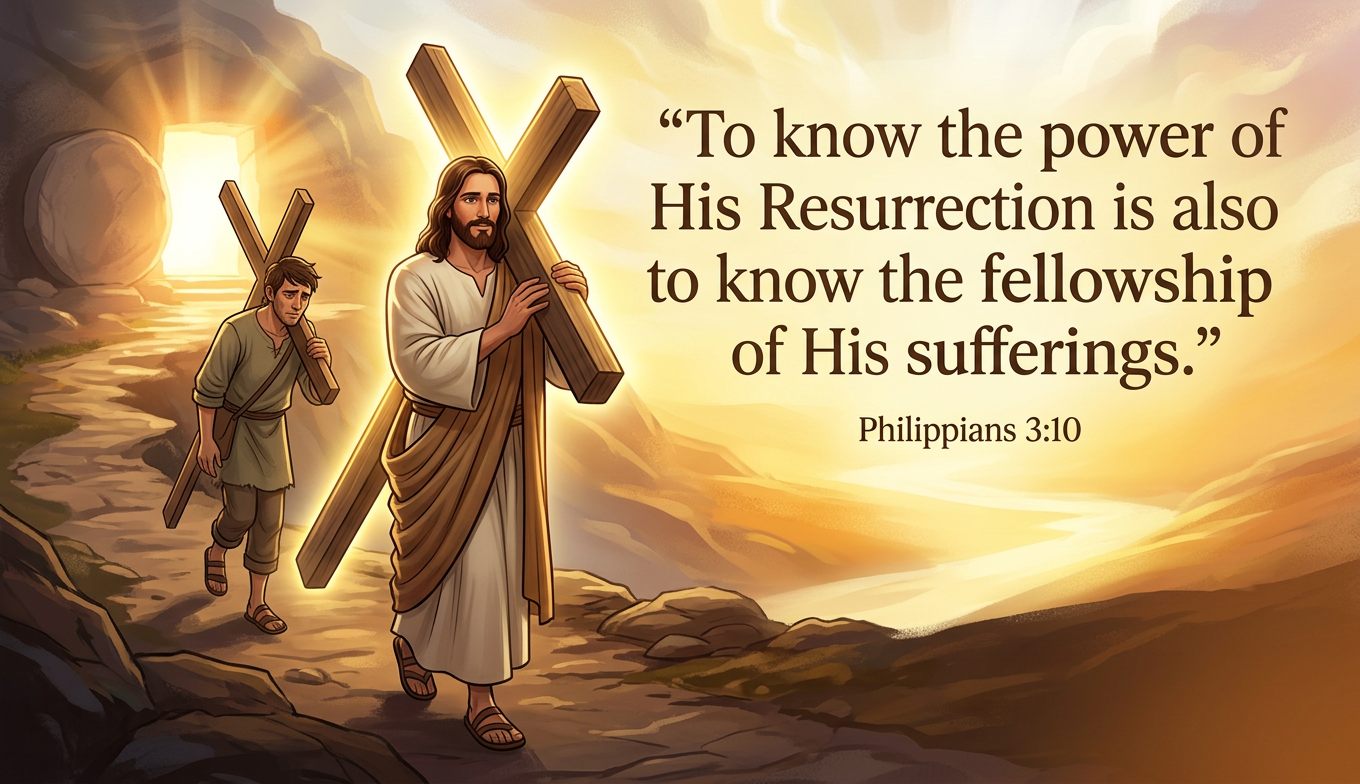
This is the great paradox of Philippians 3.
To know the power of His Resurrection is also to know the fellowship of His sufferings.
The Christian does not seek the Cross instead of the Resurrection.
We discover that the road of the Cross is already filled with Resurrection.
Because Christ is risen.
And if we suffer with Him, we shall also be glorified with Him.
So when suffering comes, hold onto Christ.
Cry if you need to cry.
Lament if you need to lament.
Ask why if you need to ask why.
Seek healing.
Seek help.
Seek justice when justice is necessary.
But never believe that your suffering means God has abandoned you.
The Cross proves otherwise.
God has entered suffering Himself.
And the empty tomb proves something greater still.
Suffering does not get the final word.
Death does not get the final word.
Christ does.
And Christ is risen.
Want the entire article distilled into one clear, printable page?
Download your free summary and keep it with you.
Get the free PDF + join thousands of people receiving short, practical Orthodox insights in the “Morning Brew with Father Don” to help you grow in Christ each week.